Cenotes and ruins: a 4-day Yucatán road trip from Cancún
At a glance
| Best for | Culture and nature travelers who want a self-drive loop |
| Pace | Moderate — early starts, real driving distances |
| Getting around | Rental car, mandatory Mexican liability insurance |
| Base | Valladolid, a central colonial town |
| Rough budget | Mid-range — car, tolls, gas and modest cenote/ruin entries |
| Book ahead | Rental car in high season; Chichén Itzá tickets can be bought at the gate |
| Best time | Early starts year-round; December–April for cooler driving days |
This is the trip a rental car is actually made for: inland Maya ruins and the cenotes scattered between them are awkward by bus and expensive by tour, but easy and flexible by car. Over four days you’ll see Chichén Itzá, Cobá, colonial Valladolid, and several of the region’s best cenotes, using Valladolid as a central base. Roads are good and well-signed; the only real hazards are topes (speed bumps) in every village and the heat, which makes early starts non-negotiable.
Day 1 — Cancún to Valladolid via a cenote
Morning
Pick up the rental car in Cancún (budget roughly 600–1,000 MXN/day all-in with the mandatory Mexican liability insurance — decline-the-insurance quotes online are misleading). Take the cuota (toll) highway 180D toward Valladolid; it’s about 2 h and the tolls run around 400–500 MXN total.
Afternoon
Stop near Valladolid at Cenote Suytun or Cenote Oxman — the photogenic ones, entry roughly 100–250 MXN (6–15 USD). Swim, then check into a hotel in Valladolid’s center.
Evening
Walk the colonial center: the Calzada de los Frailes, the main square, and a dinner of Yucatecan food like cochinita pibil or longaniza (120–250 MXN per plate). Valladolid is calm, cheap, and a far nicer base than a Chichén Itzá roadside hotel.
Day 2 — Chichén Itzá at opening, then Ek Balam or a cenote
Morning
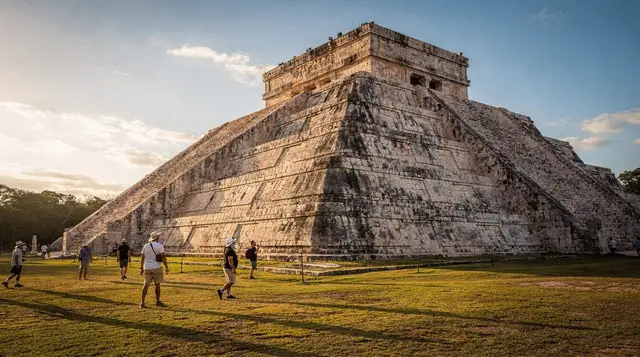
Drive to Chichén Itzá (about 45 min from Valladolid) to be at the gate for the 8 am opening — this is the single most important timing tip in the whole region. You beat the Cancún tour buses (which arrive 10–11 am) and the worst heat. Entry for foreign visitors is 697 MXN including the state fee; allow 2–3 hours.
Afternoon
Cool off at Cenote Ik Kil nearby (about 150 MXN / 9 USD) or drive 30–40 min north to Ek Balam ruins, which are quieter, climbable, and have a cenote next door. Either pairs well; don’t try to do both plus Chichén Itzá in one day. If you’d rather skip the driving, an Ek Balam, Valladolid market and cenote tour from Cancún covers all three.
Evening
Back to Valladolid for dinner. Cenote Zaci is right in town if you want one more swim.
Day 3 — Cobá and jungle cenotes
Morning
Drive to Cobá (about 1.25 h south of Valladolid). Cobá is spread through jungle; rent a bike or hire a tricycle taxi at the entrance to cover the distances. Entry is about 210 MXN. It’s a different feel from Chichén Itzá — less restored, more wild.
Afternoon
The cenotes near Cobá (Tankach-Ha, Choo-Ha, Multun-Ha) are dramatic underground caverns, entry roughly 100–150 MXN each or a combined ticket. These are the best “wild” cenote swims of the trip. Drive back to Valladolid afterward (or relocate toward the coast if your flight is from the south). If you have a spare day on the coast, a Tulum ruins, reef snorkeling and cenotes tour is an easy add-on.
Evening
Last evening in Valladolid: ice cream on the square, an early night before the drive back.
Day 4 — Valladolid to Cancún, with stops
Morning
Take it slow. A morning cenote you skipped, or a final walk through Valladolid’s market for souvenirs and cheap breakfast (50–100 MXN).
Afternoon
Drive back to Cancún (about 2 h on the toll road). Return the rental car with a full tank — gas stations near the airport overcharge, so fill up in Valladolid or along the way. Allow at least 2.5–3 hours at the airport before an international flight.
Self-drive notes
- Always take 8 am opening times seriously; mid-day at Chichén Itzá is hot and packed.
- Watch for topes (speed bumps) entering every village — they are unmarked and brutal.
- Keep cash in small pesos: cenote entries, parking, and village stops are cash-only.
- Don’t drive the highways after dark; livestock, cyclists, and unlit topes make it risky. Plan to be parked by sunset.
- Tap water is not drinkable; carry plenty for the hot, shadeless ruin sites.
Why Valladolid works as the base
Sleeping in one place for three nights means you unpack once and drive out each morning with a light bag. Valladolid sits roughly between the ruins you want to see, so no single day involves a punishing drive. The Valladolid colonial guide covers the town itself, and the Valladolid destination page is useful when choosing a hotel. Look for one with secure parking and air conditioning: after a day of ruins and cenotes, a cool room matters more than a fancy lobby.
How to choose between the cenotes
Not all cenotes feel the same, and this loop lets you sample the main types. Some are open-air pools with a hole in the rock above, others are half-covered caverns, and a few are fully underground with stalactites and dim light. Pick a mix rather than visiting five near-identical ones.
- Photogenic and dramatic: the cenotes near Valladolid suit the first afternoon, when you are tired from the drive and want something easy.
- Convenient and busy: the one beside Chichén Itzá is simple to combine with the ruins, but it draws crowds as the day goes on.
- Wild and quiet: the caverns around Cobá feel the most adventurous and reward anyone who arrives early.
- Right in town: a swim in Valladolid itself is a good reset on an evening when you do not want to drive.
For a longer comparison, read the best cenotes in the Riviera Maya guide. If you are travelling with children or nervous swimmers, the family-friendly cenotes guide points to calmer, shallower options. Whatever you choose, shower before getting in if the site asks you to, and skip sunscreen and insect repellent where it is not allowed, since the water is a fragile, living system.
Pacing each day
The loop only works if mornings are early and afternoons are easy. A few habits make the difference.
- Leave for each ruin before breakfast if you can, and eat later in the nearest town.
- Treat the hottest part of the day as swimming time, not walking time.
- Keep the afternoon after Chichén Itzá flexible. If you are tired, one cenote and an early dinner is a better day than three rushed stops.
- Fuel up when you are half full, not when the light is on, because stations thin out between villages.
- Download offline maps before you leave Cancún, since signal can drop on the smaller roads.
Understanding what you are seeing
The ruins on this route were built by the same wider Maya world, yet each site has its own character. Chichén Itzá is the monumental showpiece, Cobá is a sprawling jungle city, and Ek Balam is compact and hands-on. Reading a little first turns a walk among old stones into a story. The Maya culture guide is a good primer, and the Chichén Itzá, Tulum and Cobá comparison helps if you are deciding how much time each deserves. For the details of each stop, see the Chichén Itzá destination page, the Cobá destination page and the Cobá ruins guide. If you would rather combine Cobá with a swim on a single day, the Cobá and cenote day trip lays out how.
What to eat along the way
Yucatecan cooking is one of the real pleasures of this loop. Look for small family restaurants rather than places next to the big sites, where menus tend to be pricier and blander. The Yucatán dishes guide explains what to order if the menu is unfamiliar, and the Cancún food guide is handy for your first and last evenings. Ask what is freshly made that day, and be curious about regional specialties you will not find on a resort menu.
Before you leave Cancún
Sort out the practical pieces the day before. Confirm your car booking, check that your driving licence and passport are with you, and pack light layers, a hat, water shoes and a swimsuit you can wear all day. The packing list for Cancún covers the basics, and the Cancún travel tips page answers many of the small questions first-timers ask. If you are arriving by air, the airport to hotel zone guide helps you plan the first hour, and the Cancún destination page is a good starting point for your arrival night.
If you do not want to drive
Some travelers love a road trip and others would rather not. If the idea of topes and toll booths puts you off, the ADO bus guide for Yucatán shows how far buses can take you, and the Chichén Itzá day trip guide describes a simpler single-day option. You lose the flexibility of an early start and a free afternoon, but you also lose the stress of navigating. Either way, this loop is easy to shorten: drop Cobá, keep Chichén Itzá and a couple of cenotes, and you still have a satisfying trip.
Picking up the car, and extending the loop
Read the rental car guide before you book — the online “no insurance” quotes are misleading and the mandatory Mexican liability policy is a real, non-optional line item. If four days feels rushed, this loop stretches naturally: add a night in Mérida to see what there is to do in the colonial capital, or a stop in Izamal, the “yellow city,” on the way back. Travelers with a full week sometimes fold this whole plan into the longer Yucatán 10-day road trip instead of doing it as a standalone loop.
Popular Cancún tours on GetYourGuide
Verified deep-linked GetYourGuide tours. Book through these links and we earn a small commission at no cost to you.
These are our own photographs of the area, not the operator's pictures of this tour — open the tour page to see those.