Chichén Itzá vs Tulum vs Cobá: which ruins to visit
Which Maya ruins near Cancún are best: Chichén Itzá, Tulum or Cobá?
Choose Chichén Itzá for the most iconic, grandest site (a New Seven Wonder), if you'll go early to beat crowds. Choose Tulum for a smaller clifftop ruin with a Caribbean beach, easiest to combine with a swim. Choose Cobá for a jungle setting, fewer crowds and bike rentals. They're very different — many people pair Cobá with a cenote, or Tulum with the beach.
These three are the headline Maya sites within reach of Cancún, and travelers constantly ask which one to do. The honest answer is they’re not really competing — they offer completely different experiences. Pick based on what you actually want: grandeur, a beach, or jungle calm. Here’s the breakdown.
At a glance
| Details | |
|---|---|
| Three sites | Chichén Itzá, Tulum, Cobá |
| Distance from Cancún | ~1.5 to 2.5 hours depending on site |
| Cost | Entry fees roughly 210–700 MXN per site, cash preferred |
| Best time to visit any of them | Arrive at opening (around 8am), dry season Nov–Apr |
| Can you combine them | Not comfortably in one day — pick a pairing instead (see below) |
| Full guides | Chichén Itzá day trip, Cobá ruins guide, Tulum ruins guide |
The quick comparison
| Chichén Itzá | Tulum | Cobá | |
|---|---|---|---|
| Distance from Cancún | ~2.5 hrs | ~1.5–2 hrs | ~2 hrs |
| Scale | Huge, iconic | Small, compact | Large, spread in jungle |
| Setting | Open plain | Caribbean clifftop | Dense jungle |
| Headline sight | El Castillo pyramid | Clifftop temple + beach | Nohoch Mul (tall pyramid) |
| Crowds | Very high | High | Moderate |
| Climbing | No (roped off) | No | No (Nohoch Mul now closed to climb) |
| Get around | Walk | Walk | Walk or rent a bike |
| Entry (approx.) | 697 MXN | Over 200 MXN (see inah.gob.mx) | ~210 MXN |
| Best paired with | Cenote + Valladolid | The beach / cenotes | A cenote swim |
(Entry fees combine federal and state charges and rise periodically; treat the figures as a guide, and bring pesos.)
Chichén Itzá: the grand icon
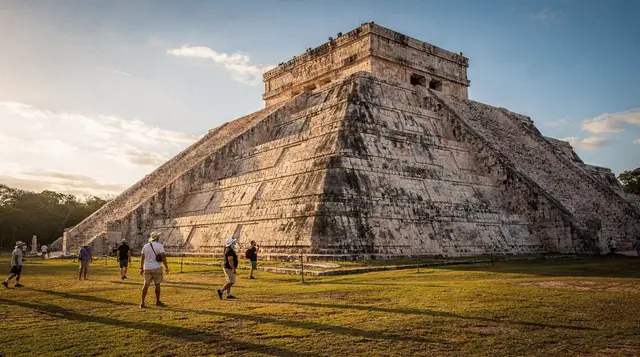
This is the famous one — a New Seven Wonder of the World and a UNESCO site, built around the towering El Castillo (the Temple of Kukulcán). It’s the largest, most complete and most architecturally impressive of the three, with a vast ceremonial city: the great ball court, the observatory, the Temple of the Warriors. If you want the single most awe-inspiring Maya site, this is it.
The honest downsides: it’s the furthest (~2.5 hours from Cancún), the most crowded (tour buses and hundreds of souvenir vendors line the paths by late morning), and you can’t climb El Castillo — it’s roped off. The trick is timing: arrive at opening (around 8 a.m.) to get an hour of relative calm and cooler air before the buses land. Pair it with a swim at a nearby cenote (Ik Kil is right there) and the colonial town of Valladolid to make the long drive worthwhile. See our Chichén Itzá day trip guide for logistics, or the Valladolid day trip guide if you want to slow down and stay overnight. If you’d rather skip the long drive, a Chichén Itzá, cenote and Valladolid tour with lunch bundles all three stops.
Best for: first-timers, history lovers, anyone who wants the bucket-list icon and will commit to an early start.
Tulum: ruins with a beach
Tulum is the only one of the three on the coast — a compact walled city perched on a low cliff above turquoise Caribbean water, with a small beach right below the ruins. It’s the smallest and least architecturally grand site, walkable in an hour, but the setting is unbeatable: nowhere else do Maya stones meet that postcard sea.
Its big advantage is combinability. It’s closer to Cancún (~1.5–2 hours), and you can pair the ruins with a swim at the beach below, a Tulum beach club, or the cenotes nearby — a full, varied day rather than a ruins-only slog. The catch: it gets hot and crowded fast (little shade up on the cliff), so go early here too, and it can have sargassum on the beach in season.
Best for: travelers who want ruins and a swim, people short on driving tolerance, anyone combining culture with beach time.
Cobá: jungle calm and a bike ride
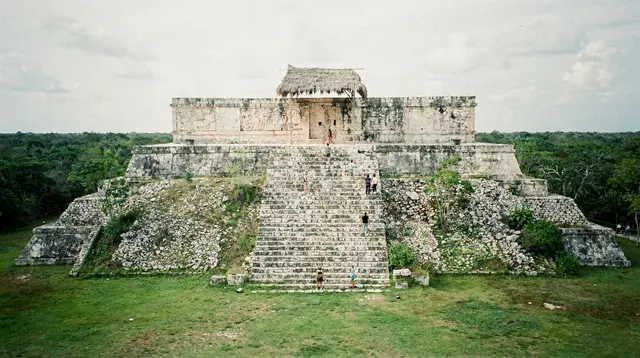
Cobá is the quiet, atmospheric choice. Set deep in dense jungle around two lagoons, it’s a large, spread-out site where the structures emerge from the trees — far more “lost city” in feel than the manicured Chichén Itzá. Its centerpiece is Nohoch Mul, one of the tallest pyramids in the Yucatán.
Because the site is so spread out, you can rent a bike or hire a pedicab to cover the gravel paths between groups of ruins, which is genuinely fun and unusual. Crowds are lighter than the other two. Note that climbing Nohoch Mul, long a draw, is now closed for preservation, so don’t come expecting to summit it.
Cobá pairs perfectly with a cenote swim — there are excellent cenotes nearby (Choo-Ha, Tamcach-Ha) to cool off after the humid jungle walk. See our Cobá ruins guide and the Cobá cenote day trip guide for the full combo, including realistic timing. If you’d rather not organize it yourself, a Cobá and Tulum ruins tour with a cenote stop covers the coast and the jungle in one day.
Best for: travelers wanting fewer crowds, a jungle atmosphere, the novelty of biking a ruin site, and an easy cenote pairing.
Choose X if… — the decision framework
- Choose Chichén Itzá if you want the single most impressive, iconic Maya site and will go early to beat the crowds — and you accept the longer drive and the busiest atmosphere.
- Choose Tulum if you want ruins plus a Caribbean swim in one easy, photogenic day, with the shortest drive of the three.
- Choose Cobá if you prefer atmosphere over scale — jungle setting, fewer people, bike rentals, and a cenote nearby to finish.
Can you combine them?
Not really in one day — they’re in different directions and too far apart. The sensible pairings are Tulum + cenotes/beach, Cobá + a cenote, or Chichén Itzá + Ik Kil cenote + Valladolid. Over a longer trip, a great plan is one coastal day (Tulum) and one inland day (Chichén Itzá or Cobá). If you only do one and want maximum “wow,” it’s Chichén Itzá; if you want the easiest, most varied single day, it’s Tulum.
Practical tips for all three
Whichever you choose, a few things hold true across these sites:
- Go at opening. The single biggest quality-of-life decision. By late morning the heat is punishing and the tour buses arrive en masse. An 8 a.m. start buys you cooler air and emptier ruins, especially at Chichén Itzá and Tulum where shade is scarce.
- Bring sun protection and water. There’s little shade on the open plain (Chichén Itzá) or the clifftop (Tulum). A hat, reef-safe sunscreen and at least a litre of water per person are essentials; the jungle at Cobá is shadier but very humid.
- Carry pesos. Entry combines federal and state fees, and not every booth takes cards. Vendors and bike rentals are cash-only.
- Decide guide vs DIY. A good guide brings Chichén Itzá’s history to life and is worth it there; Tulum and Cobá are easy to wander solo with a little reading. Beware aggressive “official guide” touts at the gates.
- Pair smartly with a cenote. The Yucatán heat makes a post-ruins swim glorious — Ik Kil near Chichén Itzá, or the cenotes near Cobá. It turns a hot history walk into a balanced day.
DIY vs organized tour
From Cancún, all three are reachable by rental car, ADO coach, or organized tour. Self-driving gives you control over timing — crucial for beating crowds — and lets you string in a cenote or town on your own schedule; it’s the best value for Chichén Itzá and Cobá if you’re comfortable on Mexican highways. Organized tours remove the logistics and add a guide, but they typically arrive mid-morning at peak crowd time and move on your group’s pace, not yours. For Tulum specifically, the short distance makes a DIY day or a colectivo trip very easy. As a rule: drive yourself if you value an early, flexible start; take a tour if you’d rather not think about logistics and want the narration.
What if none of the three quite fit?
If crowds are the deciding factor for you and even Cobá sounds too busy, there’s a fourth option worth knowing about: Ek Balam, a small site near Valladolid where you can still climb the main structure and where crowds are genuinely light year-round. It lacks the scale of Chichén Itzá or the beach of Tulum, but for travelers who value quiet over spectacle, see the Ek Balam ruins guide. A guided Ek Balam, Valladolid market and cenote tour is an easy way to see it from Cancún. And if the whole point of your day is the water rather than the stones, it’s worth reading the best cenotes in the Riviera Maya before you commit to a ruins-first itinerary — some travelers are happier building the day around a cenote and treating the ruins as the side stop.
Planning the rest of the trip around your choice
The ruins you pick shape the days around them. If you choose the coast, your base matters: the Tulum destination page and the Tulum beaches guide show how to fold a swim into the day, and the Cancún to Tulum transport guide covers the practical side of getting there. If you lean inland, the Chichén Itzá destination page and the Cobá destination page give the local context, while the ADO bus guide for Yucatán is useful if you would rather not drive.
Getting around is part of the decision too. The Riviera Maya getting around guide and the Cancún car rental guide help you weigh a rental car against buses and tours, and the Maya Train guide is worth a look if you like the idea of a different kind of journey.
It also helps to understand what you are looking at. The Maya culture guide gives background that makes any of the three richer, and reading a little before you go is the cheapest upgrade available, particularly if you skip a guide on the day.
Fitting a ruins day into a longer stay
Think of a ruins day as one anchor in a wider plan rather than the whole trip. A short stay leaves room for just one, and the 2-day Cancún itinerary and 3-day Cancún itinerary show how little space there is once you add the beach. With more time, the Cancún cenotes and ruins itinerary is built around exactly this kind of mix, and the Tulum 3-day itinerary suits anyone who wants to stay on the coast.
If you are still deciding how long to stay, the how many days in Cancún guide and the best time to visit Cancún guide will help you place a ruins day in the right season. For a ranked take on the full set of excursions, the best day trips from Cancún, ranked puts these three next to the alternatives, and the Cancún travel tips cover the basics that apply on any outing.
The honest verdict
There’s no universal winner — it depends on what you’re after. Chichén Itzá is the grandest and the bucket-list pick, best with an early start. Tulum is the most convenient and the only one with a beach, ideal for a mixed day. Cobá is the most atmospheric and least crowded, perfect paired with a cenote. If forced to choose just one for a first trip, do Chichén Itzá for the spectacle — but if your ideal day mixes culture with a swim, Tulum wins on sheer enjoyment.
Frequently asked questions about Chichén Itzá vs Tulum vs Cobá
Can I visit all three in one trip?
Not comfortably as separate day trips unless your stay is a week or more — they pull you in different directions and each deserves a full day. A common compromise is one coastal day built around Tulum (with the Tulum day trip guide) and one inland day for Chichén Itzá or Cobá, rather than trying to squeeze in all three.
Which one is best for kids?
Tulum usually works best for families because it’s short (an hour of walking), close to Cancún, and ends at a beach — a built-in reward after the history part. Chichén Itzá’s heat and long drive are tougher on young kids, and Cobá’s bike-riding format is fun for older children but awkward for toddlers.
Popular Cancún tours on GetYourGuide
Verified deep-linked GetYourGuide tours. Book through these links and we earn a small commission at no cost to you.
These are our own photographs of the area, not the operator's pictures of this tour — open the tour page to see those.