Chichén Itzá day trip from Cancún: how to do it right
Is Chichén Itzá worth a day trip from Cancún?
Yes. Chichén Itzá is about 2.5 hours west of Cancún and is one of the New Seven Wonders of the World. The single best move is to arrive at opening (8am) before the tour buses and the midday heat — which usually means self-driving or a small-group early tour rather than a large coach that arrives late morning. Combine it with a swim in a nearby cenote and a stop in the colonial town of Valladolid.
At a glance
| Details | |
|---|---|
| Distance from Cancún | ~200 km / ~2.5 hours by toll highway (180D) |
| Opening hours | 8am–5pm daily (last entry 4pm) |
| Entry fee | 697 MXN for foreign visitors (INAH 105 + state 592), cash preferred at the gate |
| Best arrival time | 8am, at opening, before the coach tours |
| Getting there | Self-drive, organised day tour, ADO bus, or the Maya Train to Chichén Itzá station |
| Combine with | Valladolid (colonial town) + one cenote (Ik Kil or Suytun) |
| Light show | ”Noches de Kukulkan” sound-and-light show most evenings, separate ticket |
The single most important tip
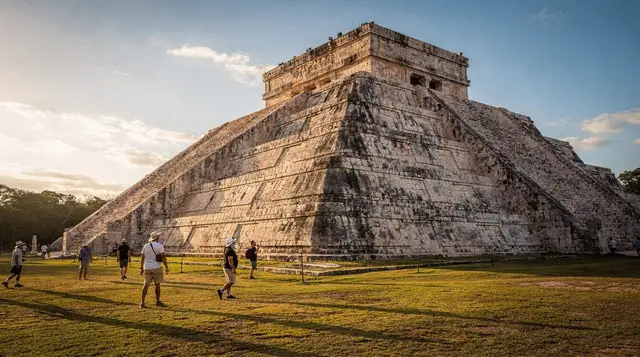
Arrive at opening time. Chichén Itzá gets brutally hot by midday and the large coach tours from Cancún and the Riviera Maya pour in around 11am. Being at the gate at 8am means cooler air, softer light, and the great pyramid of El Castillo almost to yourself.
Tour vs self-drive
A guided tour handles transport and context but usually arrives late and rushes you, so look for an early access guided Chichén Itzá tour if you go that route. Self-driving (the toll highway from Cancún is fast and easy) gives you the early start and the freedom to add a cenote and Valladolid on the way back.
How to choose between the options
The right choice depends less on budget than on how you handle early mornings and long days. If you are comfortable behind the wheel and happy to be on the road before sunrise, driving yourself gives you the most control over the day. If you would rather sleep in the car, let someone else handle parking and navigation, and show up with a guide who can explain what you are looking at, a tour makes sense, as long as you pick one that prioritises the early arrival. The Maya Train and the ADO bus sit in between: no driving, but you plan the logistics yourself. The ADO bus guide explains how the long-distance coaches work if you want the cheapest, simplest public option.
Whichever way you go, the principle is the same: the earlier you reach the gate, the better the visit. Everything else in this guide is a way of protecting that early start.
What to combine it with
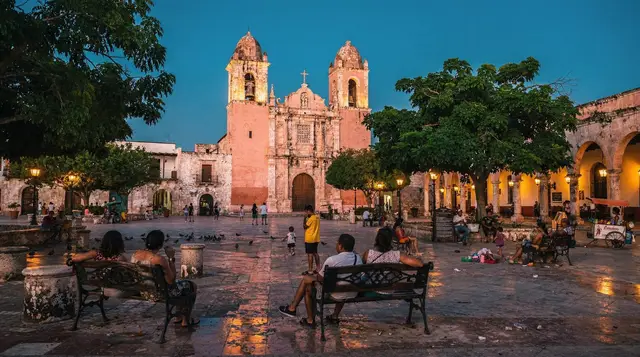
The colonial town of Valladolid and cenotes like Ik Kil or Suytun are right on the route. A swim after the ruins is the perfect antidote to the heat. Most organised day tours already bundle one cenote and an hour in Valladolid; if you self-drive, build the same stops in yourself rather than rushing straight back to Cancún. If you want it all arranged, a Chichén Itzá, cenote and Valladolid tour with lunch covers the whole combo. See the Valladolid day trip guide for a fuller version of this combo, or the Valladolid colonial guide if you want to linger overnight instead of doing it all in one push.
What you’re actually looking at
Chichén Itzá was one of the largest Maya cities in the Yucatán, active from roughly the 6th to the 13th century, and blends Maya and Toltec influence in a way few other sites do. The centrepiece, El Castillo (the Temple of Kukulkan), is a step pyramid engineered so that on the spring and autumn equinoxes the afternoon sun casts a shadow down the staircase that looks like a serpent slithering to the ground — the site’s single most famous phenomenon, and worth timing your trip around if it interests you.
Beyond the pyramid, don’t skip the Great Ballcourt (the largest in Mesoamerica, with striking acoustics), the Temple of the Warriors with its rows of carved columns, and the Sacred Cenote, a natural sinkhole once used for offerings. Climbing the structures has been prohibited for years to protect them, so this is a walking-and-looking visit, not a climbing one.
Planning your hours on site
Once you are through the gate, resist the urge to head straight for the most photographed spot and then leave. A good visit has a rhythm. Start with El Castillo while the plaza is quiet and the light is soft, because this is the view that gets harder to enjoy as the day fills up. Then walk outward to the Great Ballcourt and the Temple of the Warriors before the heat builds. Leave the shadier or more peripheral areas for the middle of the visit, and keep the Sacred Cenote for when you want a slower, quieter stretch.
If you have hired a guide, the entrance is usually the place to arrange it, and it is worth agreeing on what you want to see before you start. A good guide turns a pile of carved stone into a story about astronomy, ritual and city life, which is the main thing that separates a memorable visit from a quick photo stop. If you prefer to go on your own, read up beforehand so the structures mean something when you reach them. The Maya culture guide is a useful primer, and the Day of the Dead guide shows how Maya traditions are still alive in the region today.
Pace yourself. This is a walking visit on open ground, so take breaks in whatever shade you can find, sip water regularly, and do not try to see every last corner if the heat is getting to you. Seeing the main structures well beats ticking off everything in a haze.
Making it a full day without wearing yourself out
A day trip to Chichén Itzá is long by nature. You are covering a lot of road, standing in the sun, and often adding a swim and a town stop. The way to enjoy it rather than endure it is to be realistic about what fits.
- Keep the plan simple. Ruins in the morning, a cenote swim to cool down, a relaxed meal in Valladolid, then the drive back. Adding more usually means rushing the parts you came for.
- Eat properly. A late lunch in town is one of the nicest parts of the day, and it gives you a chance to try regional dishes. The Yucatán dishes guide tells you what to look for on a menu.
- Plan for a tired return. After an early start and a hot morning, most people are ready to doze on the way back. If you are driving, build in a break rather than pushing straight through.
- Know when to say no. If the weather is oppressive or the group is flagging, drop a stop. A shorter, happier day is better than a full itinerary nobody enjoys.
If you would rather not squeeze everything into one long day, consider splitting the trip with a night in the region. The Valladolid colonial guide covers staying there, which lets you reach the ruins fresh the next morning.
Self-drive logistics
The toll road (Highway 180D) from Cancún is fast, well-signed, and a genuinely easy self-drive — tolls run roughly 400–500 MXN one-way, and the road surface is good. Fill the tank before you leave; services thin out once you’re off the highway. If you don’t want to drive, a rental isn’t your only option: see the car rental guide if you do want your own wheels, or the Maya Train guide for the newer rail alternative, which drops you within a short taxi ride of the site and skips the driving entirely. For a private option, a private Chichén Itzá tour with cenote swim lets you set the pace.
Driving tips for a first-timer
If this is your first time driving in Mexico, the toll highway is about as gentle an introduction as you will find. Keep to the speed limits, watch for speed bumps when you pass through any town, and keep your documents and rental paperwork within reach. Start with a full tank and a charged phone, and download an offline map in case the signal drops. Park only in the official lot and be wary of anyone offering informal help. For wider advice on getting around the region, the Riviera Maya transport guide covers the main options, and the travel tips guide has general practical advice for first visits.
Crowds, heat and what to bring
By late morning the site fills with tour buses from both Cancún and the Riviera Maya, and there is very little shade across the open plaza — temperatures regularly hit the mid-30s°C (mid-90s°F) by midday. Bring a hat, reef-safe sunscreen, and more water than you think you’ll need; there are vendors on-site but prices climb with the crowds. Wear closed shoes rather than sandals — the limestone paths are uneven. Drone photography and tripods are restricted without a permit, so plan handheld shots.
A short packing checklist
- A wide-brimmed hat and sunglasses
- Reef-safe sunscreen, reapplied through the morning
- Plenty of water, plus a small snack
- Closed, comfortable shoes with good grip
- Swimwear and a quick-dry towel if you plan to visit a cenote
- Cash in pesos for entry, parking, snacks and small purchases
- A light layer for the air-conditioned car or bus
The packing list guide has a fuller version for the whole trip. Keep the bag light, because you will be carrying it for hours in the sun.
Choosing the season and the day
Chichén Itzá can be visited year-round, but the experience changes with the calendar. The cooler, drier months are generally more comfortable for walking in the open, while the hotter and wetter months make the early start even more important, since afternoon heat and storms can cut a visit short. The best time to visit Cancún guide explains how the seasons play out across the region, and the hurricane season guide is worth reading if you are travelling in the summer and autumn months.
Busy holiday periods mean more people on the road and at the gate, so the early arrival matters even more then. If your schedule is flexible, a weekday visit outside the main holiday windows tends to feel calmer than a peak weekend.
If you’d rather skip the crowds
Chichén Itzá is the biggest name, but it isn’t the only major ruin in the Yucatán, and it is also the busiest. If crowds are your main worry, Ek Balam is a quieter, less-visited site near Valladolid where you can still climb the main pyramid — see the Ek Balam ruins guide. If you’re torn between this trip and a closer option nearer the coast, the Chichén Itzá vs Tulum vs Cobá comparison lays out the trade-offs by distance, crowd levels and setting. For more on the culture behind the site, the Maya culture guide gives useful context before you go.
Fitting the trip into a longer stay
Chichén Itzá works best as one highlight among several, not the whole holiday. Most visitors slot it between beach days, which is a sensible rhythm: a long, sweaty, educational day followed by a lazy one by the water. If you are still working out how to spread your time, the how many days in Cancún guide helps you decide where a big excursion belongs, and the 3-day Cancún itinerary shows one way to balance sightseeing and downtime.
If ruins and cenotes are your main interest, the Cancún cenotes and ruins itinerary strings them together over several days so that no single day feels overloaded. And if you are weighing the destination itself, the Chichén Itzá destination page gives a broader overview of the site and its surroundings.
What to remember
Keep the essentials in mind and the day takes care of itself. Start early, protect yourself from the sun, choose the transport that suits your temperament, and add one cenote and one town stop so the day has a balance of history, water and food. Treat the ruins as a place to walk and look slowly, and leave room for the unplanned moments, like a conversation with a local vendor or an unexpectedly good lunch. Done this way, the long drive feels worth it, and you come back with more than a photograph of a pyramid.
Popular Cancún tours on GetYourGuide
Verified deep-linked GetYourGuide tours. Book through these links and we earn a small commission at no cost to you.
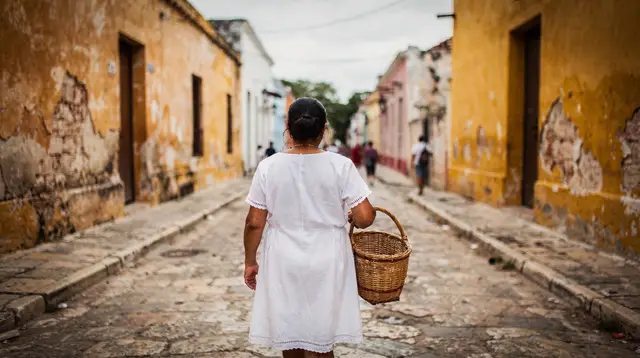
These are our own photographs of the area, not the operator's pictures of this tour — open the tour page to see those.