Día de Muertos in the Yucatán: Hanal Pixán explained
When is Day of the Dead in the Yucatán and what is it called?
It runs from late October to early November, peaking on November 1st and 2nd. In the Yucatán it has its own Maya name and form — Hanal Pixán, meaning 'food of the souls' — distinct from central Mexico's Día de Muertos. Families build altars, cook special dishes like mucbipollo (a large baked tamal), and welcome returning spirits: children first (Oct 31), then adults (Nov 1–2). Mérida hosts processions and altar displays; engage respectfully, as it's a sacred family observance.
At a glance
| Where | Across the Yucatan, most publicly visible in Merida and Valladolid |
| Cost | Free to observe public processions and altar displays; markets/food are pay-as-you-go |
| Time needed | 2-3 nights around Oct 31-Nov 2 to catch the full arc respectfully |
| Getting there | Base in Merida (or Valladolid for a quieter version); both are day-trippable from Cancun |
| Best time | Late October to early November, peaking November 1-2 |
If you picture Day of the Dead as the marigold-and-skull spectacle of Oaxaca or the giant Mexico City parade, the Yucatán will surprise you. Here the observance has its own Maya name, rhythm, and food: Hanal Pixán, “food of the souls.” It is quieter, more domestic, and rooted in Maya tradition rather than the central-Mexican image exported by films. Here is what it actually is, when it happens, and how to experience it without intruding.
When it happens
Hanal Pixán runs from roughly late October into the first days of November, peaking on November 1st and 2nd — the same window as Día de Muertos across Mexico. The days are structured around who is being welcomed back:
- October 31 — U Hanal Palal, the day for the souls of children.
- November 1 — U Hanal Nucuch Uinicoob, the day for adults.
- November 2 — U Hanal Pixanoob, a general day for all souls, often tied to church and cemetery visits.
In the days leading up, families clean and decorate graves, build altars, and cook. The mood is one of reunion and care, not mourning — but it is a serious, heartfelt observance, not a costume party.
How it differs from central Mexico
The broad idea is shared across Mexico — the dead return to visit, and the living feed and welcome them — but the Yucatecan version has its own character:
- The name and language. Hanal Pixán is Maya, and the tradition carries strong pre-Hispanic Maya roots alongside Catholic elements.
- The altars. Yucatecan altars (altares / mesas) tend toward white tablecloths, candles, photos, water, and the favorite foods and drinks of the deceased, often under an arch. They can feel simpler and more intimate than the towering, marigold-heavy ofrendas of central Mexico — though marigolds (xpujuc / cempasúchil) appear here too.
- The food. The centerpiece is mucbipollo (often called pib), an oversized tamal of corn masa, chicken and pork in achiote, wrapped in banana leaves and traditionally baked in an underground pit oven (pib) — the same Maya technique behind cochinita pibil. Families share it and leave portions for the souls.
- The scale. Outside the city it stays largely within homes and cemeteries rather than spilling into huge public parades.
Where to see it
You do not have to crash a family’s altar to experience Hanal Pixán respectfully:
- Mérida hosts the biggest public side. The Paseo de las Ánimas (“Walk of the Souls”) is a candle-lit procession, with participants in traditional dress and face paint, that draws crowds in the days around November 1. The city also stages altar competitions, exhibitions, and cultural events around the center and the Paseo de Montejo.
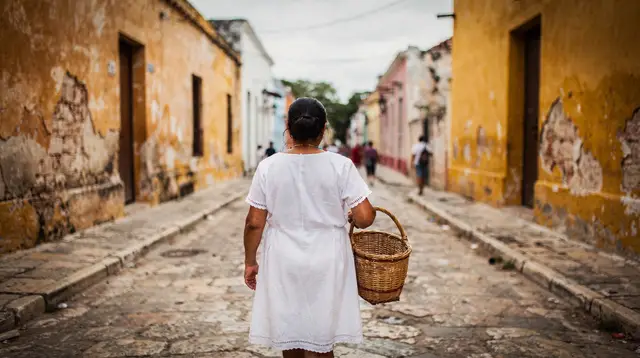
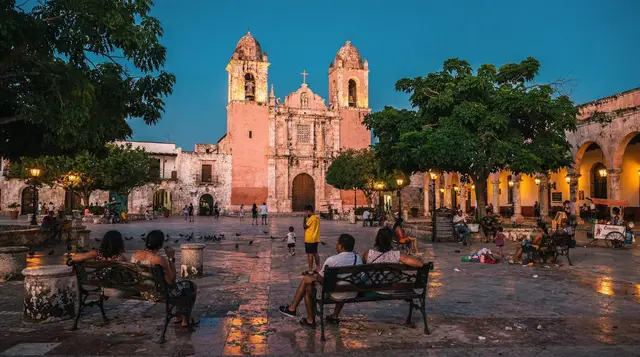
- Valladolid and the pueblos keep it more traditional and home-centered; you may see altars in public buildings, plazas, and church grounds, and pib being cooked in courtyards.
- Cemeteries across the peninsula are cleaned, painted, and decorated, and families gather there — beautiful and deeply personal, so approach with real care.
- Cancún and the Riviera Maya put on more tourist-facing events and altar displays in town squares and some resorts; honest but less rooted than the inland observances.
Confirm exact dates and routes locally each year, as the public processions and event schedules shift annually.
How to be respectful
This is the part that matters most. Hanal Pixán is a living religious and family tradition, not a show staged for visitors:
- Ask before photographing people, altars, and especially anyone at a grave. A family tending an altar is not a photo opportunity.
- Do not touch or take from altars. The food, candles, and objects are offerings for the dead.
- Keep cemeteries quiet and unhurried. If you visit, behave as you would at any grave — softly, briefly, and out of the way.
- Buy from local makers if you want pan, flowers, or crafts — support the community putting on the event.
- Skip the costume mindset. Face paint at a public Mérida procession is one thing; treating a sacred family rite as a backdrop is another. Watch, learn, and stay on the public, invited side of things.
The altar, decoded
If you are invited to see a family altar — or you study the public ones in Mérida — the elements all carry meaning. A typical Hanal Pixán mesa has a white cloth and often an arch marking the doorway for the souls; photos of the deceased; candles to light the way; water to quench the spirits’ thirst after the journey; salt for purification; incense (copal) whose smoke guides the dead; flowers, including marigolds (cempasúchil); and the favorite foods and drinks of those being remembered, from mucbipollo and tamales to chocolate, atole, fruit, and a glass of something they loved.
For children’s day the offerings turn to toys and sweets. Reading an altar this way turns a pretty display into a deeply personal message.
The food of the season
Hanal Pixán is, by name, about food. Beyond the centerpiece mucbipollo (pib), the season brings tamales colados (smooth banana-leaf tamales), atole nuevo (a fresh-corn drink), candied squash and yuca, xpelón tamales (with black-eyed peas), and pan dulce. Markets and home kitchens fill with these in late October. If you want to taste it, ask at the Mérida markets in the days around November 1, or look for community kitchens and event stalls preparing pib — it is cooked in quantity only at this time of year, which makes it genuinely seasonal rather than a year-round menu item.
Don’t confuse it with the movie version
A quick myth-buster, because expectations get set by film and marketing. There is no giant skeleton parade in the Yucatán like the one staged in Mexico City (that parade was actually invented for a James Bond film and only started in 2016). Face paint and Catrina skull makeup belong more to the central-Mexican and commercial image than to traditional Hanal Pixán, though you will see some at Mérida’s public Paseo de las Ánimas. The real Yucatecan observance is quieter, home- and cemetery-centered, and built around food and family rather than spectacle. Come for that, and you will not be disappointed; come expecting a Day of the Dead theme-park parade, and you have the wrong region.
Reading the days as a visitor
It helps to treat the three days as a slow arc rather than a single event. The first day is soft and family-centered, built around the children who are welcomed back. The second carries the heaviest weight, with adults remembered and the biggest meals shared. The last day tends to move toward the church and the cemetery. If you only have one evening, choose the one that matches what you hope to see: the public procession and altar displays in the city are the easiest to reach, while the quieter home rituals are not really meant for outsiders at all.
Pay attention to the small details as you walk around. A glass of water on a table, a plate set at an empty chair, a thread of copal smoke drifting out of a doorway: these are the real texture of the observance. You do not need a guide to notice them, only a willingness to slow down and keep your voice low.
What to eat and drink while you are there
Because the festival is built around food, eating well is part of taking it seriously. Start with the dishes described in our guide to Yucatecan dishes so you recognize what is on the table, then widen out with the Cancún food guide if you are returning to the coast afterward. Markets are the most honest place to try seasonal items, and the vendors are usually glad to explain what each preparation is and who it is for. Eat what is offered for sale, never what has been set out on an altar.
Getting from the coast
Most travelers who want to see Hanal Pixán start on the Caribbean side. The ADO bus guide explains how the long-distance coaches work across the peninsula, and the Cancún car rental guide is worth reading if you would rather drive and stop in smaller towns on the way. If you are still deciding how to move around the region, the getting around the Riviera Maya overview covers the options side by side. Whichever you choose, leave room in the schedule: festival days are not the time for a tight connection. If you’d rather not drive or navigate buses to the inland ruins, a Ek Balam, Valladolid market and cenote tour handles the logistics from Cancún.
Stops that fit the season
If you build a longer loop, a few places sit naturally alongside the observance. Izamal and Mérida both reward a slower pace and have their own churches, plazas, and markets to explore. For ruins that frame the pre-Hispanic roots of the tradition, the Ek Balam guide and the Chichén Itzá day trip give useful context on the Maya world that Hanal Pixán grew out of. From Mérida, a full-day Uxmal and Kabah tour adds another Maya site without the driving. A longer route is laid out in the Yucatán 10-day road trip itinerary, which you can adapt so that the festival days land in Mérida or Valladolid.
Packing and practical habits
Dress modestly and comfortably, especially for anything near a church or cemetery. Bring something light for the evening, a small amount of cash for market stalls, and patience for crowds around the public events. Our Cancún packing list is a good starting point, and the Cancún travel tips cover the general habits that keep a trip smooth. Keep your phone away at altars and graves unless someone has clearly said it is fine to photograph.
Planning a trip around it
If you want to witness Hanal Pixán, plan to be in or near Mérida around October 31 to November 2, and give yourself a couple of nights so you can catch the Paseo de las Ánimas and the altar displays without rushing. Book accommodation early — it is one of Mérida’s busiest cultural moments. Pair it with the city’s regular free-events calendar, a market meal of mucbipollo if you can find it, and a respectful evening among the candles. Done that way, Hanal Pixán is one of the most moving things you can witness in the Yucatán — precisely because it was never made for tourists in the first place.
Where to base yourself
Mérida is the practical base: it has the most public events, the widest range of accommodation, and easy onward access to nearby towns. If you want a quieter, more traditional feel, Valladolid is smaller and closer to the Riviera Maya side of the peninsula, with home altars and church-and-cemetery observances rather than a big public procession. Either town also makes a natural base for pairing Hanal Pixán with the region’s wider Maya culture and history, since the observance draws directly on pre-Hispanic tradition.
Pairing it with the rest of the Yucatán
Because the observance is concentrated in a few days, most visitors build it into a longer Yucatán loop rather than a dedicated trip. Combine it with the colonial center of Mérida, a stop in Valladolid, and a tasting tour of Yucatecan dishes — the region’s cuisine is deeply tied to this season, so late October and early November are an unusually good time to eat well. If you are coming from the coast, both Mérida and Valladolid are reachable as a multi-night detour from a Cancún or Riviera Maya base rather than a single rushed day.
Frequently asked questions about Día de Muertos in the Yucatán
Is Hanal Pixán the same as Día de Muertos? They mark the same window and idea — the dead returning to visit the living — but Hanal Pixán is the Yucatán’s own Maya-rooted version, with its own name, food (mucbipollo/pib), and generally quieter, more home-and-cemetery-centered character than central Mexico’s marigold-heavy imagery.
Can tourists attend Hanal Pixán events respectfully? Yes — public events like Mérida’s Paseo de las Ánimas and altar exhibitions are open to visitors and meant to be seen. The key is treating it as a living family and religious tradition: ask before photographing people or altars, stay quiet and unhurried at cemeteries, and don’t treat it as a costume theme.
Popular Cancún tours on GetYourGuide
Verified deep-linked GetYourGuide tours. Book through these links and we earn a small commission at no cost to you.
These are our own photographs of the area, not the operator's pictures of this tour — open the tour page to see those.