Maya culture in the Yucatán: a living thing, not a ruin
Are the Maya still around in the Yucatán?
Yes — very much so. The Maya are a living people, not an ancient civilization that vanished. Around 800,000 people in the Yucatán Peninsula speak Yucatec Maya today, and Maya language, food, farming, and ceremonies remain part of daily life, especially in inland towns and villages. The famous ruins are heritage, but the culture continues in Mérida, Valladolid, and the pueblos around them. Engaging respectfully means treating it as living, not as a museum.
The single biggest misconception visitors bring to the Yucatán is that the Maya are a lost civilization — a people who built Chichén Itzá and then mysteriously disappeared. They did not. The Maya are a living culture of millions, and Yucatec Maya is spoken every day in markets, kitchens, and villages across the peninsula. Understanding that changes how you experience the whole region. Here is the honest, living version of Maya culture and how to engage with it well.
| At a glance | |
|---|---|
| Where | Mérida (cultural capital), Valladolid and inland pueblos, village markets |
| Cost | Free to observe (plazas, markets); museums like the Gran Museo del Mundo Maya run around 150 MXN |
| Time needed | An evening in Mérida gives a taste; a couple of days in Mérida plus Valladolid goes deeper |
| Getting there | ADO bus or the Maya Train from Cancún to Mérida or Valladolid, around 3.5-4 hours |
| Best time | Year-round; late October to early November for Hanal Pixán altars |
The Maya didn’t “disappear”
What collapsed around 900 CE was the Classic Maya political system in the southern lowlands — cities were abandoned, dynasties fell. But the people remained, the northern cities like Chichén Itzá rose afterward, and Maya communities survived the Spanish conquest, colonization, and the brutal 19th-century Caste War. Today around 800,000 people speak Yucatec Maya (Maya t’aan) in the peninsula, often alongside Spanish. Calling the Maya “ancient” erases the people standing right in front of you.
The language is alive
Listen and you will hear it: place names (Yucatán, Cancún, Cobá, Ek Balam), food words (xnipec, pib, salbut), and conversations in markets and pueblos. Yucatec Maya is one of around thirty Maya languages still spoken across Mexico, Guatemala, and Belize. A few words go a long way and are genuinely appreciated:
- Bix a beel — how are you?
- Ma’alob — good / fine.
- Dios bo’otik — thank you (literally “God repays you”).
You will not need it to travel, but using a word or two signals respect that English and even Spanish do not.
Where the culture lives now
The ruins are heritage; the culture is in the towns and villages:
- Mérida — the cultural capital, where Maya, colonial Spanish, and modern Mexican life layer together. Markets, free evening events, museums (the Gran Museo del Mundo Maya is excellent and contemporary in its framing), and a strong arts scene.
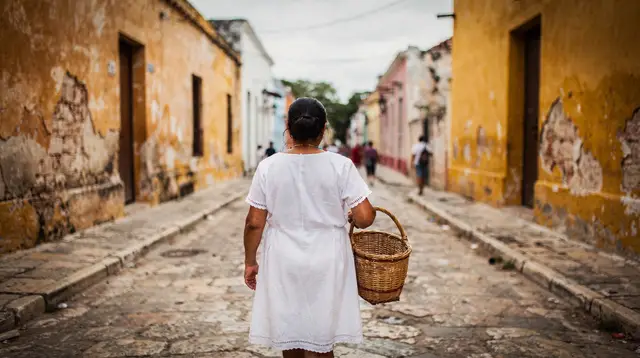
- Valladolid and the pueblos — smaller, slower, and closer to village life, with Maya spoken openly and traditional dress (the embroidered huipil) still worn.
- The milpa countryside — the traditional milpa system of intercropped corn, beans, and squash still feeds rural families, and the pib (underground oven) still cooks cochinita and Hanal Pixán food.
Food is the clearest thread
Yucatecan cuisine is Maya at its core: corn, beans, squash, pumpkin seed, achiote, and underground roasting. Dishes like cochinita pibil, papadzules, and sikil pak descend directly from pre-Hispanic cooking, layered later with Spanish and Lebanese influence. Eating at a market lonchería is one of the most direct, everyday ways to encounter living Maya culture — see the Yucatecan food guide for what to order.
Ceremonies and the calendar
Maya spiritual life persists, often blended with Catholicism. The most visible expression for travelers is Hanal Pixán, the Yucatecan Maya version of Day of the Dead (late October to early November), when families build altars and cook for returning spirits — distinct in mood and detail from central Mexico’s Día de Muertos. You may also encounter the temazcal sweat ceremony, jets’mek’ (a child’s coming-of-age rite), and agricultural rituals like the cha’a chaak rain ceremony in farming communities. These are not performances; treat any you are invited to as the private, sacred events they are.
Engaging respectfully — the honest guidelines
- Drop “ancient” and “mysterious.” Say Maya people, not Mayan (Mayan refers to the languages); and remember they are present-tense.
- Ask before photographing people, especially in traditional dress or at ceremonies. A market vendor is not a backdrop.
- Buy directly from artisans. Embroidery, hammocks, and crafts bought from makers or cooperatives put money where it belongs; haggle gently and fairly, not aggressively.
- Be wary of “Maya experience” packages. Some are run with and by communities and are excellent; others are costumed shows with little local benefit. Choose community-run cooperatives, eco-centers, and village tours where you can.
- Respect the sites. Climbing, touching carvings, and drone-buzzing sacred places is both restricted and disrespectful.
- Learn one word of Maya. Dios bo’otik. It lands.
Crafts and what they mean
The crafts you see in markets are not just souvenirs — many carry real cultural weight. The huipil, the white embroidered dress, varies in pattern and flower motif by community, and a finely hand-embroidered one represents weeks of work (and is priced accordingly; machine-made copies are far cheaper and obvious once you look). Hammocks are a Yucatecan specialty woven on home looms, sized from individual to matrimonial; a good one is tightly woven cotton or nylon and worth paying for. Jipijapa (Panama-style) hats are woven in caves near the town of Becal to keep the fiber pliable. Buying these from cooperatives or directly from makers keeps the money — and the skill — in the communities that hold it.
Music, dance and the everyday arts
Culture here is not only food and ruins — it is sound and movement you can catch for free. The jarana is the signature Yucatecan folk dance, performed in vaquerías (festive gatherings) with women in white huipiles balancing trays or bottles on their heads and couples weaving intricate footwork to brass-and-percussion music. The trova yucateca tradition — romantic guitar-and-voice serenades — fills the evening plazas of Mérida and Valladolid. You will also hear son and regional cumbia at market stalls and festivals. None of it is staged for tourists in the town plazas; it is simply how the region socializes, and watching for half an hour tells you more about living Maya-Yucatecan culture than any ruin placard.
A short, honest history to carry with you
Three turning points explain most of what you will see. The Classic collapse (around 900 CE) ended the great southern city-states but not the people. The Spanish conquest of the Yucatán (mid-1500s) was slow and bitterly resisted, layering Catholic churches onto Maya towns. And the Caste War of Yucatán (1847–1901) was a decades-long Maya uprising — one of the most successful Indigenous revolts in the Americas — that left a deep mark on the peninsula’s identity and still shapes how communities see themselves. Knowing this, the “ruins-and-resorts” postcard reads very differently: as the surface of a long, unbroken, still-contested story.
The easy version of the Yucatán is a bus to Chichén Itzá, a photo, and back to the resort. The richer version treats the ruins as one chapter of a story that is still being written — then spends time in Mérida’s plazas, a Valladolid market, a village lonchería, or a Hanal Pixán altar in early November. The Maya built the pyramids you came to see, and their descendants are cooking lunch around the corner. Meeting the culture as living rather than lost is the difference between sightseeing and actually understanding where you are.
Reading the ruins as heritage, not as the whole story
Ruins still matter, and the best way to visit them is with the living culture in mind. At Chichén Itzá, the day-trip guide covers the practicalities, but the thing to carry in with you is that the descendants of the builders live a short drive away. Smaller sites such as Ek Balam and Cobá tend to feel quieter and more personal, and a visit pairs naturally with a meal or a walk in a nearby village. If you’d rather not organize transport yourself, an Ek Balam, Valladolid market and cenote tour covers all three in one day. If you are weighing which site fits your time, the Chichén Itzá vs Tulum vs Cobá comparison helps you choose without turning the trip into a checklist.
A useful habit is to ask one question at every site: who lives here now? Often the answer is the guide at the gate, the woman selling embroidery near the entrance, or the family running the small restaurant on the road in. Seeing them as part of the place, rather than as scenery around it, is most of what respectful travel means here.
Towns worth slowing down in
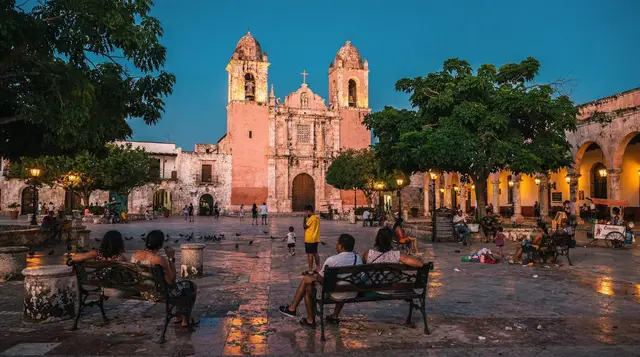
Two inland towns reward an unhurried stay. Valladolid is the easiest base for meeting everyday Maya life: its plaza fills in the evening, its markets sell food you will not find on a resort menu, and the Valladolid colonial guide explains how the old town is laid out. Izamal, the town known for its yellow buildings, layers Maya heritage and colonial architecture in a very visible way, and it is a calm change of pace after the larger sites. Neither needs a tight schedule. Wander, sit in the plaza, eat where the locals eat, and let the day take its own shape. If you are based in Mérida, a full-day Uxmal and Kabah tour from Mérida is an easy way to see the Puuc region’s ruins without a rental car.
If you are building a longer route, the Yucatán road trip itinerary strings several of these inland stops together, and the Cancún, cenotes and ruins itinerary is a shorter way to add some of this to a beach trip. For a deeper look at one site, a private guided Uxmal visit from Mérida lets you ask the questions a group tour skips.
Cenotes, water and sacred geography
Cenotes are not only swimming holes. For the Maya they were a source of fresh water in a land with few rivers, and many were treated as sacred places connected to the underworld. That context changes how you behave there: keep your voice down, follow the posted rules about sunscreen and rinsing, and treat the water with the care you would give a place of worship. Our guide to the best cenotes in the Riviera Maya lists good options, and some are run by local communities, which is a straightforward way to put your money where it helps.
Ceremonies you can join, and how to do it well
The temazcal experience guide describes the sweat ceremony in detail. The key point is to choose a facilitator who treats it as a ritual rather than a spa add-on, to listen to the instructions before you start, and to follow the host’s lead throughout. Ask questions beforehand, not during. If something feels staged or rushed, you are allowed to decline. A good ceremony leaves you quieter than you arrived, and that is a better measure of quality than any promise on a brochure.
Small habits that make a difference
- Eat where the menu is short and the room is busy. Market loncherías and family kitchens are where recipes are kept alive.
- Greet people first. A simple hello before you ask for anything changes the tone of a conversation.
- Slow down your questions. Many people are happy to explain a craft or a dish if you show real interest and are not in a hurry.
- Pay fairly and without fuss. If something is clearly handmade, the price reflects the hours behind it.
- Leave places as you found them. That goes for altars, plazas, cenotes, and ruins alike.
A note for families and first-timers
Travelers with children often ask whether this kind of trip is too heavy. It does not have to be. Markets, plaza music, and a shared meal are easy ways for younger visitors to meet the culture without long explanations, and the Cancún with kids guide has ideas for balancing beach days with something more curious. For first-timers who are still deciding how much of the peninsula to see, the Cancún travel tips guide gives a sensible starting frame, and you can add as much or as little of the inland culture as your time allows.
A simple two-day starting point
If you want a concrete way to meet living Maya culture rather than just read about it, spend one evening in Mérida catching a free plaza event (see the things to do in Mérida guide for the weekly schedule), one market meal of cochinita pibil or papadzules (the Yucatecan food guide explains what to order), and a half-day in Valladolid or a nearby pueblo where Maya is spoken openly in the street. Add the Maya Train or an ADO bus to move between them, and, if your dates align, build the trip around Hanal Pixán — see the Día de Muertos in the Yucatán guide for what that looks like and how to attend respectfully.
Frequently asked questions about Maya culture in the Yucatán
Is it okay to say “Mayan” instead of “Maya”? Not for the people — “Mayan” properly refers to the language family (there are around thirty Mayan languages), while “Maya” describes the people and their culture. Saying “the Maya” rather than “the Mayans” is the small, easy correction that locals notice.
Can travelers attend a real Maya ceremony? Some, respectfully — community-run temazcal sweat ceremonies and certain Hanal Pixán events welcome visitors who ask first and follow the host’s lead, but private rites like jets’mek’ or a family’s own altar are not open events. When in doubt, ask a local guide or your hotel rather than turning up uninvited.
Popular Cancún tours on GetYourGuide
Verified deep-linked GetYourGuide tours. Book through these links and we earn a small commission at no cost to you.
These are our own photographs of the area, not the operator's pictures of this tour — open the tour page to see those.