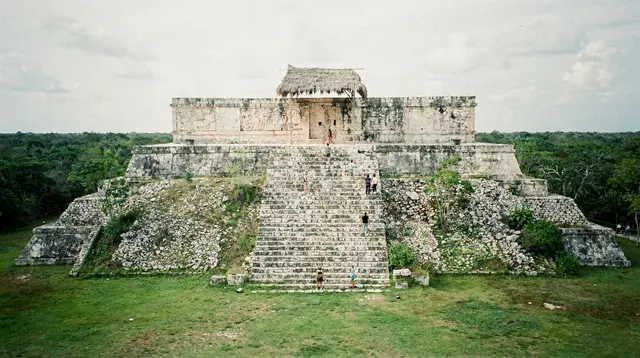
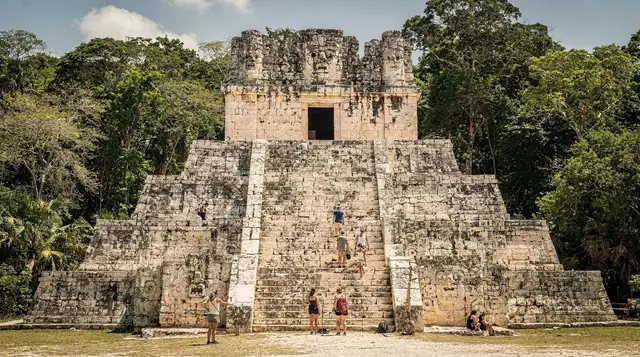
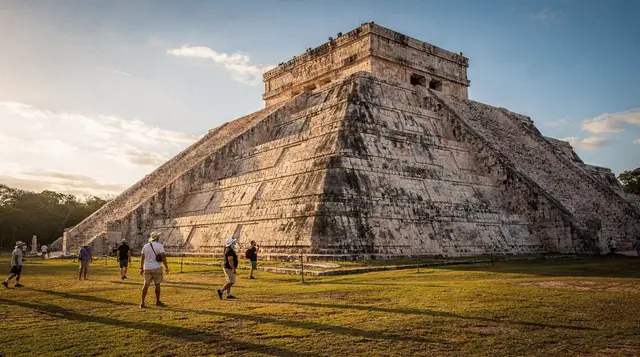
Chichén Itzá is the most famous Maya site in Mexico and one of the New Seven Wonders of the World — the great stepped pyramid of El Castillo is the image everyone arrives with. It absolutely earns the visit. But it’s also hot, crowded, lined with souvenir vendors, and a long way inland, so the difference between a great day and a frustrating one comes down to timing.
At a glance
| Where | Inland Yucatán, roughly 2.5–3 hours from Cancún, 45 minutes from Valladolid |
| Cost | 697 MXN for the combined federal + state entry fee (foreign visitors) |
| Time needed | 2–3 hours on site; a full day round-trip from Cancún |
| Getting there | Rental car, ADO bus, or organized day tour |
| Best time | Right at the 8am opening, dry season (December–April) |
What you’re actually seeing
The site was a major Maya-Toltec city that peaked roughly between 600 and 1200 CE. The centerpiece, El Castillo (the Temple of Kukulcán), is a 24-meter pyramid built with astronomical precision — its 365 steps mirror the solar year, and twice a year at the equinoxes the afternoon light casts a serpent-shaped shadow down its staircase. You cannot climb it (closed to climbing since 2008), so set that expectation now.
Beyond the pyramid, the Great Ball Court is the largest in Mesoamerica with astonishing acoustics, the Temple of the Warriors and its forest of columns are striking, and the Sacred Cenote — a natural sinkhole where offerings (and remains) were thrown — is a short walk through the trees. The El Caracol observatory rounds out the highlights. Budget 2–3 hours to see it without rushing.
The honest catch: heat, crowds, and vendors
Two things define the experience if you get the timing wrong. First, the heat — inland Yucatán is hotter and more humid than the coast, with very little shade on the open plazas. By midday it can be punishing. Second, the crowds: tour buses from Cancún and the Riviera Maya arrive in waves from about 10:30 am onward, and the central plaza around El Castillo gets genuinely packed.
There’s also a small surprise inside the gates: hundreds of handicraft vendors line the walkways selling jaguar whistles, textiles, and carvings, calling out “almost free” as you pass. It’s not a quiet, contemplative ruin like Cobá or Ek Balam. Knowing that in advance helps — a friendly “no, gracias” and keep walking is all you need.
The fix for almost all of this is simple: arrive right at the 8 am opening. You’ll have the pyramid nearly to yourself, cooler air, and better light for photos before the buses roll in.
Tickets and what they cost
Entry is split into two fees that together come to 697 MXN for foreign visitors since January 2026: a federal INAH fee (105 MXN) plus a state of Yucatán fee (592 MXN). Bring cash in pesos to be safe, as card machines at the entrance aren’t always reliable. Children under a certain age and Mexican nationals on Sundays get reduced or free entry. A licensed guide at the entrance costs around 800–1,000 MXN for a group and genuinely adds context — the ruins don’t explain themselves.
Getting there from Cancún
Chichén Itzá sits about 2.5 to 3 hours inland from Cancún — this is the classic confusion to avoid: it is nowhere near Tulum or the coast. Your options:
- Organized day tour: the easiest, often bundling a cenote swim and a Valladolid stop with lunch — see our Chichén Itzá day trip guide for how these run. The downside is you usually arrive mid-morning with the crowds. A Chichén Itzá, cenote and Valladolid tour with lunch is the most popular version.
- ADO bus: a comfortable, cheap direct service from Cancún (see our ADO bus guide), but the schedule can leave you arriving later than ideal.
- Rental car: the best way to beat the crowds — drive the toll highway (cuota) and be at the gate for opening. Reckon on tolls of roughly 500–600 MXN round-trip plus fuel.
The smartest move many first-timers miss: base yourself in Valladolid the night before. It’s only about 45 minutes away, so you can reach the gate at opening with no pre-dawn start from the coast.
Pair it with a cenote and Valladolid
The dry inland heat makes a cenote swim the perfect afternoon reward — Ik Kil, near the ruins, is the famous one (and busy), while quieter cenotes cluster around Valladolid; our cenotes of the Riviera Maya guide covers the options. The colonial town of Valladolid itself, with its pastel streets and excellent Yucatecan food, makes the long inland trip feel like more than a single monument — see our Valladolid day trip guide. Combined, they turn a tick-box ruin visit into a genuinely good day, and our 4-day cenotes-and-ruins itinerary shows how to fit it all in.
Chichén Itzá vs. Cobá vs. Tulum
| Chichén Itzá | Cobá | Tulum ruins | |
|---|---|---|---|
| Feel | Grand, restored, crowded | Jungle-buried, active | Small, cliffside, coastal |
| Getting around | Walk the central plaza | Bike or pedicab through forest | Short walk |
| Distance from Cancún | ~2.5–3 hrs | ~2 hrs | ~2 hrs |
| Best for | The iconic postcard image | Adventure and quieter crowds | Combining ruins with a beach |
See our full Chichén Itzá vs. Tulum vs. Cobá comparison for a deeper breakdown, and our Cobá ruins guide if you’re weighing the jungle site instead.
The equinox — worth it or not?
Twice a year, around the spring (late March) and autumn (late September) equinoxes, the late-afternoon sun casts a shadow down El Castillo’s northern staircase that looks like a serpent slithering toward the carved snake heads at the base — a deliberate piece of Maya astronomical design. It’s genuinely remarkable, but be honest about the trade-off: those are the most crowded days of the year, with tens of thousands of people packed onto the plaza, and the effect depends on clear skies. If you happen to be in the Yucatán then, it’s a special thing to witness; it is not worth bending an entire trip around, since the ruins are just as impressive (and far calmer) on an ordinary morning.
Walking the site: a route that works
Most people head straight for El Castillo, take the same photo as everyone else, and wander off without a plan. A little structure makes the visit feel far less like a scramble. Enter, pause at the first view of the pyramid, then resist the urge to join the crowd at its base. Start instead with the quieter structures and come back to the main plaza once you have a feel for the place.
A sensible order is to walk the main plaza first while it is still calm, then move on to the Great Ball Court and the Temple of the Warriors with its columns. After that, follow the path through the trees to the Sacred Cenote, and finish at El Caracol, where the observatory’s odd round shape rewards a slower look. Doing the loop this way means you see the busiest spots at the start, when you have the best chance of space, and you save the shaded walk for the hotter part of the morning.
Take your time at the Great Ball Court. Stand at one end and listen: the acoustics are the reason many visitors remember this spot more than the pyramid. A guide will usually show you the trick, and it is one of the moments where paying for context really changes what you notice.
Is a guide worth it?
The ruins are impressive on their own, but they say very little. There are few signs, and without someone to explain the carvings, the astronomy and the ball game, much of it turns into “big old stones.” A licensed guide at the entrance turns the same walk into a story, and splitting the cost with other travelers in your group keeps it reasonable. If you come with an organized tour, such as a classic Chichén Itzá day tour with lunch, the guide is usually included, which is one of the genuine advantages of going that way; our Chichén Itzá day trip guide explains how those tours are put together.
If you prefer to explore alone, read up beforehand. Our Maya culture guide gives enough background that the buildings make sense as you walk past them, and you can still hire a guide for just the first part of the visit if you want a short introduction before going off on your own.
Making the day easier on yourself
A long inland day works best when you treat it as a full outing rather than a rushed errand. Eat a proper breakfast before arriving, because food options near the ruins are limited and the queues build up quickly later on. Keep the cenote swim and the Valladolid lunch for the afternoon, when you will be tired and hot and will appreciate both far more. For a calmer pace, a private Chichén Itzá tour with cenote swim lets you set the schedule.
If you are traveling with children, the heat is the main challenge. Take regular breaks in the shade of the trees, keep water to hand, and let them set the pace. Our Cancún with kids guide has more ideas for keeping a family comfortable on longer days out, and the family-friendly cenotes make a good reward after the ruins.
Remember the practical side of getting back, too. Whether you are on a bus, a tour or driving yourself, the return leg takes as long as the outbound one, so plan to be back on the coast in the evening rather than expecting a quick hop home. If you are staying in the Hotel Zone, our Cancún airport to Hotel Zone page and the Hotel Zone destination page help you picture the start and end of the journey.
When to go in the year
Timing matters on two levels: the season and the hour. The dry months bring clearer skies and more comfortable walking, but they also bring more visitors. Outside that window you may find fewer people, though you should expect more heat, more humidity, and the chance of a sudden downpour. Our best time to visit Cancún guide and the month-by-month blog post cover how the seasons feel across the region, and if you are traveling during storm season, check the hurricane season guide before booking a long inland day.
Whatever the month, the same rule holds: the first hour after opening is the best hour of the day. You get cooler air, softer light, and room to move, and by the time the first large groups arrive you are already heading for the cenote.
Other ways to build the trip
Chichén Itzá does not have to be a stand-alone outing. If you want to see more of the Yucatán interior, pair it with Ek Balam, a quieter site where visitors can take their time, or with the elegant colonial streets of Izamal and the city of Mérida. Our Yucatán 10-day road trip shows how these places link together if you have the time, and the honest day-trip ranking helps you decide where Chichén Itzá sits among the alternatives from Cancún.
For travelers short on days, the 3-day Cancún itinerary and the Maya Train guide are useful starting points for working out whether a long inland day fits your plans or whether a closer ruin makes more sense.
What to bring
The open plazas and inland heat make preparation matter more here than at most sites:
- Water — more than you think; there’s little shade and you’ll be walking for hours.
- Hat, sunglasses, and sunscreen.
- Comfortable walking shoes for uneven stone ground.
- Cash in pesos for the two entry fees, a guide, and parking.
- A light, breathable layer — and patience for the vendor gauntlet.
Drones are restricted, tripods need a permit, and the site closes mid-afternoon, so an early arrival also guarantees you’re not rushed at the end.
Quick first-timer checklist
- Go at 8 am; skip the midday bus crush.
- Bring water, a hat, sunscreen, and comfortable shoes — there’s little shade.
- Carry pesos in cash for entry and the guide.
- Decide in advance you’ll enjoy the vendors rather than fight them.
- Don’t try to combine it with a beach day — it’s a full day on its own.
Frequently asked questions about Chichén Itzá
Can you still climb El Castillo at Chichén Itzá? No — climbing has been prohibited since 2008 to protect the structure. You can walk around its base and admire the scale, but standing on the summit is no longer possible at this site.
Is Chichén Itzá or Tulum better for a day trip from Cancún? They’re different trips. Chichén Itzá is the grander, more historically significant ruin but a longer inland drive with more heat and crowds; Tulum’s ruins are smaller but sit on a dramatic Caribbean cliff and pair easily with a beach day. Many first-timers do both on separate days if time allows.