Valladolid: the colonial town worth slowing down for
Is Valladolid worth visiting?
Yes — Valladolid is one of the Yucatán's most charming colonial towns and a far calmer base than Cancún or Tulum. Highlights are the pastel Calzada de los Frailes, the central plaza and San Servacio church, the San Bernardino convent, and Cenote Zaci right in town. It's also the closest base to Chichén Itzá and Ek Balam. Most people day-trip it, but staying a night to see it after the tour buses leave is the better experience.
Valladolid is the Yucatán town most people see for ninety rushed minutes on the way back from Chichén Itzá — and almost everyone wishes they had stayed longer. It is a designated Pueblo Mágico: pastel colonial streets, a swimmable cenote in the middle of town, and Yucatecan food at local prices, all an easy stroll from the plaza. Here is how to do it properly, and why an overnight beats a coach-tour pit stop.
| At a glance | |
|---|---|
| Where | Inland Yucatán, roughly 2–2.5 hours west of Cancún, ~45 min from Chichén Itzá |
| Cost | Cenote Zaci around 30 MXN; hotel rooms roughly 800–2,500 MXN/night |
| Time needed | A half-day covers the highlights; one overnight is the sweet spot |
| Getting there | ADO bus from Cancún, Playa del Carmen or Mérida, or by car |
| Best time | Early morning or after ~4–5pm, once the tour coaches leave |
The colonial core
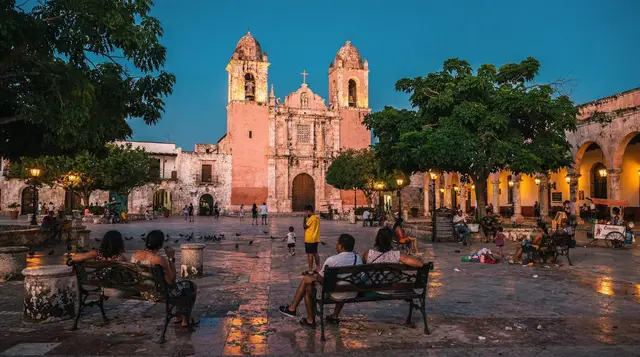
Founded by the Spanish in 1543 on top of the Maya town of Zací, Valladolid wears its layers openly. Start at the Parque Principal (the central plaza), anchored by the Iglesia de San Servacio and ringed by arcaded buildings, the casas confidentes love seats, and street-food carts in the evening. The pace is slow on purpose — this is a town for sitting, not ticking off sights.
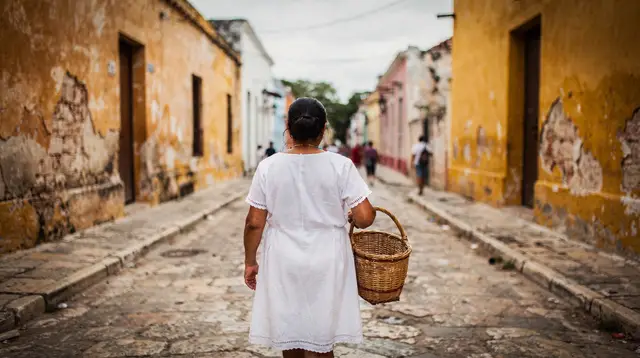
The signature walk is the Calzada de los Frailes, a short, photogenic street of low pastel houses, boutiques, mezcal bars, and cafés running toward the convent. It is genuinely lovely in early morning or late afternoon light, and crowded with day-trippers in the middle of the day.
San Bernardino convent
At the end of the Calzada stands the Convento de San Bernardino de Siena (16th century), one of the oldest churches in the Yucatán, with a fortress-like facade, a cloister, and a cenote in its grounds. Entry is a few tens of pesos. In the evening there is sometimes a free video-mapping light show projected onto the facade — check the day’s schedule with your hotel, as it runs seasonally and not every night.
Cenote Zaci — swim in the middle of town
Valladolid’s party trick: Cenote Zaci, a large semi-open cenote right in the town center, a few blocks from the plaza. You can swim among the hanging vines and catfish, with carved steps down and a small restaurant above. Entry is around 30 MXN — one of the cheapest cenote swims in the whole peninsula. It is busier and a touch greener than the wild cenotes outside town, but the location is unbeatable.
For clearer water, the famous Cenote Suytun (with its iconic light-beam platform) and Cenote Oxman sit a short drive or colectivo ride away, each around 150–300 MXN. Suytun’s photo is gorgeous but the queue for the platform shot can be long; go early. A private Ek Balam tour with lunch and Cenote Suytun is one way to combine the two.
Markets, food and shopping
Valladolid eats well and cheaply. The Mercado Municipal and the loncherías around it serve Yucatecan classics — and the town’s own longaniza de Valladolid (smoked sausage) is a local specialty worth ordering grilled in tacos. A full market meal runs 60–120 MXN. For sit-down dining, the restaurants around the plaza and on the Calzada are pricier but still reasonable.
Shopping leans toward genuine craft: embroidered huipiles, hammocks, and honey. Buy from cooperatives and makers where you can — the artisan market and shops on the Calzada have both honest craft and tourist filler, so look before you buy.
The base for ruins
Valladolid’s other strength is location. It is the closest town to Chichén Itzá (about 45 minutes) and to Ek Balam (about 30 minutes), and well placed for Cobá. Basing here lets you reach Chichén Itzá at the 8am opening, ahead of the Cancún and Mérida tour buses that arrive mid-morning — the single best trick for beating the crowds and the heat. See the Chichén Itzá day trip from Cancún: how to do it right guide for the full plan. Ek Balam, smaller and climbable, makes a perfect half-day from town — see the Ek Balam ruins guide: climb the Maya acropolis. If you’d rather not organise transport, a full-day Ek Balam and Valladolid tour covers both in one go. If you can’t decide which ruin fits your trip, Chichén Itzá vs Tulum vs Cobá: which ruins to visit compares all three.
When to visit — seasonality
| Season | Weather | Crowds | Notes |
|---|---|---|---|
| Dec–Apr (dry) | Warm, low humidity, little rain | Busiest — peak tour season | Best light for the Calzada; book cenotes early |
| May–Jun | Hot, building humidity | Moderate | Good value, fewer coach groups |
| Jul–Aug | Hot, afternoon storms | Busy (school holidays) | Inland, so no sargassum, unlike the coast |
| Sep–Nov | Hurricane season, rain more likely | Quietest | Cheapest hotel rates; watch storm forecasts |
Where to stay
Valladolid’s hotels cluster around the plaza and the Calzada de los Frailes — both put you within walking distance of the church, Cenote Zaci and the evening food carts. Boutique guesthouses in restored colonial homes are common and good value compared with the coast; budget hostels also cluster near the bus terminal. If you are basing here to hit Chichén Itzá at opening, a plaza-area hotel that lets you leave by 6.30–7am is worth prioritizing over one further out.
Why stay overnight
Here is the honest pitch against day-tripping: the coach tours arrive around lunchtime, flood the Calzada and plaza for an hour, and leave. Valladolid in the early morning and evening — once the buses are gone — is a different, far better town. Streets empty, the light softens, the plaza fills with locals and food carts, and you can have the Calzada nearly to yourself.
A night here costs little: comfortable boutique and budget hotels run 800–2,500 MXN, far below Cancún or Tulum rates. Stay one night and you get an early Chichén Itzá run, a relaxed evening on the plaza, and the town at its best on both ends of the day.
Fitting Valladolid into a wider Yucatán trip
Valladolid works best as the hinge of an inland loop rather than a side trip bolted onto a beach holiday. If you are building a longer route, the Yucatán 10-day road trip puts it where it belongs, between the coast and the colonial and Maya sights further west. For a shorter plan that mixes ruins and swimming holes, the Cancún cenotes and ruins 4-day itinerary shows how an inland night can slot in without wrecking the rest of the week.
Travelers heading on to the state capital will find that the pace changes again: Mérida is a bigger, busier city with its own food scene and evening life, so Valladolid makes a gentle warm-up before it. The town’s own destination page collects the basics in one place if you only need a quick reference.
If you are still deciding how much of the Yucatán to see, the ADO bus guide for the Yucatán explains how the long-distance coaches link these towns, which matters if you are travelling without a car. And if swimming is the main draw of your trip, the best cenotes in the Riviera Maya guide covers the coastal options so you can compare them with the in-town and outlying cenotes described here.
What to do with a free morning or afternoon
Because the town is small, it rewards unstructured time. Here are a few ways to spend it that do not require a plan:
- Walk a loop with no destination. Leave the plaza, take a side street off the Calzada de los Frailes, and look at the painted doors, the ironwork, and the courtyards visible through open entrances. The colonial grid makes it hard to get lost, and the best details are rarely on the main street.
- Sit and watch. The plaza is a working public space, not a stage set. Pick a bench, order something cold from a nearby café, and let an hour go by. This is the cheapest way to understand why people choose to stay.
- Pair a cenote swim with a slow lunch. Swim at Cenote Zaci in the heat of the day, then eat in the shade nearby rather than pushing on to another sight. The combination is exactly what the midday hours are for.
- Look inside the church. The Iglesia de San Servacio is an active parish church, so dress modestly, keep your voice low, and avoid walking in during a service.
- Visit the market early. The Mercado Municipal is at its liveliest in the morning, when locals do their shopping, and it is the best place to taste the town’s food at an everyday pace.
Respecting the town
Valladolid is a place where people live, not only a stop for visitors. A few small habits go a long way. Greet shopkeepers and stallholders before you ask a question, ask before photographing people or their stalls, and carry small bills so a small purchase does not become an awkward exchange. In churches and the convent, treat the space as a place of worship first and a photo spot second. If you want the cultural background behind what you see on the streets, the Maya culture in the Yucatán guide explains how the Maya heritage is still part of daily life here, and the Día de Muertos in the Yucatán guide is worth reading if your dates fall around that festival, when the town’s traditions are especially visible.
Eating your way through the town
Food is one of the best reasons to stay a night. Breakfast in the market is a good way to start: simple plates, strong coffee, and a counter full of locals. At lunch, look for the loncherías around the market, which tend to put the day’s specials on a handwritten board. In the evening, the plaza carts and the restaurants along the Calzada offer a more relaxed, sit-down option.
If the regional dishes are new to you, the Yucatecan dishes guide explains what to order and what the names mean, which makes a market menu much less intimidating. Ordering a few small plates to share is a good way to try several things without overcommitting. And if you want to compare with what the coast offers, the Cancún food guide shows how different the two food scenes feel.
Choosing between Valladolid and the coast
It helps to be honest about what kind of trip you are taking. Valladolid suits travelers who enjoy walking, eating, and small-town atmosphere, and who do not mind a hotter, less breezy climate. It does not suit anyone who measures a holiday by sand and sea. If you are weighing a few bases against each other, the Cancún vs the Riviera Maya comparison helps you decide how much of your time belongs on the coast and how much inland. Many travelers split their trip: a few beach days first, then one or two inland nights, then back to the coast for the last stretch, so the heat and the driving never feel like a chore.
Practical tips
- Getting there. ADO buses connect Valladolid with Cancún, Playa del Carmen, Mérida, and Tulum; the Maya Train also stops nearby. With a rental car the town is an easy hub for the inland sights.
- Getting around. The center is small and flat — walk everywhere. Colectivos and taxis handle the nearby cenotes and ruins.
- Cash. Carry pesos; market stalls, Cenote Zaci, and small cenotes are cash-only.
- Heat and water. It is inland and hot; carry water and save the midday hours for a cenote swim or a shaded lunch. Tap water is not potable.
- Timing. Visit cenotes and ruins early, save the plaza and Calzada for golden hour, and let the day-trip crowds do the opposite.
How long to give it
A half-day lunch stop is enough to say you saw it and not enough to enjoy it. One overnight is the sweet spot: arrive mid-afternoon, walk the Calzada and plaza in the evening light, sleep, and do Chichén Itzá or Ek Balam at opening the next morning before the heat. Two nights lets you add a couple of outlying cenotes (Suytun, Oxman, Hubikú) and a slower pace without rushing. Any longer and you will have seen the town itself, though it makes a calm, cheap base for exploring the whole inland Yucatán if you have a car.
A relaxed Valladolid evening
The town is built for golden hour. As the day-trip buses pull out around 4–5pm, the plaza shifts into local gear: families, balloon sellers, marquesita and elote carts, and couples on the S-shaped casas confidentes. Grab a marquesita, sit under the laurels, then wander the lamp-lit Calzada de los Frailes when the pastel walls glow and the boutiques and mezcalerías open. Dinner of local longaniza tacos or a sit-down Yucatecan plate, an early night, and an early ruins start the next day — that is Valladolid at its best, and it is the exact rhythm a coach tour can never give you.
A few honest caveats
It is small. If you need nightlife, beaches, or a big choice of restaurants, Valladolid will feel sleepy — that is the point, but know it going in. The famous cenote photos (Suytun’s light beam especially) draw queues, so arrive at opening or skip the shot. Some shops on the Calzada lean touristy and overpriced; the real bargains and craft are in the market and the cooperatives. And it is genuinely hot inland, with little sea breeze — plan around the midday sun and a cenote swim, not against them.
Valladolid rewards exactly the thing tour itineraries deny it — time. Give it an evening and a morning instead of a lunch stop, and it becomes one of the most memorable corners of the Yucatán. If you are coming from the coast without a car, a Chichén Itzá, cenote and Valladolid tour is an option, and see the Valladolid day trip from Cancún: colonial town and cenotes guide for bus and transport options, and Maya culture in the Yucatán: a living thing, not a ruin for more on the history behind the town and its ruins.
Frequently asked questions about Valladolid
Is Valladolid safe to walk around at night? Yes — it is one of the calmer, safer towns in the Yucatán, and the plaza and Calzada are well lit and busy with families and food carts into the evening. Normal city-travel caution still applies.
Do you need a car to enjoy Valladolid? No. The center is flat and walkable, and colectivos and taxis reach Cenote Zaci, Ek Balam and the outlying cenotes cheaply. A car only helps if you want to loop several ruins and cenotes in one day.
Popular Cancún tours on GetYourGuide
Verified deep-linked GetYourGuide tours. Book through these links and we earn a small commission at no cost to you.
These are our own photographs of the area, not the operator's pictures of this tour — open the tour page to see those.