ADO bus guide for the Yucatán: routes, prices, booking
How does the ADO bus work in the Yucatán?
ADO runs comfortable, air-conditioned intercity coaches across the Yucatán with assigned seats and fixed fares. From Cancún you reach Playa del Carmen (~100 MXN), Tulum (~250 MXN), Valladolid (~250 MXN) and Mérida (~600 MXN). Book at the terminal, on the ADO app/website, or at OXXO shops. It is reliable and safe — the cheapest comfortable way to travel between towns.
At a glance
| Where | Terminals in downtown Cancun, Playa del Carmen (Fifth Avenue), Tulum and beyond |
| Cost | Around 80 MXN (Playa) to 700 MXN (Merida) one-way, depending on distance |
| Time needed | Book 15-20 minutes ahead of departure; journeys run 1-4.5 hours |
| Getting there | Book at the terminal counter, on the ADO app/website, or at an OXXO store |
| Best time | Any time of year; book a day ahead in high season for popular routes |
ADO is the backbone of intercity travel in southeast Mexico: a dependable network of air-conditioned coaches connecting Cancún, the Riviera Maya and the wider Yucatán. For anyone not renting a car, it is the comfortable, safe, fairly priced way to get between towns — far better than overpriced taxis and far comfier than a packed colectivo for longer trips.
What ADO is
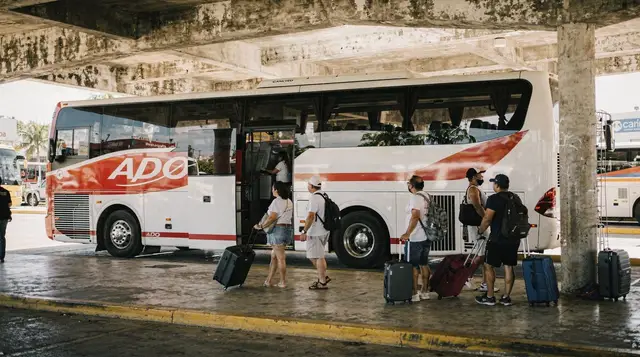
ADO buses are full-size highway coaches with assigned seats, air conditioning (bring a layer — it gets cold), reclining seats, onboard toilet on longer routes, and luggage stowed underneath. There are tiers: standard ADO, the pricier ADO GL/Platino (more legroom), and the budget OCC. For most travellers standard ADO is the right balance of comfort and price.
Key routes and fares from Cancún
Approximate one-way fares (they vary by time and demand):
- Cancún ↔ Playa del Carmen: ~80–110 MXN (~5–6 USD), ~1 hour.
- Cancún ↔ Tulum: ~250–300 MXN, ~2.5 hours.
- Cancún airport (CUN) ↔ downtown Cancún: ~120 MXN.
- Cancún airport ↔ Playa del Carmen: ~250 MXN, direct.
- Cancún ↔ Valladolid: ~250–350 MXN, ~2–2.5 hours.
- Cancún ↔ Mérida: ~500–700 MXN, ~4–4.5 hours.
- Playa del Carmen ↔ Tulum: ~100–140 MXN.
- Cancún ↔ Chichén Itzá: ~350–450 MXN (limited departures — check the timetable).
Buy early for popular routes in high season; the cheaper standard-class seats sell out and you get pushed to pricier GL fares.
How to book
Three easy ways:
- At the terminal counter — pay cash (MXN) or card. Simplest for next-departure travel.
- ADO app or ado.com.mx — reserve a specific seat and time in advance; you get a QR code. The site sometimes blocks foreign cards, so try a couple of cards or use PayPal if offered.
- At OXXO convenience stores — staff can print ADO tickets; handy when the website rejects your card.
Arrive 15–20 minutes early, keep your QR or printed ticket ready, and note your platform (anden) number on the screens.
Terminal tips
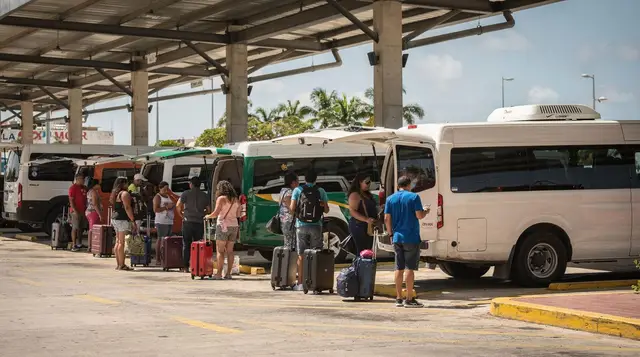
- ADO terminals are central in each town (Cancún’s main terminal is downtown near the ADO/Mercado 28 area; Playa del Carmen’s is right on Fifth Avenue).
- Toilets at terminals usually cost ~5–10 MXN — keep coins.
- Watch your bags in the waiting area as anywhere, but ADO travel is generally very safe.
- For luggage stowed below, keep your claim tag.
ADO vs colectivo vs Maya Train
- Colectivo (shared van): cheaper for short coastal hops (Playa–Tulum ~50 MXN vs ADO ~120 MXN) and more frequent, but cramped with limited luggage room. Best for quick coastal trips.
- ADO: the winner for longer routes, with luggage, or when you want a guaranteed seat and air conditioning — Cancún to Mérida or Valladolid, airport runs, anything over an hour.
- Maya Train: the new Tren Maya also links inland hubs (Cancún, Valladolid, Chichén Itzá, Mérida). It can be scenic and comfortable, but stations are sometimes far from town centres and schedules are still maturing, so ADO remains the more flexible, frequent option for now. Compare both for inland trips.
Is ADO safe? (Yes)
ADO is one of the safest and most respected bus operators in Mexico. The coaches travel main highways, terminals are monitored, and intercity ADO travel is routine for locals and tourists alike. Standard sensible precautions apply: keep valuables in your daypack on your lap rather than in the overhead or the hold, keep your luggage claim tag, and stay aware in busy terminals as you would anywhere. Overnight long-hauls exist for far-flung routes, but most Yucatán trips from Cancún are daytime and short.
Day trips built around ADO
Plenty of the region’s best day trips work on ADO alone, no car needed:
- Valladolid: ADO from Cancún (~2–2.5 h), then walk the colonial centre and reach a cenote by taxi or colectivo.
- Mérida: longer (~4 h) but very doable as an overnight, with the historic centre right by the terminal.
- Tulum: ADO drops you in the pueblo; from there a bike or taxi reaches the ruins and beach.
- Playa del Carmen: the terminal sits on Fifth Avenue, steps from the Cozumel ferry — ideal for a Cozumel day trip.
For Chichén Itzá, ADO works but departures are limited and timing is tight for the early arrival that beats the heat and crowds, so many people prefer a tour or rental car for that specific site. If you want Valladolid covered too, an Ek Balam, Valladolid and cenote day tour handles the logistics.
Common mistakes to avoid
- Assuming you can just turn up for popular routes in high season — standard seats sell out and you pay for pricier GL. Book a day ahead.
- Confusing OCC with ADO — OCC is the budget sister brand; cheaper, a bit less comfortable, fine for short hops.
- Underdressing — the air conditioning is genuinely cold on long rides; bring a layer.
- Cutting it fine on the last departure — check the final bus back before committing to a day trip, especially from smaller towns.
Practical money tips
- Pay in pesos; if a card terminal offers USD, decline and choose MXN.
- Standard ADO is cheap enough that paying for GL is rarely necessary unless you want the legroom on a 4-hour ride.
- Keep small bills for terminal toilets and snacks.
- The ADO app sometimes shows promo fares cheaper than the counter — worth a quick check before you queue.
What to expect on board
Seats are assigned, so check your seat number (asiento) on the ticket before boarding — staff will point you to the right row if you’re unsure. Most coaches show a movie (usually dubbed or subtitled in Spanish), and the air conditioning is set genuinely cold, so a light hoodie or scarf makes a big difference on anything over an hour. Snacks and water are not always sold on board, so grab something at the terminal beforehand. Wifi is offered on many routes but can be patchy — don’t rely on it for anything important.
Using ADO for cenotes and ruins day trips
ADO alone gets you a long way into the region’s best inland day trips. It’s the standard way to reach Valladolid and Chichen Itza without a rental car, and from the Valladolid terminal a short taxi or colectivo reaches cenotes near Tulum or the town’s own cenotes.
If your day trip is built entirely around ruins and swimming, our Chichen Itza day trip guide and best cenotes in the Riviera Maya guide both note where ADO gets you and where a taxi or tour is more practical for the last mile. For a broader look at getting around without a car, see our getting around the Riviera Maya guide.
Planning a bus-based trip around the region
Because the main towns sit along one corridor, ADO lends itself to a simple rhythm: pick a base, take a bus to the next town when you are ready to move, and use short taxi or colectivo hops for the last stretch. A first-timer who does not want to drive can string together a whole week this way without ever feeling stuck.
If you are still deciding where to sleep, our where to stay in Cancún guide and the comparison of Cancún, Playa del Carmen and Tulum help you choose a base that suits a bus-first plan. Staying near a terminal saves a lot of hassle on departure mornings, especially with luggage.
For a ready-made rhythm, the Riviera Maya 7-day itinerary and the Yucatán 10-day road trip both map out sensible stops. The road-trip version assumes a car, but nearly every leg can be swapped for an ADO ride if you would rather not drive.
Getting from the airport to your first night
Most arrivals begin at the airport, and ADO is one of the simplest ways to leave it. The coaches wait in a clearly signed area outside arrivals, tickets are sold at a counter inside, and the ride is far calmer than haggling with a taxi after a long flight. Our Cancún airport to hotel zone guide compares the options side by side, so you can see when the bus is the obvious pick and when a transfer makes more sense for your group. If you land late or arrive with a lot of luggage, a private Cancún airport transfer removes the guesswork.
If your hotel is in the beach strip rather than downtown, remember that the main terminal is in the city centre. Plan a short extra hop by local bus or taxi to finish the journey.
Travelling with luggage, kids and early starts
Luggage goes in the hold underneath, so large suitcases are not a problem, but keep anything valuable, medication and documents with you in a small daypack. Dress warmly for the cabin, and carry a snack and water, since onboard service is not guaranteed.
Families usually find the bus easier than a colectivo: seats are assigned, there is room to move, and the longer routes have a toilet on board. Our Cancún with kids guide covers the wider logistics, and the same advice applies here: book ahead, avoid tight connections, and keep the first and last legs of the day short.
For early starts, such as catching a morning departure to the ruins, check the evening before where your platform is and how long the walk from your hotel takes. Terminals are busy, and a calm arrival beats a sprint to the door.
When a different option makes more sense
ADO is excellent between towns, but it does not replace everything. If you want to hop between several cenotes or beaches in a single day, a rental car or a guided tour will usually suit you better than a chain of buses and taxis; a Cobá, Tulum, cenote and Playa del Carmen tour packs several stops into one day. For a clear picture of the coast-specific choices, see Cancún to Tulum transport, and if you would rather ride the rails inland, our Maya Train guide explains what to expect from stations and schedules.
A good rule of thumb is to let the bus carry you between bases, then choose the local transport that fits each place. That keeps costs low, keeps you relaxed, and leaves you free to enjoy the destination instead of the logistics.
Bottom line
For intercity travel across the Yucatán, ADO is the cheapest reliable comfortable option — book ahead for busy routes, use OXXO if the website rejects your card, and save colectivos for short coastal hops. It pairs naturally with day trips to Valladolid, Chichén Itzá and Tulum, and it beats paying many times the fare for a private taxi.
Popular Cancún tours on GetYourGuide
Verified deep-linked GetYourGuide tours. Book through these links and we earn a small commission at no cost to you.
These are our own photographs of the area, not the operator's pictures of this tour — open the tour page to see those.