Maya Train guide: routes, stations and is it worth it
Is the Maya Train worth taking from Cancún?
It can be, for inland trips like Valladolid, Chichén Itzá and Mérida — the coaches are modern and comfortable. The catch: several stations sit far from town centres, so you add a taxi at each end, and schedules are still maturing. For the coastal corridor (Playa, Tulum) colectivos and ADO remain faster and more frequent. Book via the official app/website or the station counter.
The Tren Maya (Maya Train) is Mexico’s flagship railway across the Yucatán Peninsula, connecting Cancún with inland towns, archaeological sites and onward to Campeche, Palenque and beyond. It is a real, working option now — but it is still settling in, and whether it beats the bus depends entirely on where you are going. Here is the honest picture.
| At a glance | |
|---|---|
| Where | Cancún to Chichén Itzá, Valladolid, Mérida (inland loop); a coastal branch toward Playa del Carmen and Tulum |
| Cost | Roughly a few hundred pesos for short hops, up to around 1,000+ MXN for Cancún-Mérida depending on class |
| Time needed | Cancún to Mérida runs around 4-5 hours by train, similar to ADO once transfers are counted |
| Getting there | Book via the official Tren Maya app/website or the station counter; bring passport/ID |
| Best time | Any season; book ahead for Chichén Itzá departures and holiday periods |
What the Maya Train is
A modern, air-conditioned passenger railway running a long loop around the peninsula, with comfortable coaches (standard and premium classes), large windows and a smoother ride than a bus on the long inland stretches. For Cancún visitors the most relevant stretch runs west toward Valladolid, Chichén Itzá, Izamal and Mérida, with a branch serving the airport and the coast toward Playa del Carmen and Tulum.
Stations and the catch
This is the thing to understand before you buy a ticket: several stations are built well outside the towns they serve. A station “for” a town can be many kilometres away, meaning a taxi or shuttle at both ends. That extra cost and time can erase the train’s advantage for short trips. Notable points:
- Cancún has stations including one at the airport and one in/near the city — confirm which one matches your start point.
- Chichén Itzá has a dedicated station, which is genuinely convenient for the ruins.
- Valladolid and Mérida stations can sit a taxi-ride from the historic centres — budget 100–300 MXN each way for that connection.
Always check exactly which station you arrive at and how far it is from where you actually want to be.
Routes that make sense
The train shines on longer inland journeys where its comfort and speed pay off:
- Cancún → Chichén Itzá: a strong use case — comfortable, and the station is close to the site.
- Cancún → Valladolid → Mérida: good for a scenic inland loop, accepting the taxi connections.
- Airport connections: the CUN airport station can be useful depending on your onward destination.
For the immediate coast (Cancún–Playa del Carmen–Tulum), the train is generally not the smart pick: colectivos (~50 MXN) and ADO buses are more frequent, drop you centrally, and cost less once you factor in station transfers.
Fares and booking
Fares vary by distance and class and have been adjusted as the network matures; expect roughly:
- Short inland hops: a few hundred pesos.
- Cancún ↔ Mérida range: typically several hundred to ~1,000+ MXN depending on class and promotions.
- Foreign visitors sometimes pay a higher tariff than residents on certain segments.
Book through the official Tren Maya app or website (trenmaya.gob.mx), or at the station ticket counter. Buy ahead for popular departures and for Chichén Itzá. Bring your passport/ID and your QR ticket. As with any new system, double-check your departure on the day, as timetables and frequencies still change.
Comfort and practical notes
- Coaches are cold — bring a layer.
- Premium class adds more legroom and amenities for a modest extra fare on long rides.
- Luggage allowances apply; oversized bags may incur a fee.
- Pay in pesos; choose MXN if a card terminal offers USD.
- Stations are new and clean but services (food, taxis) can be limited — carry water and small cash for the onward taxi.
Who the train suits
The Maya Train is at its best for travellers who value a comfortable, scenic seat over flexibility and lowest cost:
- First-timers nervous about driving or local buses who want a clean, modern, easy ride for a marquee trip like Chichén Itzá.
- Anyone doing a longer inland leg (Cancún–Mérida) where the smoother ride genuinely beats hours on the highway.
- Train enthusiasts who simply want the experience of a brand-new railway across the peninsula.
It is less suited to budget travellers doing short coastal hops, to people on tight same-day schedules where a missed train costs hours, and to anyone whose plans cluster around cenotes and small villages with no station nearby.
A realistic planning checklist
Before you commit to the train for a given trip, run through this:
- Which station do I depart from and arrive at, and how far is each from where I actually want to be?
- What is today’s timetable, and how frequent are departures (still lower than ADO on many segments)?
- What does the door-to-door total cost — train fare plus taxis at both ends — versus an ADO ticket that drops me centrally?
- Is there a last train back that fits my plans, or do I risk being stranded?
- Do I have a backup (ADO or colectivo) if a departure is cancelled or delayed?
If the answers stack up, the train is a pleasant choice. If not, the bus usually wins.
Maya Train vs ADO vs car
- Maya Train: best for comfortable long inland rides (Chichén Itzá, Mérida) if the stations suit you.
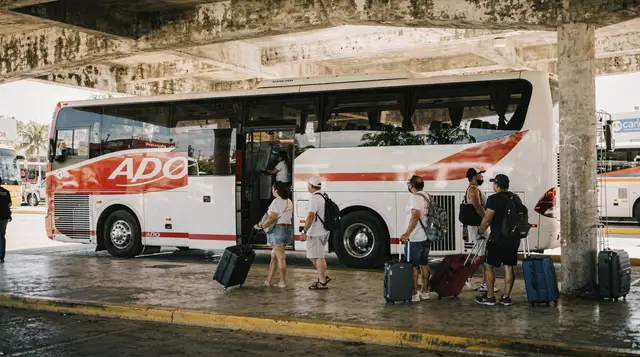
- ADO bus: more frequent, central terminals, proven reliability — still the default for most intercity trips.
- Rental car: best for cenotes and multiple inland stops in one day, where no fixed schedule fits.
Getting to and from the stations
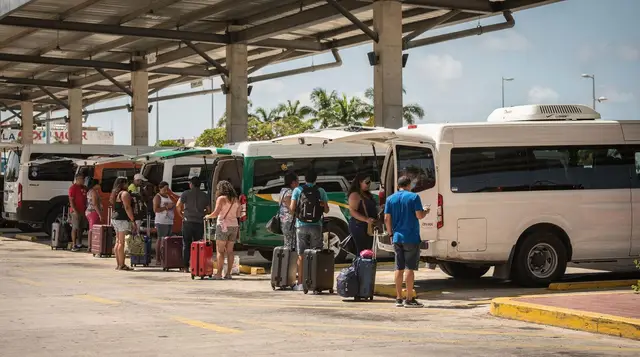
Because stations can be on the edge of town, plan the last mile before you travel. At Cancún, confirm whether you depart from the airport station or a city station and how you will reach it (taxi, ADO feeder, or hotel transfer). At Valladolid and Mérida, line up a taxi at the station — fares for the run into the historic centre typically range 100–300 MXN. At Chichén Itzá the station is close to the site, which is one of the train’s clearest wins. Carry small pesos for these connections, as station taxi ranks may not take cards. If you land in Cancún and would rather skip the hunt for a taxi, a private Cancún airport transfer gets you to your hotel or station directly.
A note on a still-evolving network
The Tren Maya is young, and details — frequencies, fares, which segments are fully running, even some station access — continue to change. Treat any timetable you read in advance as provisional and reconfirm on the official channel close to your travel date. This is also why keeping an ADO or colectivo backup in mind is sensible: if a train is cancelled or delayed, the bus network can usually get you there.
Building the train into a wider trip
The train works best as one leg of a plan rather than the plan itself. If you are still deciding how long to stay and where to base yourself, start with how many days in Cancún and where to stay in Cancún, then decide which days genuinely need a long inland ride. Many visitors find that a single train day, to the ruins or to a colonial town, is enough to enjoy the novelty without letting station logistics take over the holiday.
If you like the idea of an inland loop, the Yucatán 10-day road trip shows how the same region can be linked by car, and it is a useful comparison when you are weighing a fixed timetable against total freedom. For a shorter, cenote-and-ruins focused plan that mixes transport types, the Cancún cenotes and ruins 4-day itinerary is a good template.
Using the train for Chichén Itzá
Chichén Itzá is the single trip where the train’s strengths line up most clearly. A dedicated station close to the site means you avoid the long highway slog and the tour-bus crowds at the entrance, and you can travel at your own pace instead of a tour operator’s. Read the Chichén Itzá day trip guide and the Chichén Itzá destination page before you go, so you know what to see and when the site is most pleasant. Plan your return carefully: since the last departure of the day sets your schedule, leave yourself a comfortable margin rather than squeezing in one more pyramid.
If you would rather compare the big ruins before committing a day to one of them, Chichén Itzá vs Tulum vs Cobá lays out the trade-offs honestly. Some travellers decide that Chichén Itzá is the right place to use the train, while Tulum and Cobá are easier to reach by other means.
Using the train for Valladolid, Izamal and Mérida
Valladolid makes a pleasant base for a night or two, and combining it with the train gives you a relaxed arrival rather than a rushed day trip. The Valladolid colonial guide and Valladolid destination page cover the streets, plazas and food worth your time, and the Valladolid day trip guide helps if you only have a single day. From there, Ek Balam and nearby cenotes are natural add-ons, though they are exactly the sort of places where the train cannot help and you will need a taxi, a tour or a rental car. A Ek Balam, Valladolid market and cenote tour from Cancún covers all three without any station logistics.
Further west, Izamal and Mérida round out the inland loop. The Mérida things to do guide is worth a read if you plan to end a train journey there, because it helps you judge how many nights the city deserves. Remember that the station in a larger city may be a taxi ride from the centre, so build that last mile into your first-day plan. If you add a ruins day from Mérida, a full-day Uxmal and Kabah tour from Mérida avoids the problem of reaching them without a car.
When a car or bus fits better
Be honest about what you want from the day. If your list includes several cenotes, a small village and a ruin in one go, no timetable will fit, and the Cancún car rental guide will serve you better. If you want cheap, frequent and central, the ADO bus guide remains the sensible default, and getting around the Riviera Maya compares every option side by side. For the coastal run specifically, see Cancún to Tulum transport, and keep the Cancún travel tips handy for the small practical details that make any transfer smoother.
Small habits that make the ride easier
- Screenshot your ticket and keep a copy offline, since mobile signal can be patchy around stations.
- Arrive at the station with time to spare, so security checks and finding the right platform never feel rushed.
- Pack snacks and water before you leave town, because station services can be thin.
- Keep your passport or ID in an easy pocket, not at the bottom of a daypack.
- Message your hotel or host about your arrival station so they can suggest the right taxi arrangement.
- Treat the journey itself as part of the day: the big windows and the change of scenery are a real part of the appeal.
Bottom line
The Maya Train is a comfortable, improving option that genuinely shines for inland hauls like Chichén Itzá and Mérida — just verify how far your station is from town and add that taxi to the cost. For the coastal corridor, ADO and colectivos remain the cheaper, more reliable choice. Book on the official channel, travel with a warm layer and small pesos, and treat the train as one tool among several rather than your default.
Frequently asked questions about Maya Train guide
Do I need to book the Maya Train in advance? For short, low-demand segments you can often buy same-day at the station counter, but for popular routes like Chichén Itzá or peak-season Cancún-Mérida departures, booking a few days ahead on the official app or website is safer, since seats can sell out.
Is the Maya Train safe and reliable? Yes — it’s a modern, government-operated railway with security checks at stations, and it’s considered a safe way to travel. Reliability is still improving as the network matures, so build in a buffer if you have a tight connection, such as a flight out of Mérida.
Popular Cancún tours on GetYourGuide
Verified deep-linked GetYourGuide tours. Book through these links and we earn a small commission at no cost to you.
These are our own photographs of the area, not the operator's pictures of this tour — open the tour page to see those.