Best cenotes in the Riviera Maya: an honest pick
Which cenotes in the Riviera Maya are actually worth it?
For first-timers, the trio of Gran Cenote and Dos Ojos (near Tulum) plus the cave system at Cenotes Sac Actun covers the three cenote types: open, semi-open, and cave. Entry runs roughly 200–500 MXN (about 12–30 USD). Arrive before 10am to beat tour vans, and bring biodegradable sunscreen only — regular sunscreen is banned to protect the water.
A cenote is a natural sinkhole filled with cool, clear groundwater — the Yucatán has thousands of them, and the Riviera Maya stretch between Playa del Carmen and Tulum has the densest, most accessible cluster. The water is genuinely beautiful. The catch is that the famous ones can feel like a swimming-pool queue by midday, and “best” depends entirely on what you want from the day.
At a glance
| Where | Along the 307 highway between Playa del Carmen and Tulum, plus inland near Valladolid |
| Cost | Around 100–500 MXN entry (roughly 6–30 USD) per cenote |
| Time needed | 1–2 hours per cenote; a half-day for two |
| Getting there | Rental car, colectivo (shared van) along the 307, or a guided day trip |
| Best time | Arrive at opening (8–9am), any season — cenotes stay clear year-round |
Comparing the honest shortlist
| Cenote | Type | Best for | Rough entry |
|---|---|---|---|
| Gran Cenote | Semi-open | Turtles, easy snorkeling, beginners | ~500 MXN |
| Cenote Dos Ojos | Cave / semi-open | Snorkeling, cave diving | ~350–500 MXN |
| Cenote Cristalino / Azul | Open | Cheap, relaxed, colectivo-accessible | ~150–200 MXN |
| Cenote Sac Actun / Pet Cementerio | Cave | Guided cave diving | Guide-dependent |
| Cenote Suytun | Open (platform) | Photos near Valladolid | ~150 MXN |
The three types — pick before you go
Cenotes come in three broad shapes, and knowing the difference saves you from disappointment.
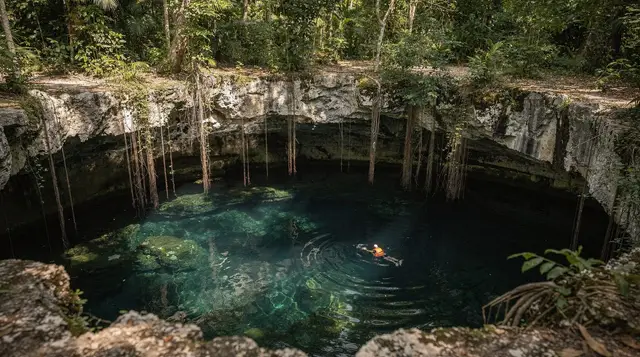
Open cenotes are exposed to the sky, like a round pool with vines hanging down. They get the most light and the postcard look. Good for casual swimming and photos.
Semi-open (cavern) cenotes are partly covered, with a dramatic mix of light beams and shadow. Often the best for snorkeling because you get visibility plus atmosphere.
Cave cenotes are fully underground, lit artificially or by narrow shafts. These are the realm of divers and the eeriest, most memorable to swim in — but claustrophobic if that’s not your thing.
If you only do one, a semi-open cenote is the safest crowd-pleaser.
The honest shortlist
Gran Cenote (near Tulum) — semi-open, turtles, easy snorkeling, walkways. The most beginner-friendly. Also the most crowded; go at opening. Around 500 MXN.
Cenote Dos Ojos — two connected pools, world-class for snorkeling and the most famous cave-diving site on the coast. Around 350–500 MXN depending on what’s bundled.
Cenote Cristalino / Azul (between Playa and Tulum) — cheaper, more local, open-air, often around 150–200 MXN. Less polished, more relaxed, easy to reach by colectivo.
Cenote Sac Actun / Pet Cementerio — cave systems for the dramatic underground experience, usually visited with a guide.
Cenote Suytun (near Valladolid, inland) — the Instagram one with the light beam and stone platform. Stunning photos, but it’s a queue for that exact shot and the water is for wading, not real swimming. Manage expectations.
Skip the resort-built “eco-parks” if you want the real thing cheaply; they package cenotes at a premium.
Real prices and what you’ll actually pay
Entry fees range from about 100 MXN at small local cenotes to 500 MXN at the famous ones (roughly 6–30 USD). On top of that, expect:
- Snorkel gear rental: 80–150 MXN if you didn’t bring your own.
- Mandatory locker or life jacket at some sites: 30–100 MXN.
- Parking if you drove: usually free to 50 MXN.
Bring cash in pesos. Card machines are unreliable and ATMs are far. USD is sometimes accepted but at a poor rate.
The sunscreen rule — this one matters
Standard sunscreen and bug spray are banned in the water at virtually every cenote, because the chemicals damage the fragile ecosystem and the connected underground rivers. Staff will ask you to shower it off, and many sites enforce it strictly.
Bring biodegradable, reef-safe sunscreen only, and ideally apply it well before you arrive so it has absorbed, or just wear a rash guard and skip it entirely. A long-sleeve swim shirt is the cleanest solution.
Good combos for a longer day
Cenotes pair naturally with other Riviera Maya stops if you want to make a full day of it rather than just a swim. Base yourself near Tulum and you can combine a morning cenote with the Tulum ruins in the afternoon, since the ruins’ last entry is at 3:30pm and the two sit within a short drive of each other. A Tulum ruins, reef and cenotes tour bundles all three into one day. If you’re coming from Cancún, the Cancún to Tulum transport guide covers ADO buses, colectivos, and rental cars for the full 307 corridor.
Families traveling with young kids should check the family-friendly cenotes guide first — not every cenote has easy stairs, shallow entry points, or life jackets in kid sizes. And if you’re weighing a cenote day against a beach day, the cenotes vs. beaches guide breaks down when each makes more sense, especially during sargassum season.
Fitting cenotes into the rest of your trip
Where you sleep decides how easy the cenotes are. If you haven’t booked yet, the where to stay in Cancún guide and the Cancún vs Playa del Carmen vs Tulum comparison help you pick a base. Tulum and Playa del Carmen put you closest to the cluster; staying in the Hotel Zone means a longer drive before you even reach the first gate.
Cenotes also work as one stop in a bigger plan. The Cancún cenotes and ruins 4-day itinerary and the Riviera Maya 7-day itinerary show how to space them between beach and ruin days so you don’t burn out. Short on time, the 3-day Tulum itinerary fits a morning swim around the ruins.
If you’re heading inland anyway, the Cobá cenote day trip pairs a swim with the ruins, and Valladolid puts you near the inland cenotes. For a wider look at the whole area, the Cenotes Riviera Maya destination page lists what’s around, and the getting around the Riviera Maya guide covers the practical side of moving between stops.
Last, a few cautions that apply to the whole trip rather than to one cenote: the Cancún travel tips cover cash and etiquette basics, and the packing list is worth a look so the water shoes and rash guard actually make it into your bag. Snorkel-minded travelers can compare the experience with the Cancún snorkeling guide.
Rio Secreto and the “eco-park” cenotes
Beyond the standalone cenotes above, a handful are packaged as guided eco-experiences rather than pay-and-swim sites. Rio Secreto is the best-known example: a fully guided underground river tour with wetsuits and helmets included, priced well above a standalone cenote entry but with a genuinely different, more immersive feel than a quick swim stop. It’s worth it if you want a structured, photography-restricted cave experience rather than DIY snorkeling — skip it if your budget favors the honest shortlist above.
DIY vs guided tour
DIY is very doable here. Rent a car (see the Cancún car rental guide for what to expect on insurance and deposits) or hop a colectivo (shared van) along the 307 highway between Playa del Carmen and Tulum — drivers stop on request at the cenote turnoffs for around 40–60 MXN. With a car you can chain two or three cenotes in a morning before the heat and crowds.
A guided tour makes sense if you want cave snorkeling with a certified guide, or you’re nervous about driving and navigating. Multi-cenote tours from Cancún or Playa run roughly 60–120 USD including transport, gear, and a couple of stops — convenient, but you’re on their clock and you’ll often arrive mid-morning with everyone else. If you’re based in Cancún, a multi-cenote tour from Cancún keeps the logistics simple.
The honest middle path: stay in Tulum or Playa del Carmen, rent a car for one day, and self-drive to two cenotes starting at opening. If you’d rather not drive, a 3-cenote adventure tour with lunch handles the logistics.
When to go
The dry season (December to April) gives the clearest water and best light. Cenotes are spring-fed and stay cool and clear year-round, so they’re also the perfect escape during the sargassum season (roughly May to August) when the Caribbean beaches get seaweed. Heavy summer rain can occasionally cloud the open cenotes slightly, but the cave ones stay crystal clear regardless.
Whatever the season, the real enemy is timing. Be at the gate when it opens (usually 8–9am) and you’ll have the place nearly to yourself before the first vans roll in around 10:30.
How many cenotes in one day
Two is the sweet spot; three is the maximum before fatigue sets in. Each cenote means parking, paying, changing, swimming, showering, and changing again — it adds up. A realistic morning is: be at cenote one for opening (8am), swim for an hour, drive 15–25 minutes to cenote two, swim, and be done by lunch when the heat and the crowds both peak.
Pick cenotes that are genuinely different so you’re not repeating yourself: one semi-open for snorkeling (Gran Cenote or Dos Ojos), one open-air for relaxed swimming (Cristalino or Carwash), and if you have energy, one cave system with a guide. Doing three near-identical open cenotes back to back gets samey fast.
A sample self-drive route
If you base yourself in Tulum or Playa del Carmen and rent a car for one day, a proven loop is:
- 8:00 — Gran Cenote (or Dos Ojos) at opening for the headline snorkel.
- 10:30 — drive north or south to a cheaper open cenote like Cristalino or Carwash for a relaxed swim with fewer people.
- 12:30 — lunch in Tulum or at a roadside cocina económica.
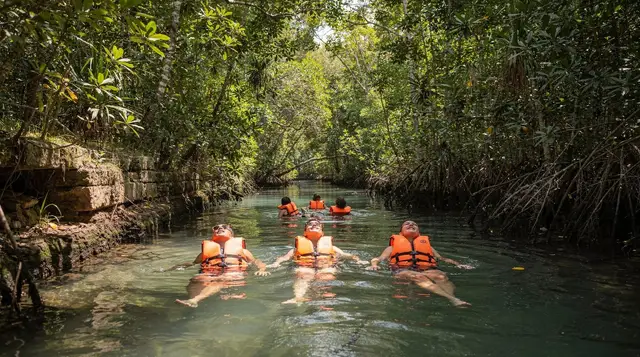
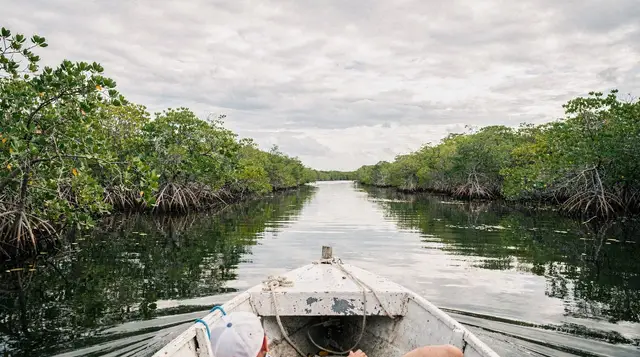
- Optional afternoon — Casa Cenote for a lazy mangrove float, which stays pleasant even when busy.
The colectivo version of this works too, just slower: you wait on the highway shoulder between stops, so build in extra time and keep small bills handy for each ride.
Safety and etiquette
Cenotes are natural water with no chlorine, so a few sensible habits keep you and the ecosystem safe:
- Wear the life vest where it’s required — it also keeps you off the fragile bottom.
- Don’t touch stalactites or formations; the oils on your skin stop them growing.
- Watch your footing — wet limestone and ladders are slippery, and water shoes help.
- Mind the depth. Some cenotes are very deep with cold thermoclines; stay within your comfort and don’t free-dive into caves without training.
- Take everything out that you brought in. These are drinking-water aquifers for the whole peninsula.
Most cenotes have lifeguards at the popular sites, but the quieter local ones may not, so swim with a buddy.
Practical checklist
- Cash in pesos (small bills) — no reliable card machines or ATMs on site.
- Biodegradable, reef-safe sunscreen, or a rash guard to skip lotion entirely.
- Your own mask and snorkel if you have them — better fit than rentals.
- Water shoes — limestone is sharp on bare feet.
- A dry bag for phones; the light is too good not to shoot.
- A small towel and a change of clothes (you’ll change two or three times).
- Arrive early, leave by lunch, swim in a quiet pool.
Get the timing right and the Riviera Maya’s cenotes are the single best thing you’ll do on the coast — cooler, clearer, and more memorable than any beach day, and a perfect escape when sargassum spoils the sea.
Frequently asked questions about Best cenotes in the Riviera Maya
Can you swim in a cenote if you can’t swim well? Yes, at the open and semi-open sites — most have shallow entry ledges, stairs, and life jackets available or required. Cave cenotes and any cave-diving section are a different story and require confidence in the water plus a guide.
Are cenotes worth it if you’ve already seen a lot of beaches? Yes — the appeal is different. Cenotes are still, clear freshwater rather than surf and sand, and several (like Dos Ojos) offer visibility and formations no ocean swim can match. They’re also the reliable backup when sargassum hits the coast.
Popular Cancún tours on GetYourGuide
Verified deep-linked GetYourGuide tours. Book through these links and we earn a small commission at no cost to you.
These are our own photographs of the area, not the operator's pictures of this tour — open the tour page to see those.