Cobá and cenotes day trip from Cancún: ruins in the jungle
Is Cobá worth a day trip from Cancún?
Yes, especially paired with cenotes. Cobá is about 170 km (2–2.5 hours) southwest of Cancún — a sprawling, jungle-covered Maya city you explore by bike or on foot, far less crowded than Chichén Itzá. Combine it with the trio of cenotes near Cobá village (Choo-Ha, Tamcach-Ha, Multun-Ha) for a cool swim, and you have one of the best ruins-plus-water days in the region.
Cobá is the ruins day for people who found Chichén Itzá too crowded and Tulum too small. It is a huge, half-excavated Maya city swallowed by jungle, where you cover ground by bicycle and the cenotes nearby are some of the most atmospheric in the Yucatán. Done as a pair, ruins and cenotes make a genuinely great day.
At a glance
| Details | |
|---|---|
| Where | Cobá village, ~170 km southwest of Cancún, ~45 min from Tulum |
| Cost | Ruins ~210 MXN + cenote combo ticket ~100–300 MXN + bike rental ~60–80 MXN |
| Time needed | Full day from Cancún; a half-day if you’re already based in Tulum |
| Getting there | Self-drive, colectivo via Tulum, or an organised tour |
| Best time | Dry season (Dec–Apr), arriving by 8–9am |
How far is Cobá from Cancún?
Cobá lies inland, southwest of Cancún, about 170 km away — roughly 2 to 2.5 hours by road. It is also only about 45 minutes from Tulum, which matters for planning: Cobá pairs naturally with the coast, and many people reach it via the Tulum corridor.
As with all the inland ruins, an early start beats the heat. The site is shaded by jungle, which helps, but the cenotes are best enjoyed before the afternoon tour vans arrive, so aim to leave Cancún by 7–8am.
The ruins: a city you bike around
What makes Cobá different is scale and atmosphere. The structures are spread across kilometres of jungle linked by ancient raised roads (sacbeob), so you do not walk it all — you rent a bike (around 60–80 MXN) or hire a pedal-taxi to move between groups of ruins. Entry to the site is about 210 MXN, plus parking.
Cobá’s tall pyramid, Nohoch Mul, was for years one of the few you could climb; access rules to the summit have tightened and shift over time, so check on the day rather than banking on a climb. Either way, cycling shaded jungle paths between vine-covered temples, with far fewer people than Chichén Itzá, is the real draw.
The cenotes near Cobá
Just south of Cobá village sits a cluster of three cave cenotes that turn this into a proper swim day: Choo-Ha, Tamcach-Ha and Multun-Ha. These are dramatic underground caverns reached by stairs — cool, clear water under stalactites, very different in feel from the open coastal cenotes. A combined ticket runs roughly 100–300 MXN; bring water shoes and expect mandatory rinse-off rules to protect the water. A swim here after the warm ruins is the perfect close to the day.
Getting there: driving, ADO or tour
Rental car. The best option for this trip. Around 600–1,200 MXN/day (35–70 USD) with mandatory insurance, plus fuel. A car lets you do the ruins at opening, then drive the short distance to the cenotes on your own clock — public transport cannot link them well.
ADO bus / colectivo. ADO buses serve Cobá but with limited daily departures, so timing a same-day return is tight; colectivos run from Tulum to Cobá cheaply (around 50–80 MXN) and are the usual budget route. Reaching the village by bus is doable; reaching the cenotes 3–6 km away then needs a taxi or bike.
Organised tour. Guided Cobá tours from Cancún or the Riviera Maya run roughly 70–120 USD and typically bundle the ruins, a cenote and lunch, often with a Tulum or Maya-village stop. They solve the awkward logistics of linking ruins and cenotes without a car, which is their main appeal. A Cobá, Tulum, cenote and Playa del Carmen tour from Cancún covers it all in one day.
Tour vs DIY
Go DIY with a car if you can drive — it is cheaper for two or more people, gets you in early, and lets you pace the ruins and cenotes yourself. This is the optimal Cobá day.
Take a tour if you are not driving, because the public-transport timetable to Cobá is thin and stitching the cenotes on afterwards is fiddly. For solo travellers and non-drivers, a tour that bundles ruins plus cenote is a reasonable, low-stress trade. If you’re based in Tulum, a Tulum ruins and four cenotes tour is a simple alternative.
What to combine it with
- Tulum. Only about 45 minutes away, so a classic combo is Cobá in the morning (cooler, quieter) and the Tulum ruins or a coastal cenote in the afternoon — though that is a full day, best with a car. Without one, a Tulum ruins, reef snorkeling and cenotes tour packs the coast into one outing. See the Tulum day trip guide for how to structure it.
- Cenote crawl. The Choo-Ha / Tamcach-Ha / Multun-Ha trio is a half-day in itself.
- Punta Laguna. A nearby reserve where you can sometimes spot spider monkeys, an easy add-on for wildlife fans.
A realistic day plan
Driving yourself, the day runs cleanly. Leave Cancún by 7am, reach Cobá around 9am, shortly after the 8am opening, and rent a bike to cover the jungle paths between the ruin groups while the air is still cool and shaded — an hour and a half to two hours is plenty. Drive the short distance to the cave cenotes south of the village by late morning, swimming Choo-Ha and Tamcach-Ha before the tour vans arrive. Lunch in Cobá village or back toward Tulum, then either drive home or, if you have the appetite, add a Tulum coastal cenote in the afternoon. Back in Cancún by early evening.
What it costs and what to bring
Independently, budget roughly: a rental car day around 600–1,200 MXN (or a colectivo via Tulum for far less), Cobá site entry about 210 MXN plus parking, a bike rental around 60–80 MXN, and the cave-cenote combo ticket around 100–300 MXN. Bring pesos in cash, water shoes for the slippery cenote steps, a towel, and reef-safe products — several cenotes require a rinse before entry to keep the water clean. As with all the inland trips, sun protection and plenty of water are essential even though Cobá’s jungle canopy gives more shade than most ruins.
Cobá vs Chichén Itzá vs Tulum
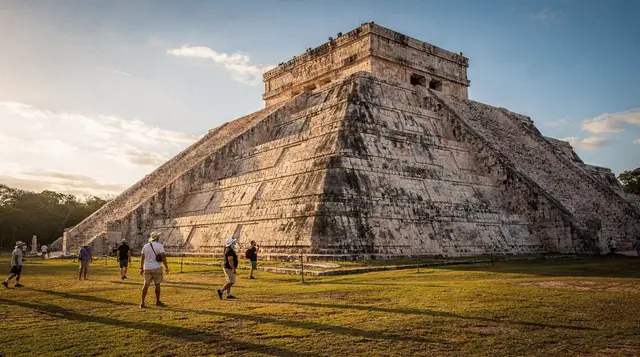
It helps to know how Cobá differs from the region’s other big ruins so you pick the right one — or the right pairing. Chichén Itzá is the grandest and most famous, a restored ceremonial centre with the iconic El Castillo pyramid, but it is also the most crowded and the hottest, with little shade and no swimming or climbing. Tulum is the smallest, prized for its cliff-top Caribbean setting rather than its scale.
Cobá sits in between: bigger in footprint than either, swallowed by jungle, far less crowded, explored by bike, and — crucially — paired with excellent cave cenotes. If you want atmosphere, shade and a swim over sheer monumental grandeur, Cobá is the pick. Many travellers do Chichén Itzá once for the spectacle and Cobá for the quieter, more active experience. For the full three-way breakdown, including which to pick if you can only do one, see the Chichén Itzá vs Tulum vs Cobá comparison.
Which cenote pairing is best for you
Not everyone wants the same cenote experience. If you’d rather stay near Cancún and skip the long drive, the best cenotes in the Riviera Maya guide covers closer alternatives to Choo-Ha and Tamcach-Ha. Traveling with young kids? The cave cenotes near Cobá involve stairs and can feel intimidating for toddlers — the family-friendly cenotes guide points to gentler, more open options. And if turtles or open water matter more to you than cave swimming, swimming with turtles in Akumal is a very different, equally worthwhile day from Cancún.
Getting the logistics right
If you are still deciding how to move around the region, the car rental guide explains what to check before you pick up keys, and getting around the Riviera Maya lays out the other options side by side. Travellers leaning on buses will find the ADO bus guide for the Yucatán useful for understanding how the long-distance network behaves, while Cancún to Tulum transport covers the coastal leg that most Cobá trips share. The village itself is small, so whichever way you arrive, plan to rely on bikes, taxis or your own wheels once you are there.
Because this day mixes a long drive, hot walking and cold water, pack with that range in mind. The Cancún packing list has the basics, and the general travel tips are worth a skim if this is your first time driving or using colectivos in Mexico. Concerned about road conditions or personal safety on an inland day? The safety guide gives an honest picture so you can plan calmly rather than guess.
Making the most of the ruins
Treat the site as a slow, wandering visit rather than a checklist. Stop often, because the charm of Cobá is in the details: stelae half-hidden by roots, quiet clearings, and long straight causeways that hint at how connected this city once was. If the story behind these places interests you, the Maya culture guide gives helpful background, and the Cobá destination page and Cobá ruins guide go deeper on the site itself.
A few habits make the visit easier. Start with the farthest group while you are fresh and work your way back, so the return ride is the relaxed part. Keep your water within reach on the bike, and give yourself permission to skip a group if the heat is building. Pedalling through shade is pleasant, but it still adds up over a few hours. Photographers will get the softest light early, when the jungle is quiet and the paths are nearly empty.
Choosing your swim
The cave cenotes near Cobá are dark, cool and dramatic, which is exactly why they feel so refreshing after the ruins. If you enjoy them and want more, the cenotes near Tulum guide and the Dos Ojos guide cover further options, and Gran Cenote is a natural fit for an afternoon stop on the way back toward the coast. Not sure whether you would rather swim in a cenote or on a beach? The blog comparison cenotes vs beaches: where to swim helps you decide, and cenotes in the Riviera Maya gives the wider regional picture.
Take your time in the water. Let your eyes adjust to the low light, look up at the rock formations, and move slowly so you do not stir up the sediment. Keep valuables locked in the car or left behind, since you will want both hands free on the stairs.
Building a longer trip around Cobá
One day is enough to enjoy Cobá, but it also slots neatly into a longer stay. The four-day cenotes and ruins itinerary shows how to spread inland sights across several days, and the three-day Tulum itinerary works well if you would rather base yourself on the coast and visit Cobá from there. For a ranking of the region’s excursions, see the blog’s best day trips from Cancún, ranked. If you want another quiet inland ruin, the Ek Balam ruins guide and the Valladolid day trip make a good second inland day, and the Tulum destination page covers the coastal side of the same corridor.
Finally, timing matters. The best time to visit Cancún explains how the seasons shape your plans, and the sargassum guide is a good reminder of why an inland day like this one is such a reliable alternative when the beaches are not at their best.
When to go
The dry season, December to April, is most comfortable inland, where summer heat and humidity can be intense. Cobá’s jungle canopy offers more shade than the open inland ruins, and the cave cenotes stay cool whatever the weather, so this is a reasonably heat-resilient day — but an early start still pays off in cooler air and quieter cenotes. Being inland, Cobá is unaffected by Caribbean sargassum, making it a dependable choice in the May–August beach-weed months.
Verdict
Cobá rewards anyone who wants Maya ruins without the Chichén Itzá crush, and the cave cenotes next door make it a swim day too. Drive if you can, leave early, bike the jungle paths, then cool off underground — it is one of the most satisfying ruins-and-water combinations within reach of Cancún.
Frequently asked questions about Cobá and cenotes day trip from Cancún
Do I need to book the Cobá cenotes ahead?
No — the Choo-Ha, Tamcach-Ha and Multun-Ha cenotes are run informally at the gate with cash tickets, no reservation needed even in high season. The only real risk of a queue is early afternoon, when tour vans from Tulum and Playa del Carmen arrive.
Is Cobá better than Chichén Itzá for cenotes?
Cobá wins on cenote pairing specifically — the cave cenotes are a few minutes’ drive from the ruins, so you can genuinely do both in one day. Chichén Itzá’s nearest cenote (Ik Kil) also works well, but it’s more crowded because every Chichén Itzá tour stops there. See the Chichén Itzá day trip guide for that pairing.
Popular Cancún tours on GetYourGuide
Verified deep-linked GetYourGuide tours. Book through these links and we earn a small commission at no cost to you.
These are our own photographs of the area, not the operator's pictures of this tour — open the tour page to see those.