Tulum 3-day itinerary: ruins, cenotes & beach for couples
Three days is enough to feel Tulum properly without renting a car: the clifftop ruins, a couple of cenote swims, one slow beach day and an easy half-day at Cobá. This plan assumes you’re staying in Tulum (either the pueblo for value or the beach zone for romance) and getting around by colectivo, bike, taxi and the odd guided trip. Tulum rewards a slower pace — the beach road is long, hot and pricey, so the goal is to do less, better.
At a glance
| Best for | Couples wanting ruins, cenotes and beach without a rental car |
| Pace | Easy — one main activity per day |
| Getting around | Colectivo, bike rental, taxi; no car needed |
| Where to sleep | Tulum pueblo for value, Tulum beach zone for romance |
| Rough budget | Mid-range — cenote and beach-club entries, not resort pricing |
| Book ahead | Beach-club day passes and Cobá cenote combos in high season |
| Best time | December–April for drier weather and lighter sargassum |
Getting to Tulum and getting around
Most couples arrive from Cancún airport, about 2 hours south — see the Cancún-to-Tulum transport guide for shuttle, ADO bus and taxi prices before you book. Once you’re here, this plan deliberately skips a rental car: colectivos run the highway all day for a few dozen pesos, bikes handle the beach road, and taxis fill the gaps. Basing yourself in Tulum pueblo rather than the beach zone is the single biggest money-saver on this trip — dinners and hotel rates both run roughly half the beach-road price, and it’s a short colectivo hop to the sand each morning.
If you are still deciding where Tulum fits in a wider trip, the Cancún vs Playa del Carmen vs Tulum comparison lays out how the three bases differ, and the getting around the Riviera Maya guide covers the transport options beyond what this plan needs. Travelling by bus is straightforward too: the ADO bus guide explains how the long-distance buses work, which is handy if you would rather skip a shuttle.
How the three days fit together
The logic behind this itinerary is simple: put the hot, exposed sightseeing first thing in the morning, keep the middle of the day for water, and leave evenings for slow dinners. Day 1 is the busiest, because the ruins and a cenote swim sit close together and share a rhythm. Day 2 is intentionally empty so that you actually feel like you are on holiday. Day 3 gives you a second, quieter ruin site and a last swim before you head home. If your flight leaves early on the last day, you can swap Day 3 and Day 2 so that the beach day comes last and Cobá happens while you still have energy.
None of the days needs a tight booking schedule. That is deliberate. Tulum’s weather can change a plan quickly — a heavy shower, a windy sea or a bad sargassum week can all reshape a beach day — so the itinerary leaves room to shuffle. If seaweed is a worry, read the sargassum guide and the honest take on sargassum season before you lock in dates, and use the best time to visit guide to pick a month that suits you.
Day 1 — Tulum ruins and a first cenote
Morning
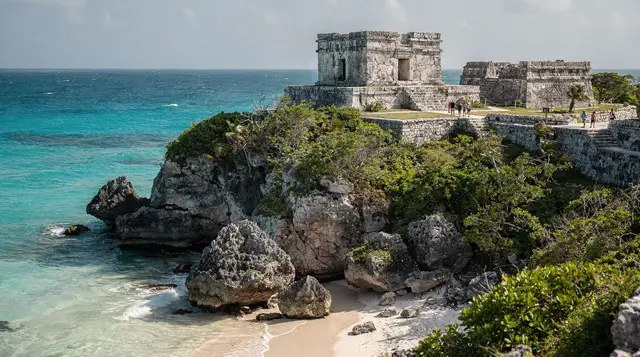
Hit the Tulum ruins early — they open around 8am and bake by 10. From Tulum pueblo it’s a quick colectivo or taxi (about 100–150 MXN); entry is now over 200 MXN since INAH raised its rates in January 2026 (check inah.gob.mx), plus any access/parking fee. The setting is the draw: a compact Maya site perched over a turquoise cove, with a swimmable beach below if the access stairs are open.
Take your time on the walk around the site. The ruins are small, so the experience is less about ticking off buildings and more about the setting: the cliff edge, the colour of the water and the breeze coming off the sea. Bring a hat, water and sunscreen, and keep your swimsuit on under your clothes if you plan to use the little beach. If you’d rather not sort out transport, a guided Tulum ruins, reef and cenotes tour bundles the site with a snorkel and two swims. For the history of the site and what each structure was for, the Tulum ruins guide and the Tulum ruins destination page go into more depth than this plan can.
Afternoon
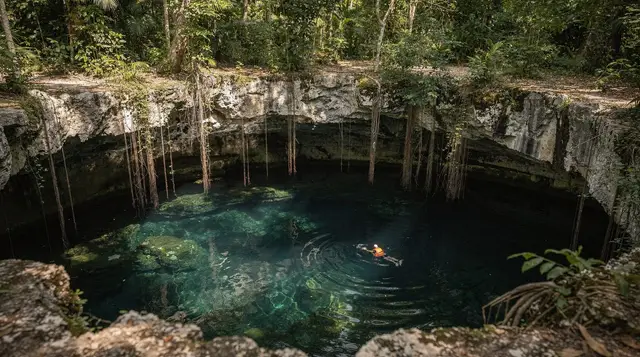
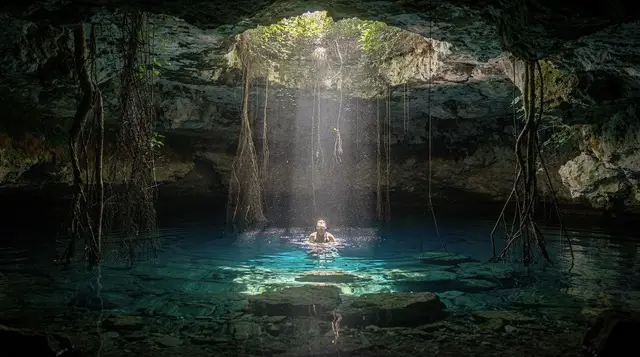
Cool off at a nearby cenote. Gran Cenote is the postcard one — turtles, snorkelling and clear water (about 500 MXN); the Dos Ojos system is better for a longer snorkel (about 350–500 MXN). Pick one and linger rather than racing between them.
Rinse off before you get in, since cenote water is fragile and many sites ask for this. Bring a towel and something dry to change into, and keep valuables to a minimum. For a hassle-free day, a half-day Tulum ruins and cenotes tour covers two swims with transport sorted. If you want more detail on either option, there are dedicated pages for Gran Cenote and Cenote Dos Ojos, and the cenotes near Tulum guide compares the other swimming holes in the area. The wider best cenotes in the Riviera Maya list is useful if you would like a different cenote on a later trip.
Evening
Dinner in Tulum pueblo, where prices are roughly half the beach zone — two people eat well for 500–800 MXN. The beach road looks glamorous but a casual dinner there can quietly top 2,000 MXN.
After a hot day of walking and swimming, you will probably want something simple and unhurried. Wander the main street in the pueblo, look at a few menus and pick whichever place has locals at the tables. The Tulum restaurants guide has ideas if you want a shortlist, and the Yucatán dishes guide is a good primer on what to order if the regional menu is unfamiliar.
Day 2 — Beach day on the Tulum coast
A deliberately do-nothing day.
Morning
Rent bikes (about 150–250 MXN a day) or take a colectivo to the beach road. Mornings are calmer and cooler. Public beach access points exist by law — Playa Paraíso and the stretch near the ruins are the easiest free entries.
Afternoon
If you want loungers, shade and a pool, a beach club is the move; day passes run about 40–80 USD per person and usually carry a food-and-drink minimum. Worth it once for a couple’s afternoon, but check the minimum spend before you sit down. The Tulum beach clubs guide compares the options so you can choose a vibe that suits you, whether that is quiet and shaded or lively with music.
If a paid club does not appeal, nothing stops you from spreading a towel on a public stretch and spending the afternoon in the water. The Tulum beaches guide describes the different sections of coast, and the public beach access guide explains how access rules work on this coastline. A good compromise is to pick a free beach for the morning swim and keep a beach club for a single late-afternoon session.
If you have energy left over, the Tulum beach zone page and the nearby Akumal destination page point to other places along the coast, and swimming with turtles in Akumal is a natural add-on for another trip. A Tulum ruins, turtle swim and cenote tour combines it all in one day.
Evening
Sunset cocktails on the beach, then back to the pueblo for dinner — or splurge on one beach-zone meal tonight if you’re going to do it at all.
Day 3 — Cobá ruins and departure
Morning
A guided or colectivo trip inland to Cobá (about 45 minutes), a jungle ruin site you explore on foot or by hired bike, with a tall pyramid and far fewer crowds than Tulum. Entry is about 210 MXN. Go early for shade.
The appeal of Cobá is that it feels like an expedition compared with the coast. Paths run through forest, birdsong replaces the crowd noise, and climbing or simply standing near the big pyramid gives a sense of scale that Tulum’s compact site cannot. Wear closed shoes, bring water, and take it at your own pace. The Cobá ruins guide and the Cobá destination page cover the layout, and the Cobá ruins and cenote day trip shows how others combine the two.
Afternoon
Cool off in a Cobá-area cenote on the way back — the cluster near the village (Multum-Ha, Tamcach-Ha) is dramatic and quiet. Then a last relaxed lunch in the pueblo.
Departure
If you’re flying out of Cancún, allow 1.5–2 hours of road plus 3 hours at the airport. Pre-book a shuttle or shared van the night before (about 30–55 USD per person) rather than relying on a same-day taxi.
Where to go next
If you finish these three days wanting more, there are easy ways to extend the trip. The Cancún 5-day itinerary and the Riviera Maya 7-day itinerary both work as longer frameworks, and the Cancún honeymoon itinerary leans into the romantic side that couples often want from Tulum. For a more active trip, the cenotes and ruins itinerary packs in more sites. For a wider view of the region, the Tulum destination page and the Tulum pueblo page are good starting points, and the Cancún travel tips guide gathers practical advice for the whole trip.
Honest pacing notes
Tulum tempts couples into over-spending and over-driving. You don’t need a car for three days — colectivos run the highway constantly and bikes cover the beach road. Don’t try to add Chichén Itzá to a 3-day Tulum trip; it’s 2 hours each way and would eat the relaxed mood this plan is built around — if ruins are the priority, compare the options in our Chichén Itzá vs Tulum vs Cobá guide before you commit the days. The single best decision is staying in the pueblo and visiting the beach by day: you get Tulum’s beauty without paying beach-zone prices to sleep there.
Popular Cancún tours on GetYourGuide
Verified deep-linked GetYourGuide tours. Book through these links and we earn a small commission at no cost to you.
These are our own photographs of the area, not the operator's pictures of this tour — open the tour page to see those.