Akumal means “place of the turtles” in Maya, and it earns the name: its calm, shallow bay is one of the few places in the world where you can reliably snorkel alongside wild green sea turtles grazing on the seagrass. That fame is a blessing and a problem — the bay gets busy and tightly regulated. Go in knowing the real rules and the right timing, and it’s magical; go in blind, and it can feel like a crowded, confusing tourist trap.
| Where | Riviera Maya, on Highway 307 between Playa del Carmen and Tulum |
| Cost | Beach access free; guided turtle snorkel around 300–700 MXN (~17–40 USD) per person |
| Time needed | Half a day, or a full day paired with Yal-Kú lagoon |
| Getting there | Colectivo or ADO bus from Playa del Carmen (~25 min) or Tulum |
| Best time | Opening, around 8am; December–April for clearest water |
What Akumal is
Akumal is a small beach community on the Riviera Maya, roughly between Playa del Carmen and Tulum. The star is Akumal Bay: a protected, horseshoe-shaped cove with seagrass beds that draw turtles in to feed close to shore, often in waist-to-chest-deep water. There’s also a coral reef further out and, just north, the calm snorkeling lagoon of Yal-Kú. It’s compact, walkable, and not a party town — the whole point is the marine life.
The turtle rules (read before you go)
The bay is a protected area, and access is regulated to protect the turtles. Here’s the honest, practical version:
- You generally need a guide to enter the main turtle area, plus a mandatory life vest (it stops you standing on or kicking the seagrass and turtles). Independent snorkeling is restricted in the core zone.
- Expect to pay for a guided snorkel tour — commonly around 300–700 MXN (~17–40 USD) per person including vest, sometimes gear — booked at the beach with the local cooperatives. Prices and exactly what’s permitted have shifted over the years and between operators, so confirm on the day.
- Don’t touch, chase, or ride the turtles, don’t use sunscreen before entering (it harms the reef and seagrass — wear a rash guard for sun instead, or reef-safe only), and keep your distance. Rangers enforce this.
Beware aggressive touts in the parking area who imply you must buy an expensive package to even reach the beach. The beach itself is public (all Mexican beaches are), so you can walk on for free; what’s regulated is snorkeling in the turtle zone.
The single best tip: go early
If you do one thing right, arrive at opening, around 8am. The water is clearest, the turtles are active, and you’ll have the bay before the big tour buses roll in from Cancún and Playa around mid-morning. By midday in high season the bay can be genuinely crowded with snorkelers, which is worse for you and stressful for the turtles. Early is calmer, clearer, and far more rewarding.
Yal-Kú lagoon: the calm alternative
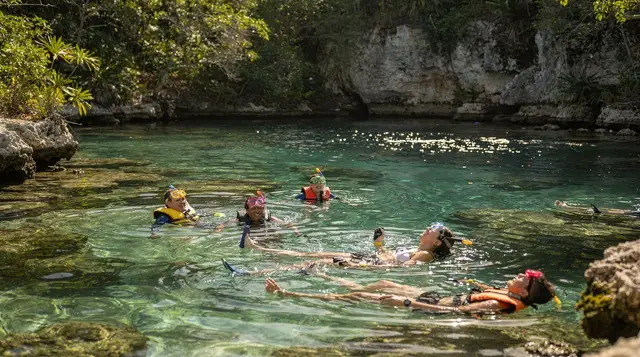
A short walk or drive north of the main bay, Yal-Kú is a sheltered lagoon where fresh and salt water mix, full of colorful fish among the rocks. It’s calm, beginner-friendly, and usually less hectic than the turtle bay, with its own entry fee (roughly 250–350 MXN, sometimes with gear rental). You’re less likely to see turtles here, but it’s a lovely, gentle snorkel and a good plan B if the main bay is mobbed.
Getting there
Akumal sits right on Highway 307, so it’s easy:
- Colectivo: the cheapest way — shared vans run constantly between Playa del Carmen and Tulum; ask to be dropped at Akumal (~30–60 MXN from Playa), then walk under the highway and down to the bay.
- ADO bus: comfortable but less flexible; confirm it stops at Akumal.
- Car / taxi: easiest if you want to add Yal-Kú or nearby cenotes; there’s paid parking near the beach.
From Playa del Carmen it’s about 25 minutes; from Tulum, a little less.
Honest expectations
Two cautions. First, turtle sightings are very likely but never guaranteed — they’re wild animals. Second, like everywhere on this coast, sargassum can cloud the water and pile on the sand from roughly May to August, hurting visibility; the dry months are far better. If you arrive early, in the dry season, and go with a cooperative guide, your odds of a genuinely special swim are high. If you turn up at noon in peak summer expecting a private encounter, you may leave disappointed.
What else is around
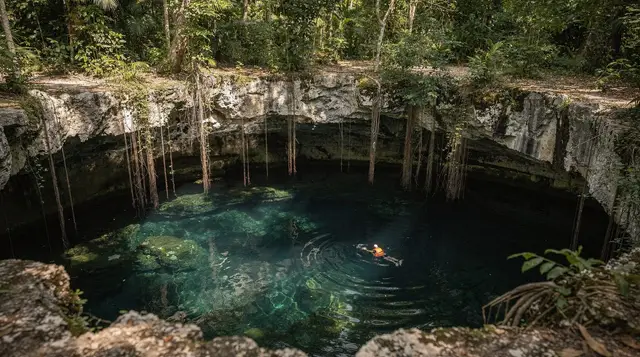
Akumal works well stitched into a bigger day, since it sits in the heart of the Riviera Maya. Just inland and a little south are some of the coast’s best cenotes — Dos Ojos and the Sac Actun system among them — perfect for a freshwater snorkel or dive, and a reliable seaweed-free backup if the bay’s water is murky; the best cenotes guide has the shortlist. If you’d rather not organize it yourself, a turtles and cenotes half-day tour combines both.
Tulum and its cliff-top ruins are a short hop south; Playa del Carmen, with its restaurants and the Cozumel ferry, is north. A common, satisfying itinerary is turtles in Akumal at opening, a cenote around midday, and a late lunch in Tulum or Playa — all linked by colectivos along Highway 307. For a no-logistics version, a Tulum ruins, turtle swim and cenote tour bundles the whole day. If you’re coming straight from the resort strip, the Cancún to Tulum transport guide covers every option, including a stop in Akumal.
When to visit, month by month
Timing changes the experience more here than almost anywhere on the coast, since both water clarity and crowd size swing hard between seasons.
| Months | Water & weather | Crowds | Notes |
|---|---|---|---|
| Dec–Feb | Clear, cooler air, some wind | Moderate, holiday peaks | Great turtle visibility; book tours ahead over Christmas/New Year |
| Mar–Apr | Clear, warming up | Busy (spring break spillover) | Still the best all-round window |
| May–Aug | Warmer water, rising sargassum risk | Busiest (day-tour season) | Arrive at opening or expect a crowded, cloudier bay |
| Sep–Nov | Hurricane season, rain possible | Quietest | Cheaper, calmer if weather cooperates; check forecasts |
Beyond the turtles: Yal-Kú and the wider bay
If the main bay feels too regulated or too busy on the day, Yal-Kú’s calmer waters (see above) are the easiest pivot, and a growing number of visitors treat Akumal as a base for the nearby cenotes rather than the turtles alone — especially useful if sargassum has clouded the bay. Swapping a turtle swim for a cenote day isn’t a downgrade; it’s simply a different, equally worthwhile side of the same stretch of coast (a Tulum ruins and cenotes day with lunch is an easy way to do it), and it’s covered in more depth in the dedicated swimming with turtles guide.
Practical tips before you go
A few things that make the difference between a smooth visit and a frustrating one. Bring cash in small bills for the cooperative tour, vest, and parking, as card acceptance is patchy. Pack your own mask and snorkel if you have them — rentals are fine but yours fit better and cost nothing. Skip sunscreen and wear a rash guard instead to protect both your skin and the seagrass. Arrive early, ideally at opening, both for clear water and to beat the crowds. And set expectations within your group: this is a regulated wildlife area, not a free-for-all swim, and respecting the rules is the price of keeping Akumal worth visiting at all.
What the snorkel is actually like
Expect a slow, quiet float rather than an adventure sport. The guide leads a small group along the seagrass, the vest keeps you at the surface, and the turtles do their own thing below, lifting their heads for air and going back to grazing. The best encounters come from staying calm and letting the animals set the pace; the worst come from groups that bunch up and crowd a single turtle. If you can, choose a guide who talks about the turtles rather than just herding people, and ask them to keep your group spread out. Strong swimmers will find it easy, and nervous ones will appreciate that the water near shore is shallow and the vest does the floating for you.
Bring a waterproof camera or phone case if you want photos, but keep it on a wrist strap and resist the urge to dive down for a closer shot. Staying horizontal and still is better for the turtles and gives you a more natural picture anyway.
Planning a family visit
Akumal suits children who are comfortable in the water with a life vest, since the bay is calm and shallow. Younger kids may prefer the sheltered lagoon at Yal-Kú, where there is less to worry about and plenty of fish to spot. Whatever you choose, brief them on the rules before you get in the water: no touching, no chasing, no standing on the seagrass. For more ideas on keeping a whole group happy along this coast, see the Cancún with kids guide and the list of family-friendly cenotes.
Fitting Akumal into a longer trip
Akumal rarely needs a full day on its own, which makes it easy to slot into a wider route. If you are basing yourself in one town and moving around by colectivo, the getting around the Riviera Maya guide explains how the shared vans and buses fit together. Travelers building a longer stay can fold Akumal into the Riviera Maya 7-day itinerary, and those who want a shorter loop on the southern part of the coast will find it works neatly alongside the Tulum 3-day itinerary.
If you are still deciding where to sleep along this stretch, the comparison in Cancún vs Playa del Carmen vs Tulum helps you weigh the main bases, and Puerto Aventuras is a quieter neighbor if you prefer a calmer marina town to the busier hubs. Pair that with the sargassum guide when you are choosing dates, since seaweed affects the bay more than almost anything else.
Etiquette that keeps the bay healthy
Local guides and rangers work hard to keep the bay in good shape, and visitors make the biggest difference. Rinse off lotions and repellents at home rather than in the sea, wear a rash guard, and carry out everything you bring to the beach. Do not feed the fish or turtles, and keep a respectful distance if a turtle swims toward you; let it choose whether to approach. Tip your guide if the experience was good, since the cooperatives depend on responsible visitors. These small habits are the reason the turtles still return to the bay year after year, and they are what separate a memorable swim from a damaging one.
Worth it?
Yes — Akumal delivers one of the most accessible wild-turtle experiences anywhere, and pairing the bay with Yal-Kú makes a great half- or full-day from Playa or Tulum. Just respect the rules that keep it that way: go early, take a cooperative guide, keep your distance, skip the sunscreen, and don’t let the parking-lot touts rush you into an overpriced package.
Frequently asked questions about Akumal
Do you need a tour guide to see the turtles at Akumal? Generally yes — access to the main turtle zone requires a certified local guide and a life vest, both arranged through the beach cooperatives on arrival; independent snorkeling in that zone is restricted.
Is Akumal better than snorkeling in Cozumel or Cancún for turtles? For a reliable wild turtle sighting close to shore, yes — Akumal’s shallow seagrass bay is one of the most consistent spots on the coast. Cozumel is better for reef diving generally, and Cancún’s reefs see turtles less predictably.