Playa del Carmen sits about an hour south of Cancún and splits the difference between the two extremes of this coast: more walkable and characterful than the Hotel Zone, more developed and convenient than Tulum. Locals call it “Playa.” It grew from a sleepy fishing village into a buzzing beach town in a couple of decades, and it makes an excellent base for exploring the whole Riviera Maya — as long as you go in knowing what it is.
| Where | Riviera Maya, ~1 hr south of Cancún on Highway 307 |
| Cost | Hostels ~250–500 MXN; mid-range hotels ~1,500–3,000 MXN/night |
| Time needed | 2–3 days, or a base for the whole Riviera Maya |
| Getting there | ADO bus ~90 min (~250–320 MXN) or colectivo from Cancún |
| Best time | December–April for dry weather and least sargassum |
What Playa is, in one paragraph
The town is built on a simple grid running back from the beach, organized by Avenidas (parallel to the sea) and Calles (cross streets). Everything orbits Quinta Avenida (Fifth Avenue), a long pedestrian street of restaurants, bars, shops, and street performers one block from the sand. The Cozumel ferry leaves from the central pier. You can walk most of what you need, which is the town’s biggest selling point over sprawling Cancún.
Fifth Avenue: the heart and the catch
Quinta Avenida is the social spine of Playa — buzzing day and night, lined with everything from taco stands to international chains, rooftop bars to silver shops. It’s genuinely pleasant to stroll, especially in the evening. The catch: it’s relentlessly commercial and touristy, prices climb the closer you are to it, and hosts will call out to pull you into restaurants. The food and value get noticeably better a couple of blocks inland, where locals actually eat. Use Fifth Avenue for the atmosphere and a drink; eat your real meals on the side streets.
The beaches (and the honest seaweed talk)
Playa’s main beach is wide and walkable, with that Caribbean color, and plenty of free public access — every Mexican beach is public by law. Beach clubs charge a minimum spend (often ~200–500 MXN per person) for loungers and service, but you can also just lay out a towel for free.
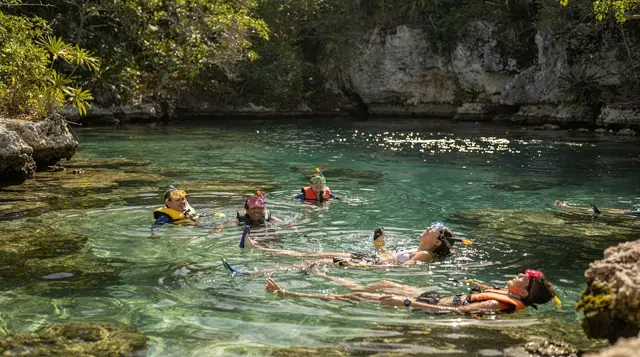
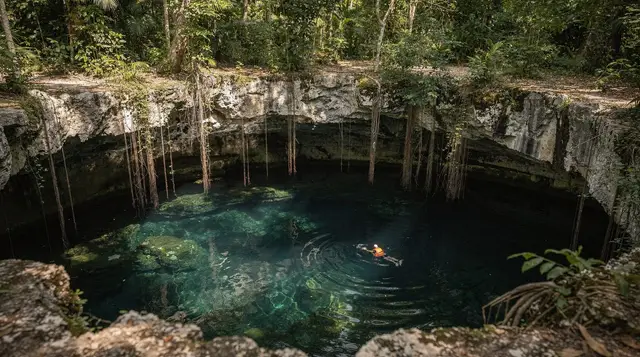
The honest downside is sargassum: the brown seaweed that washes up on this Caribbean-facing coast, typically worst from roughly May through August. In a bad week it can blanket the beach and smell as it rots. December to April is far cleaner. If sargassum hits during your trip, the move is to swap a beach day for a cenote (freshwater sinkholes inland, never seaweedy; a snorkeling tour of Riviera Maya cenotes is an easy way to do it) or take the ferry to Cozumel, where many shores are clearer. Our sargassum honest take and cenotes vs. beaches posts cover exactly how to plan around it.
Best beaches beyond the center
The main strip isn’t the only option. Playacar’s beach, south of the center, tends to be calmer and less crowded, while the northern beaches near Calle 38-46 are popular with a quieter local feel outside peak hours. For a full breakdown by stretch, see our best beaches in Playa del Carmen guide — it’s worth reading before picking a hotel, since which beach you land near matters more than the hotel’s star rating.
Where to stay and what it costs
Playa suits more budgets than the Hotel Zone:
- Hostels / budget: dorm beds ~250–500 MXN (~14–28 USD); simple private rooms ~700–1,300 MXN.
- Mid-range hotels: ~1,500–3,000 MXN (~85–170 USD) a night, many within walking distance of the beach and Fifth Avenue.
- Upscale / boutique & all-inclusive: 3,500 MXN and well up.
Staying within a few blocks of the center means you can skip taxis entirely — a real saving over Cancún’s spread-out layout.
Using Playa as a base
This is where Playa shines. From here you’re well placed for:
- Cozumel by ferry (~30–45 min from the central pier) for world-class diving and snorkeling — see our ferry to Cozumel guide for schedules and fares.
- Cenotes a short drive or colectivo away — Rio Secreto, Dos Ojos, and many roadside cenotes off Highway 307; the best cenotes in Riviera Maya guide ranks them.
- Tulum ~45–60 minutes south by colectivo or ADO bus for the ruins and beach.
- Akumal ~25 minutes south for snorkeling with sea turtles.
- Puerto Morelos ~20 minutes north for a quieter, smaller-town feel.
How a first day in Playa tends to unfold
Most first-timers do best by keeping day one slow. Drop your bags, walk down to the water, and get your bearings along the beach before you commit to anything. Because the town is a grid, it takes very little time to understand: the sea is on one side, Fifth Avenue runs parallel a block back, and the numbered streets tell you exactly how far north or south you are. Once you know that, you stop needing a map.
Late afternoon is a good moment for a first stroll along the pedestrian street, when the heat eases and the street performers come out. Pick a rooftop for a sunset drink, then walk a few blocks inland for dinner. If you want to plan the evening around music and bars, our Playa del Carmen nightlife guide explains how the scene is laid out, and our Fifth Avenue guide goes block by block through what to look for and what to skip.
Save the day trips for day two and three. Arriving, adjusting to the humidity, and sleeping well matter more than cramming an excursion into your first afternoon.
Choosing your part of town
Where you sleep shapes the whole trip, so it is worth a moment’s thought. Close to Fifth Avenue you get convenience and noise in equal measure: restaurants and bars are at your door, and so is the late-night music. A few streets further inland or toward the quieter ends of town, you trade a slightly longer walk for much better sleep and usually a lower bill.
- For nightlife and first-time energy: stay near the central blocks, and accept that earplugs may be part of the deal.
- For couples and quiet: look toward the calmer stretches away from the busiest crossings, or consider a smaller town up the coast such as Puerto Morelos.
- For families: the calmer beach areas and a hotel with a pool give you a retreat when the main strip feels too hectic. Our Cancún with kids guide has ideas that carry over to the whole coast.
- For long stays and remote workers: a place with a kitchen a few blocks inland makes daily life cheaper and calmer, and you are still a short walk from cafés and the sea.
If you are still deciding whether the Hotel Zone or Playa suits you better, our where to stay in Cancún guide lays out the trade-offs, and is the Hotel Zone worth it is a frank take on the alternative.
Cenotes and ruins from Playa
Playa is a natural starting point for the freshwater side of the Riviera Maya. Swimming in a cenote is a very different experience from a beach day: cool, clear water, rock walls, and often a sense of quiet that the main strip never has. For first-timers, the choice is usually between a well-organized cenote park and a simpler roadside swim. Our Dos Ojos guide and Rio Secreto guide explain what each visit feels like, and if you are travelling with younger swimmers, the family-friendly cenotes guide helps narrow things down. For a ready-made day, a Dos Ojos, Gran Cenote and Tulum tour leaves straight from Playa.
For ruins, the usual pairing is a morning at an archaeological site followed by a cenote swim to cool off. Tulum is the closest and easiest, and our Tulum ruins guide covers how to approach it. If you want something larger and are willing to give up a full day, Chichén Itzá is the headline option, and Cobá rewards visitors who like a little more exploring and fewer crowds. Our comparison of Chichén Itzá, Tulum and Cobá helps you pick one rather than trying all three. If you’d rather not organize it yourself, a guided Tulum ruins tour handles the logistics.
Practical habits that make Playa easier
A few small habits save money and frustration here:
- Carry small bills and some pesos. Street carts, colectivos and small family restaurants are far easier with cash on hand.
- Agree prices before you start. This applies to taxis, informal tours and anything without a posted rate.
- Ignore the touts politely. A friendly “no, gracias” and a steady walk is enough. Do not feel obliged to stop for timeshare or tour pitches.
- Use sun protection from the first hour. The Caribbean sun catches people out on the first afternoon, especially on a cloudy-bright day by the water.
- Check conditions before a beach day. If seaweed is a concern, our sargassum guide explains how to read the situation and what to do instead.
- Book popular tours ahead in busy months. It keeps your plans flexible and avoids disappointment.
For wider trip planning, Cancún travel tips and our packing list cover the basics that apply across the region, and is Cancún safe answers the question most first-time visitors have before they arrive.
Fitting Playa into a longer trip
Playa works well as one stop in a bigger route rather than the whole holiday. Many travelers pair it with a few nights up in Cancún or Isla Mujeres, then head south. If that sounds like you, the Riviera Maya 7-day itinerary and the Cancún 5-day itinerary show how the pieces can fit together, while the Cancún, cenotes and ruins itinerary leans toward the inland side. Our guide on how many days to spend in Cancún is useful for deciding how much time to give the whole coast.
If your trip is built around the sea, think about adding an island day. Isla Mujeres sits in the north, while Cozumel is reached directly from Playa, and our Isla Mujeres vs. Cozumel comparison helps you choose. For food, the best tacos in Playa del Carmen is a good shortcut to the kind of meal that makes eating inland so worthwhile.
Getting around the coast
The colectivo (shared van) is the local secret: vans run constantly up and down Highway 307 between Cancún, Playa, and Tulum, dropping you anywhere along the route for roughly 40–90 MXN depending on distance. They leave when full from set points in town — cheap, frequent, and used by everyone. For longer or more comfortable hops, the ADO bus terminal on Fifth Avenue serves Cancún airport, Tulum, Mérida, Valladolid, and beyond. You don’t need a car to stay in Playa, though one helps for cenote-hopping on your own schedule.
Playa vs Cancún vs Tulum
Quick honest comparison: Cancún is bigger, has the grand resort beaches and a real airport, but feels engineered and spread out. Tulum is more boho and scenic but pricier, less walkable, and increasingly overhyped. Playa lands in the middle — walkable, lively, well-connected, mid-priced, with a beach that’s good when the sargassum behaves. For a first Riviera Maya trip where you want one base for everything, Playa is the safe, sensible pick.
Nightlife and eating well
Playa’s nightlife is livelier than Puerto Morelos or Akumal but more laid-back than Cancún’s mega-clubs. The action concentrates around Calle 12 off Fifth Avenue, with bars, lounges, and a couple of big clubs; it builds late and runs into the early hours. For something gentler, the rooftop bars and beach clubs offer sunset drinks without the thumping volume.
On food, the rule holds everywhere: step off Fifth Avenue. The taco joints and family-run cocinas a few blocks inland — around Calle 30 and beyond — serve better food at half the price. Look for al pastor carved off the spit, fresh ceviche, and marquesitas from a street cart for dessert. A genuinely good local dinner runs 120–250 MXN; the same on Fifth Avenue with a sea-view markup can be triple that for less soul.
Honest downsides
To keep it balanced: Playa has grown fast, and it shows. Fifth Avenue can feel like an open-air mall, timeshare and tour touts work the busier blocks, and the sargassum can genuinely spoil beach days in summer. It lacks Tulum’s scenery and Cancún’s grand resort beaches. None of that is a dealbreaker — it just means you should come for what Playa does well (walkability, location, value, atmosphere) rather than expecting an unspoiled paradise. Manage that, and it rarely disappoints.
Bottom line
Come for the walkability, the nightlife, and the unbeatable location for day trips. Eat off Fifth Avenue, not on it. Visit December to April if you can, and have a cenote or Cozumel plan ready in case the seaweed rolls in. As a base for the Riviera Maya, Playa del Carmen is hard to beat.
Frequently asked questions about Playa del Carmen
Do you need a car in Playa del Carmen? No. The town center is walkable, and colectivos and the ADO bus cover day trips up and down the coast cheaply. A car only helps if you want full flexibility for cenote-hopping on your own schedule.
Is Playa del Carmen safe for solo travelers? Yes, generally — the tourist center and Fifth Avenue are well-trafficked and safe to walk, though normal city sense applies late at night and on quieter side streets away from the main strip.