What Tulum actually is
Tulum is three places at once: a Maya archaeological site perched on a cliff over the Caribbean, a beach road lined with boutique hotels and beach clubs, and a down-to-earth pueblo (town) a few kilometres inland where most people actually eat and sleep affordably.
How the three Tulums fit together
The mistake many visitors make is treating Tulum as one place. The ruins, the beach road and the pueblo are separate worlds with their own prices, pace and atmosphere, and knowing which one you actually want shapes everything else: where you sleep, how you get around, and how much you spend. Some travellers come only for the ruins and leave by afternoon. Others settle into a beachfront room and barely see the archaeological site. Most will be happiest mixing the three, using the pueblo as a practical base and dipping into the ruins and the beach on the days that suit them.
If you are still deciding whether Tulum belongs on your trip at all, the Cancún vs Playa del Carmen vs Tulum guide sets the three side by side, and the Cancún vs Riviera Maya guide helps if you are choosing between a resort base and a more spread-out coastal trip.
The ruins
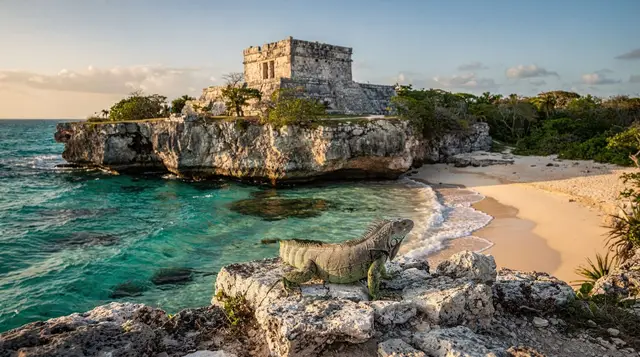
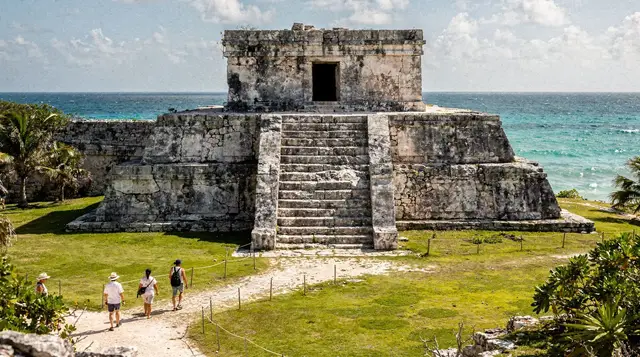
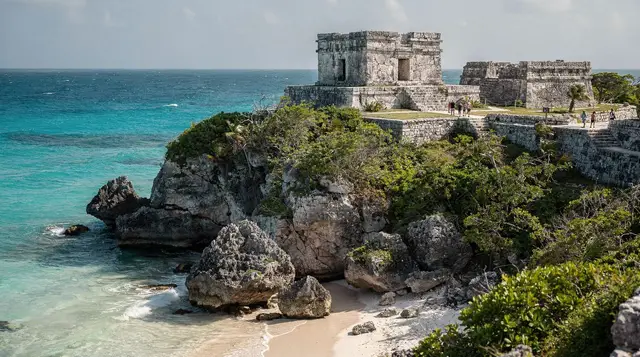
Tulum is the only major Maya site built on the coast, and the setting — limestone temples above turquoise water — is the reason to come. The site is small compared to Chichén Itzá or Cobá (you can walk it in under an hour), but the clifftop position over the Caribbean makes it one of the most photogenic ruins in the Yucatán. Arrive at opening time: it gets hot and crowded fast, and there is little shade once you’re past the entrance path. If you’d rather skip the planning, a guided Tulum ruins tour from the Riviera Maya covers the history and logistics. The full walkthrough — hours, tickets, and the best photo angles — is in the Tulum ruins guide.
Making the most of your time at the ruins
Because the site is compact, the experience depends less on how much you see and more on how you see it. Go early, walk the main path slowly, and give yourself time at the cliff edge, where the temples, the sea and the small coves below come together. Bring water, a hat and sun protection, since shade is scarce, and wear shoes you can walk in comfortably on uneven stone. A little context makes the visit richer: Tulum was a walled port town, and understanding that it was a trading outpost facing the sea explains why the buildings sit where they do. The Maya culture guide gives the background that turns a pile of limestone into a story.
If ruins are the main reason you are in the region, compare Tulum with its bigger inland cousins. The Chichén Itzá vs Tulum vs Cobá guide lays out what each site does best, and the Cobá ruins guide is worth reading if you prefer wandering through jungle to standing on a cliff. Many visitors pair the clifftop and the jungle on the same trip, and the two feel completely different from each other. For the closest, most detailed look at the coastal site itself, see the dedicated Tulum ruins page.
The beach road today
The beach-road hotel strip runs south from the ruins along a single sandy lane lined with boutique hotels, beach clubs, and a scene that leans boho-luxury rather than budget. Beach erosion and past storm damage have reshaped parts of the shoreline over the years, and some hotels now sit behind rebuilt or narrower stretches of sand — worth knowing before you book based on old photos. It’s also the priciest lodging zone in this guide’s coverage area, noticeably more than equivalent rooms in Playa del Carmen or the Cancún Hotel Zone. See the Tulum beaches guide and the Tulum beach clubs guide for where the good public access and the worthwhile day-pass clubs actually are.
Choosing your beach day
Not every beach day in Tulum looks the same. Some people want a lounger, a drink and music at a beach club; others want an empty stretch of sand and a quiet swim. Public access points exist alongside the private clubs, and the mood changes noticeably from one stretch of the coast to the next. Check the conditions on the day, because seaweed and wind can change how the water looks and feels. The sargassum guide explains how the seasons affect the shoreline, and the Tulum beach zone page describes the strip in more detail.
If the beach road turns out to be more polished or more expensive than you want, nearby alternatives are easy to reach. Xpu-Ha and Akumal offer calmer water, and Akumal in particular is known for its turtles, covered in the swimming with turtles guide.
Tulum pueblo
A few kilometres inland, the pueblo is where the beach-road prices don’t apply: cheaper hotels, real taquerías, and the ADO bus station for onward travel. Many visitors base themselves here and taxi or bike to the beach and ruins, which stretches a modest budget much further than staying beach-side. It’s also a more practical base if you’re combining Tulum with day trips to nearby cenotes or Cobá, since the pueblo sits closer to the inland roads than the beach strip does.
Eating and sleeping well
Food is where Tulum rewards a little curiosity. The pueblo is the place for simple, honest meals at local prices: tacos, grilled meats, fresh juices and the regional dishes you will not find on a beach club menu. The beach road, by contrast, is built around stylish restaurants with a more international, health-conscious bent, and you pay for the setting as much as the plate. A balanced trip usually includes both. Our Tulum restaurants guide sorts the options by style, and the Yucatán dishes guide is a useful primer on what to order so you do not default to the safest item on the menu.
For lodging, the decision is simple in principle. Stay beach-side if atmosphere and sunrise walks on the sand matter more than money. Stay in the pueblo if you want value, variety of places to eat, and an easy base for onward travel. Either way, read recent reviews rather than relying on how a place looked in older photos, and check the where to stay guide for how Tulum compares with the other bases on this coast. The Tulum pueblo page goes deeper on the town itself.
Cenotes nearby
Some of the region’s best cenotes — Gran Cenote, Dos Ojos, Cenote Calavera — are within a short drive. They are the natural counterpoint to the beach and a welcome escape from the midday heat, and several are shallow and calm enough for nervous swimmers or kids with supervision. The cenotes near Tulum guide breaks down which ones suit snorkeling, cave-diving, or just a quiet float, and the Gran Cenote guide covers the most popular single option in detail. To combine the swim with the ruins in one day, a Tulum ruins, reef snorkeling and cenotes tour is an easy option.
Cenote manners and what to bring
A cenote is a natural freshwater swimming hole, often fed by an underground river, and the water is fragile. Most sites ask you to rinse off before getting in and to avoid sunscreen and insect repellent, because the chemicals harm the ecosystem. Bring a towel, water shoes if the rock is slippery, and a small waterproof bag. A snorkel mask makes a big difference where the water is clear. Go early or late if you can, since the most famous cenotes fill up with tour groups around midday. If you are travelling with children or less confident swimmers, the family-friendly cenotes guide points to calmer options, and the Dos Ojos guide covers a larger cave system for those who want something more dramatic. For a wider choice across the region, the best cenotes in the Riviera Maya is the place to browse, and the Riviera Maya cenotes page gives the regional overview.
Getting to Tulum from Cancún
Tulum is about two hours south of Cancún by car via Highway 307, and a similar time by ADO bus (cheap, reliable, and a common choice for travellers without a car) or a private shuttle. Colectivos (shared vans) running the coast road are the cheapest way to hop between Tulum, Playa del Carmen, and other Riviera Maya towns once you’re down there. The Cancún to Tulum transport guide covers all of these options with current prices, and the Tulum day trip from Cancún guide is the one to read if you’re not staying overnight and just want to see the ruins and a cenote in a single long day. A Cobá, Tulum, cenote and Playa del Carmen combo tour packs several stops into that day without driving yourself.
Getting around once you are there
The three parts of Tulum are spread out, so think about transport before you arrive. Taxis are the simplest way to link the pueblo, the ruins and the beach road, though you should agree on the fare before getting in. Bicycles are popular for the shorter hops and suit the flat terrain, as long as you start early and carry water. A rental car gives the most freedom for reaching cenotes and inland sites, and the car rental guide explains what to watch for. If you would rather not drive, the getting around the Riviera Maya guide covers colectivos and buses, and the ADO bus guide explains how the long-distance network works. The Maya Train guide is worth a look if you are connecting Tulum with places further afield.
Best time to visit
November to April is dry season and the best all-round window: clearer cenote water, lower humidity, and better light for the ruins. May through August brings more heat, humidity, and the highest chance of sargassum seaweed on the beach side — the ruins and cenotes are unaffected, so it’s still workable if the beach isn’t your main draw.
Beyond the dry and wet seasons, think about the kind of crowd you want. Peak months bring a livelier beach scene and fuller cenotes, while shoulder periods are calmer and easier on the budget. The best time to visit guide breaks the year down, and the hurricane season guide is worth reading before you commit to dates in the wetter months.
Who Tulum suits, and who it does not
Tulum suits couples, photographers, wellness-minded travellers and anyone who enjoys history with a swim attached. Yoga, spa treatments and traditional steam-bath ceremonies are part of the local scene; the temazcal guide explains what to expect from one. It is a weaker fit for travellers who want a classic all-inclusive stay with everything on site, and for anyone allergic to a slightly unpolished, improvised atmosphere. Families can enjoy it too, particularly with the calmer cenotes, but the beach road is not set up as a children’s resort, so plan around that or see the Cancún with kids guide.
Combining Tulum with other stops
Tulum works well as one stop in a longer route. Add it to a coastal trip with Playa del Carmen, pair it with the lagoon at Bacalar, or head inland to Coba and Valladolid. Ready-made routes are in the Tulum 3-day itinerary and the Riviera Maya 7-day itinerary. For a balanced view of whether the town lives up to its reputation, the blog post Tulum: overrated or not gives our honest take.