Playa del Carmen beaches: where to actually swim
Where are the best beaches in Playa del Carmen?
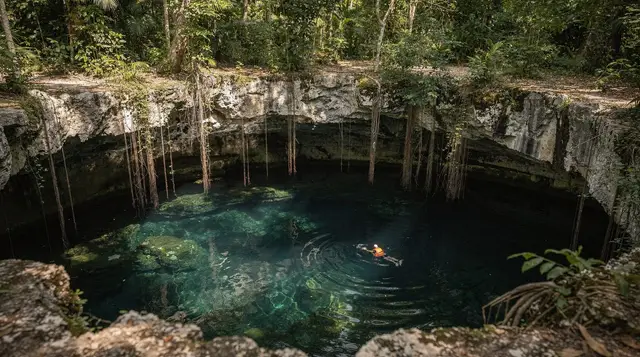
Playa Punta Esmeralda (north, near Calle 92) is the local favourite — free, calm, with a small cenote where freshwater meets the sea. The central beach off Fifth Avenue is convenient but busier and lined with beach clubs charging a minimum spend. All beaches are public by law, so you can walk in anywhere.
Playa del Carmen sells itself on the beach, but the truth is more mixed than the postcards: the central sand is convenient and lively, while the genuinely calm, pretty spots sit at the quiet ends of town. Here is where to go for each kind of day, what it costs, and the catch nobody mentions.
At a glance
| Where | Central beach off Quinta Avenida, Punta Esmeralda (north), Playacar (south) |
| Cost | Free (public access) to around 400-700 MXN per person minimum spend at a club |
| Time needed | A morning or a full beach day |
| Getting there | Walkable from downtown; Punta Esmeralda is a 10-15 minute taxi or colectivo north |
| Best time | December-April for clearest, sargassum-free water; go early to beat crowds and heat |
Every beach here is public
Mexican law puts the entire sandy foreshore in the public domain — there is no such thing as a private beach in Playa del Carmen, no matter what a resort sign implies. You can walk onto any stretch, including the sand in front of gated all-inclusive properties. What resorts and beach clubs control is the access from their land and the loungers, not the sand or the water. If you reach the beach by a public access point, you can put your towel down anywhere below the high-tide line for free.
The central beach (off Fifth Avenue)
The most photographed stretch runs east of Quinta Avenida between roughly Calle 8 and Calle 14, a few minutes’ walk from the Cozumel ferry pier. It is genuinely handy — you can be on the sand minutes after a taco lunch — but it is also the busiest, most commercial sand in town. Expect timeshare touts, vendors walking the waterline, and a wall of beach clubs.
The catch is the cost. The beach clubs here (Mamita’s Beach Club, Kool, Lido and similar) typically run on a minimum consumption model: no flat door fee, but you must spend a set amount on food and drinks to keep a lounger, often around 400–700 MXN (roughly 22–38 USD) per person at the better-known spots, more on weekends and holidays. Cocktails land around 180–280 MXN. None of this is necessary to swim — bring your own towel, use a free access point, and you pay nothing.
Punta Esmeralda — the local pick
If you want the prettiest, calmest water and the lowest price (free), head north to Playa Punta Esmeralda near Calle 92, about a 10–15 minute taxi from the centre (a colectivo or a 60–100 MXN taxi). A small cenote bubbles up here and runs into the sea, so you get a freshwater channel kids love and shallow, sheltered swimming. It is a residents’ beach: cheaper street-food stands, families, no minimum-spend clubs. Weekends get busy with locals, so go on a weekday morning if you can.
Playacar — quieter, harder to reach
South of the ferry pier, the Playacar beaches front a gated residential and resort enclave. The sand is wide and the water calm, but the public access points are less obvious — look for the path near the pier or ask for the “acceso público.” It is calmer and less commercial than the centre, though you are surrounded by all-inclusive territory. The reward for the slightly awkward access is space: even on a busy weekend the Playacar sand is far emptier than the central strip, and the water is gentle enough for relaxed swimming.
Beach club or no beach club — an honest cost comparison
Here is the real decision most visitors face, laid out plainly. For two people on a beach day:
- Free way: towel on the sand at a public access point, a few drinks from a roaming vendor (~120 MXN total). Cost: near zero. Trade-off: no lounger, no shade unless you bring it, scarce toilets.
- Beach club: minimum spend of roughly 400–700 MXN per person at a known club, so ~1,000–1,500 MXN for two with a basic lunch and a couple of drinks. You get loungers, shade, table service, toilets, showers and security for your bags.
- Hotel day pass: some resorts sell day passes (often 700–1,500 MXN per person, sometimes all-inclusive) giving pool, beach and buffet access — worth comparing if you want a full-facility day.
There is no wrong answer; the point is that the beach is free and the comfort is the upsell. Decide which you are actually paying for.
Swimming reality: calm but watch the ferry zone
The water along Playa del Carmen is generally calmer than Cancún’s open-Caribbean east coast, with gentler waves and a gradual sandy entry in most places. The exception is around the Cozumel ferry pier, where boat traffic, currents and the pier structure make swimming unpleasant and unsafe — stay well north or south of it. There are no lifeguards on most stretches, so judge currents yourself and keep an eye on children.
Sargassum: the honest season
From roughly May to August (sometimes stretching into September), sargassum seaweed drifts onto this Caribbean-facing coast. In a bad week it forms brown mats at the waterline and clouds the shallows. The central beach clubs rake their patches daily; the free public stretches may not be cleaned at all, so a free spot can mean wading through weed.
Your honest options in sargassum season:
- Go early. Crews clear overnight wash-up in the morning; by afternoon a fresh tide can dump more.
- Switch to a cenote inland — freshwater, no seaweed, no waves. See the Riviera Maya cenotes pages for options near Playa, or book a guided cenote snorkelling tour from Playa del Carmen.
- Cross to Cozumel (40-minute ferry; check fares on ultramarferry.com), where the leeward west coast is far less affected.
- Take a day away from the coast — a guided Tulum ruins tour keeps you out of the weed entirely.
- Check the live tracker howisthesargassum.com before you commit a beach day; it maps recent wash-up along the coast.
The dry season, roughly December to April, brings the cleanest water, the least seaweed and the calmest seas — and the highest prices and crowds.
A no-cost beach day, step by step
You do not need a beach club to enjoy Playa del Carmen. Walk down any of the numbered calles to a public access point, lay your towel on the sand, and buy a beer or an agua fresca from a roaming vendor (40–60 MXN) when you want one. Bring water, reef-safe sunscreen and shade — there is little natural shade on the central sand. Public toilets are scarce, so the trade-off of the free approach is using a café or the beach-club bathroom (buy a drink) when you need one.
Choosing a beach by the kind of day you want
The three stretches suit different moods, and it helps to decide before you leave the hotel rather than wandering the sand looking for something that fits. If you want people-watching, music and a drink within reach, the central beach is the obvious answer: it sits right at the end of the busiest streets, so there is no planning involved. If you want your children to splash around in shallow, sheltered water, or you simply want a slower, cheaper day, Punta Esmeralda is the better call. If you want to spread out, read a book and not be asked to buy anything, Playacar’s wide sand is the quietest option, with the small price of a slightly awkward walk to reach it.
Many visitors end up splitting the trip. A common rhythm is a calm morning at one of the quieter ends, then a late lunch back in town, then a short stretch on the central sand once the heat eases and the light turns softer. That way you get the best of each without committing a whole day to a crowd you did not come for.
What to bring and how to pack for the sand
The free approach works best when you arrive prepared, because you are not relying on a club for shade, water or a place to leave your things. A few habits make a real difference:
- Shade. There is little natural cover on the central sand, so a hat, a light cover-up or a small umbrella is worth carrying. See the packing list for the wider checklist.
- Reef-safe sunscreen. Reapply after swimming, and keep it handy rather than buried at the bottom of a bag.
- Water and a snack. Vendors will find you, but having your own supply stops you paying beach prices every hour.
- Small cash. Vendors and street-food stands near the quieter beaches are easier to pay in pesos.
- A dry bag or a waterproof pouch for your phone and cards, since there is no locker unless you are at a club.
Travel light and keep valuables to a minimum. If you are swimming in turns, one person stays with the towels. For general safety habits across the region, the Cancún safety guide is a useful read before your first beach day.
Timing your day around crowds and heat
Early morning is the single best window on every stretch. The sand is cleaner after the overnight raking, the sun is gentler, and the water is usually at its calmest. By midday the central beach fills up, the clubs turn their music up, and shade becomes a scarce resource. If you prefer an afternoon swim, aim for the later hours once the strongest sun has passed and day-trippers begin heading back to their hotels or ferries.
Weekends and holidays change the picture. Locals head to Punta Esmeralda in numbers, and the central strip gets denser, so a weekday is the easier choice whenever your schedule allows. Seasonal timing matters too: the best time to visit Cancún page explains how the dry and wet seasons shape water clarity, crowds and prices across the whole coast, and the same logic applies here.
Fitting the beach into a wider trip
Playa del Carmen works well as a beach base or as a stop between other places. If you are still deciding where to stay on this coast, the comparison of Cancún, Playa del Carmen and Tulum lays out the trade-offs plainly. If your main aim is simply the best sand and water, the Tulum beaches guide is the natural next read, and the town overview of Playa del Carmen covers everything else you might want to do once you have had enough sun.
For a longer stay, the Riviera Maya seven-day itinerary shows how beach days can alternate with cenotes, ruins and food stops, so no single day feels repetitive. On a rainy or windy day, which can happen at any time of year, swapping the beach for an indoor meal or a cenote visit costs you nothing and often makes for a better memory than waiting out the weather. A Dos Ojos, Gran Cenote and Tulum tour is an easy way to fill that day.
Practical etiquette on a public beach
Because the beaches are public and shared, a little courtesy goes a long way. Keep your belongings close to your own spot and avoid setting up directly in front of a club’s loungers, where staff will politely ask you to move. Take your rubbish with you, and be mindful of music from your own speaker, since the quieter ends are quiet for a reason. If a vendor approaches and you are not interested, a calm “no, gracias” with a smile is all that is needed. Treat the staff at any club you use with the same patience you would want in return, especially in busy periods when service is stretched.
Quick comparison
- Most convenient: central beach off Fifth Avenue — lively, lots of clubs, busiest.
- Calmest and free: Punta Esmeralda (north) — small cenote, local crowd.
- Quietest: Playacar (south) — wide sand, trickier access.
- Sargassum escape: Cozumel’s west coast or an inland cenote.
The honest summary: Playa del Carmen’s central beach is convenient and fun but commercial and pricey if you let the clubs set the terms; the genuinely lovely, calm, free swimming is at Punta Esmeralda in the north, and the quiet space is in Playacar to the south. Bring your own towel, lean on the free public access, keep a cenote or a Cozumel crossing in reserve for sargassum weeks, and you get the best of the coast without the resort markup. For the shopping-and-dining strip just inland, see the Fifth Avenue guide; for the wider regional picture and where Playa sits against Cancún and Tulum, the best beaches in Cancún overview is a useful companion.
Beach day, evening plan
A beach day here pairs naturally with the rest of the town. Finish an afternoon on the sand with a stroll up Quinta Avenida for a shower-and-shop break, then stay for Playa del Carmen’s nightlife once the sun goes down — the whole loop is walkable, so you never need a taxi between beach, shopping and bars. If you’re only in town for a day trip from Cancún, the ADO bus guide covers the easiest way down and back.
Frequently asked questions about Playa del Carmen beaches
Do you have to pay to use any beach in Playa del Carmen? No. Mexican law makes all beaches public, so you can walk to any access point and set up a towel for free. Beach clubs only charge for their loungers, shade and service, not for the sand or water itself.
Which beach is best for young kids? Punta Esmeralda, in the north near Calle 92, is the top pick for families — the small cenote-fed channel creates shallow, calm water, and it’s a local rather than a party crowd.
Popular Cancún tours on GetYourGuide
Verified deep-linked GetYourGuide tours. Book through these links and we earn a small commission at no cost to you.
These are our own photographs of the area, not the operator's pictures of this tour — open the tour page to see those.