The best beaches in Cancún and how to choose between them
Which is the best beach in Cancún?
Playa Delfines is the best free public beach in Cancún — wide, white-sand, and home to the famous Cancún sign — but its open-sea position means stronger waves. For calm, swimmable water, the north-facing beaches near Punta Cancún (Playa Caracol, Playa Las Perlas) are gentler and better for families. All beaches in Mexico are public by law, so you can use the sand in front of any resort.
At a glance
| Beach | Best for | Waves | Free public access |
|---|---|---|---|
| Playa Delfines | The famous sign, wide sand, photos | Strong, open sea | Yes — large public lot |
| Playa Las Perlas | Families, calm swimming | Gentle, sheltered bay | Yes |
| Playa Caracol | Calm water near the marina | Gentle, sheltered bay | Yes, smaller |
| Playa Chac Mool | Surf, active swimmers | Moderate–strong | Yes |
| Playa Tortugas | Easy access, food and bars nearby | Gentle, sheltered bay | Yes, busiest |
| Playa Marlin / Ballenas | Quieter stretch, fewer crowds | Moderate | Yes, less signed |
All Cancún beaches are public
By Mexican law, every beach is public — the federal zone of sand is open to everyone, even in front of the biggest resorts. The practical limit is access: resort-fronted stretches are easiest to reach through public access points.
Calm water vs open sea
The Hotel Zone is shaped like a 7. The north-facing beaches near Punta Cancún (Playa Las Perlas, Playa Caracol) face the sheltered bay and have calm, shallow water — best for families and swimming. The east-facing beaches along the long stretch (Playa Delfines, Playa Chac Mool) face the open Caribbean, with bigger waves and stronger currents.
Sargassum season
From roughly May to August, sargassum seaweed can wash ashore on the east-facing beaches. Resorts rake it daily, and the sheltered north beaches and nearby islands (Isla Mujeres, Isla Contoy) are usually clearer. See the sargassum guide for which months and beaches are worst, and how hotels and the city handle cleanup.
Getting to the beaches without a car
You don’t need a rental car to beach-hop the Hotel Zone. The R-1 and R-2 buses run the full length of Boulevard Kukulcán for about 12 MXN a ride, stopping within walking distance of nearly every beach listed here — flag one down anywhere along the strip. Taxis are easy but pricier for short hops, so the bus is the honest budget option for moving between, say, a calm morning swim at Las Perlas and an afternoon at Delfines.
Beach-by-beach breakdown
Playa Delfines is the headline beach and the one on every postcard: wide, free, public, and home to the giant CANCÚN sign. The trade-off is that it faces the open Caribbean directly, so the surf is stronger and swimming conditions can turn rough after storms — it’s a beach for sunbathing and photos more than long, calm swims.
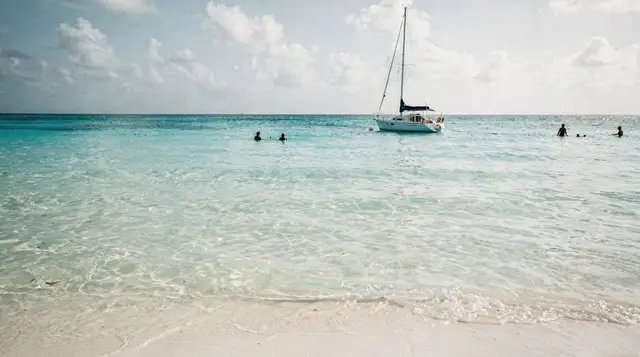
Playa Las Perlas and Playa Caracol, near the start of the Hotel Zone close to downtown, sit inside the sheltered bay. The water is shallow and calm enough for small kids, and both have decent free public access points with parking.
Playa Chac Mool, roughly mid-Zone, picks up more swell and is popular with confident swimmers and the occasional surfer on a good day, though it’s not a dedicated surf beach. Playa Tortugas is the most convenient all-rounder — calm water, food stalls, and jet-ski and parasail operators right on the sand, which also makes it the busiest.
Playa Marlin and Playa Ballenas, further down the strip, are quieter simply because they’re less signposted from the main road and sit in front of fewer all-inclusive resorts — worth seeking out if you want fewer crowds without leaving the Hotel Zone.
Finding free public access
Mexican federal law keeps every beach public, but “public” doesn’t always mean an obvious path to the sand — some stretches are boxed in by resort grounds. Look for the official blue-and-white “Acceso a playa pública” signs along Boulevard Kukulcán; they mark walkways, small parking areas, and sometimes basic bathrooms. The public beach access guide maps the main entry points if you’re staying downtown or don’t want to walk through a resort lobby.
If Cancún’s beaches aren’t cutting it
When sargassum is heavy or you just want calmer, clearer water, the short ferry to Isla Mujeres is the easiest upgrade — Playa Norte there is shallower, calmer, and usually far less seaweed-affected than the mainland; see the Isla Mujeres day trip guide. A catamaran tour with snorkelling and Playa Norte makes the crossing easy. Families in particular tend to prefer that combination of calm water and golf-cart-paced island life — more on that in the Cancún with kids guide.
How to pick a beach based on who you are
The table at the top gives the quick version, but the right beach depends on who is coming with you. A few common situations, and what tends to work.
Travelling with small children. Stay on the bay side. Calm, shallow water means you can relax a little instead of watching every wave, and the beaches near Punta Cancún are close to restaurants and bathrooms. Bring a hat and a shade option for the little ones, and plan the beach for the morning, before the sun is at its harshest. For the wider family picture, the Cancún with kids guide covers what else is worth your time, and the family itinerary shows how to balance beach days with other plans.
Travelling as a couple. The open-sea beaches reward a slow walk at the edge of the water, and the quieter stretches further down the strip feel less crowded. Pair a calm swim on one day with a long sunset stroll on another. If romance is the brief, the honeymoon itinerary gives an idea of how beach time can sit alongside other highlights.
Travelling with a group of friends. Playa Tortugas is the obvious choice for convenience: food, drinks and activity operators are all within a few steps. If your evenings matter as much as your days, the nightlife guide is worth a look before you decide where to base yourselves.
Travelling solo or on a tight budget. Every beach here is free, so the real cost is getting there and what you buy once you arrive. The bus along the strip keeps transport simple, and the Cancún budget guide goes into how to keep the rest of the trip affordable too.
What to expect on a typical beach day
Most visitors underestimate how much a good beach day depends on small preparation. Arrive earlier than you think you need to: the sand is more pleasant, the light is softer, and it is easier to find a spot with some shade nearby. Midday is when the sun is strongest and the beaches fill up, so many people retreat to the hotel for lunch and come back later in the afternoon.
Pack light but sensibly. Water, sunscreen, a hat, a towel and a small bag for your valuables cover most of it. The packing list has the longer version if you are still deciding what goes in the suitcase. Reef-safe sunscreen is the considerate choice, since the water you are standing in is part of a living reef system.
If you plan to swim at an open-sea beach, take the waves seriously. Look at how other swimmers are behaving before you go in, keep an eye on any flags, and never assume the water is calm just because it looks pretty from the sand. Currents can be stronger than they appear, and children should always be within arm’s reach. When in doubt, move to the sheltered bay side, where the conditions are far more forgiving.
Water conditions and the best time of year
The calmest, clearest and most comfortable beach weather tends to come in the drier months, while the rainy season brings more cloud, heavier showers and a higher chance of disrupted plans. Sargassum is a separate factor and does not follow the same calendar as the weather, which is why it deserves its own check. The best time to visit Cancún guide lays out how the seasons compare, and the hurricane season guide explains what that part of the year means in practice for beach plans.
A useful habit: look at the sea on arrival rather than relying only on a forecast. If the east-facing beaches are rough or covered in seaweed on a given morning, the bay side or a different day will almost always give you a better swim. Flexibility is the most reliable beach strategy in Cancún.
Snorkelling and other things to do from the sand
Beaches in the Hotel Zone are mostly about sunbathing and swimming, but some of the nearby water is better suited to snorkelling than the main strands. If you want to see marine life rather than just lie beside the sea, the snorkelling guide explains where to go and what to expect. Playa Tortugas also has operators offering jet skis and parasailing right on the sand, which suits visitors who want something more active than a towel and a book. If you would rather pre-book, a snorkelling, parasailing and wave runner outing bundles those activities together.
For a different kind of water day entirely, the cenotes versus beaches comparison helps you decide when a freshwater swim is the better choice. And if you want a boat day with sea views and swimming stops, the Isla Mujeres catamaran guide is a good place to start. For something faster, a jet ski rental on the ocean side gets you out on the open water.
Choosing where to stay for the beach you want
Your hotel’s location decides which beach is your default, so it is worth thinking about before you book. A base on the bay side puts calm water on your doorstep, while a base along the open-sea stretch means bigger waves but often more space. The where to stay guide compares the options, and the Hotel Zone destination page gives a feel for the strip as a whole.
If you are weighing an all-inclusive against a more independent stay, remember that beach access is public either way. The all-inclusive comparison goes through the trade-offs, and your choice does not have to limit which sand you visit. Arriving by air? The airport transfer guide explains how to get to your hotel so you can be on the beach sooner.
Combining beaches with the rest of your trip
Beaches are rarely the whole trip. Most visitors mix a few beach days with ruins, cenotes and excursions, and the balance depends on how long you have. The how many days in Cancún guide helps you decide how much sand time to schedule, while the two-day itinerary and the five-day itinerary show how beach time fits into a real plan.
If you want to compare Cancún with other coastlines, the Playa del Carmen beaches guide and the Tulum beaches guide describe what the neighbouring stretches of the Riviera Maya offer. Each has its own character, and seeing more than one is a good way to work out what kind of beach you actually enjoy.
Staying comfortable and safe on the sand
Cancún’s beaches are busy, well-used places, and ordinary common sense goes a long way. Keep valuables to a minimum, do not leave bags unattended while you swim, and agree on a meeting point if you are in a group. For a wider view of safety in the area, the is Cancún safe guide and the general travel tips cover what first-time visitors should know.
Respect the environment too. Take your rubbish with you, avoid touching or standing on coral if you snorkel, and leave nesting areas undisturbed if you come across marked zones. The beaches here are the reason most people visit, and small habits from thousands of visitors make a real difference to how they look next season.
Popular Cancún tours on GetYourGuide
Verified deep-linked GetYourGuide tours. Book through these links and we earn a small commission at no cost to you.
These are our own photographs of the area, not the operator's pictures of this tour — open the tour page to see those.