Tulum pueblo is the actual town — the part of Tulum that is not on the beach. It sits a few kilometres inland, strung along Highway 307, and it is where most people eat affordably, sleep affordably, catch the bus, and run errands. It is unglamorous next to the beach strip, but it is also far better value and far more functional, and a lot of savvy first-timers base themselves here.
At a glance
| Where | Inland along Highway 307, about 3 km from the Tulum beach zone |
| Cost | Hostel bed around 250–500 MXN; taco meal under 200 MXN — the cheapest base on this coast |
| Time needed | 2–4 days as a base for the beach, ruins, and cenotes |
| Getting there | ~2 hrs from Cancún by ADO bus or car; ADO station in town |
| Best time | December–April for dry weather; the pueblo works year-round |
What it actually is
The pueblo is a working coastal town: a main drag (Avenida Tulum) lined with taquerias, cafes, shops, dive operators, ATMs, pharmacies, and budget-to-midrange hotels and hostels, with quieter residential streets behind it. It has grown fast with tourism, so it is busier and more polished than it once was, but it still feels like a real place rather than a styled resort.
Crucially, the pueblo has the things the beach zone often lacks: reliable mains electricity, working Wi-Fi, air-conditioning, plenty of cheap food, and the ADO bus station that connects you to Cancún, Playa del Carmen, Valladolid, Mérida, and beyond. The Maya Train also serves Tulum, adding another way in and out.
Finding your feet on arrival
Orientation is easy because the town is built around one long avenue. Once you know where the bus station sits relative to the main drag, you can place almost everything else: the taco stands, the bike rental shops, the pharmacies, the laundries, the dive shops. Most visitors drop their bags, walk a few blocks, and have a clear mental map within an hour. Side streets get calmer the further you move from the avenue, and that is where the quieter guesthouses and long-stay rentals tend to cluster.
If you arrive by bus, the ADO bus guide for the Yucatán explains how the long-distance network works, and the Maya Train guide covers the rail option. If you are still deciding between coastal bases, the comparison of Cancún, Playa del Carmen and Tulum lays out how each one feels in practice.
Why stay here instead of the beach
The honest case for the pueblo is money and function. Hostel dorms run from roughly 250–500 MXN (about 14–28 USD), and decent private rooms or small hotels often 700–1,500 MXN (about 40–85 USD) — a fraction of beach-zone rates. Tacos cost 15–30 MXN each (under 2 USD), and a full local meal can be 100–180 MXN (6–10 USD). You also get reliable services and easy transport.
The trade-off is obvious: you are not on the sand. The beach is about 3 km away, a short bike ride or taxi (often 100–200 MXN, about 6–11 USD). For many travellers that is a fair swap — sleep cheap and comfortable in the pueblo, spend the day at the beach, and come back to better, cheaper dinners.
Eating in the pueblo
This is the pueblo’s strength. Avenida Tulum and its side streets are full of taco stands, cochinita pibil joints, marisquerias (seafood), vegetarian cafes, and a surprisingly strong digital-nomad cafe scene. You can eat extremely well for very little, and the variety beats the pricey, design-led restaurants on the beach road. Look for busy local spots at lunchtime for the best value and freshest food. For a fuller rundown of where to actually sit down, see the Tulum restaurants guide.
How to eat well without a plan
You do not need a reservation or a review app to eat well here. Walk the avenue at the hour locals eat, pick the stand with a queue and a quick turnover, and order what the person ahead of you ordered. Try the regional dishes if you are curious about what you are eating; the guide to Yucatán dishes explains the names you will see on menus, from slow-roasted pork to lime-heavy soups. Breakfast is a good time to explore too, since local cafes and bakeries are at their best early.
For a broader sense of how this compares with eating elsewhere on the coast, the Cancún food guide is a useful companion, and the Cancún budget guide shows how a pueblo base fits into a wider money plan.
Getting there and around
From Cancún, the pueblo is about a two-hour ADO bus ride or drive; buses also run frequently from Playa del Carmen, and colectivos shuttle up and down the coast cheaply. The Maya Train station adds a scenic option for some routes. Within the pueblo, everything is walkable, and bikes (cheap to rent) are the best way to reach the beach and nearby cenotes.
You do not need a rental car to enjoy Tulum, but one helps if you plan to chase cenotes and ruins across the region. Within town, parking is easy compared with the cramped beach road. See the Cancún to Tulum transport guide for the full breakdown of buses, colectivos, and shuttles into the pueblo.
Cenotes and day trips from the pueblo
The pueblo is well placed for the region’s cenotes — Gran Cenote, Cenote Calavera, and the Dos Ojos system are all a short ride away, and going at opening time means cooler, clearer, quieter water; the cenotes near Tulum guide ranks them by crowd level and swim style. If you’d rather skip the logistics, a guided Dos Ojos, Gran Cenote and Tulum ruins tour bundles all three. The Tulum ruins are about 4 km north, and Cobá’s tall jungle pyramid is roughly 45 minutes inland. From the bus station you can also day-trip inland to Valladolid, whose own colonial streets and town cenote are covered in the Valladolid day trip guide.
Choosing between cenotes and the beach
Many visitors wonder whether to spend a free day at the sea or in the water-filled caves. They are different experiences: the beach is about open sky, sand and long lazy hours, while a cenote is cool, shaded and best enjoyed early. The pueblo lets you do both in the same day without a long transfer. For specific places, read the Gran Cenote guide and the Dos Ojos guide, and if you are weighing the two styles of swimming, the blog post on cenotes versus beaches gives an honest take.
On the beach side, the Tulum beaches guide helps you choose a stretch of sand, and the Tulum beach clubs guide is worth a look if you want a lounger and a drink rather than a bare towel. Seaweed can change a beach day, so the sargassum guide is useful before you commit a whole afternoon to the coast.
Ruins and inland excursions
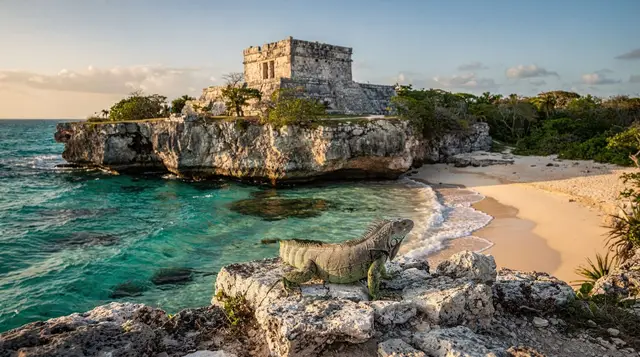
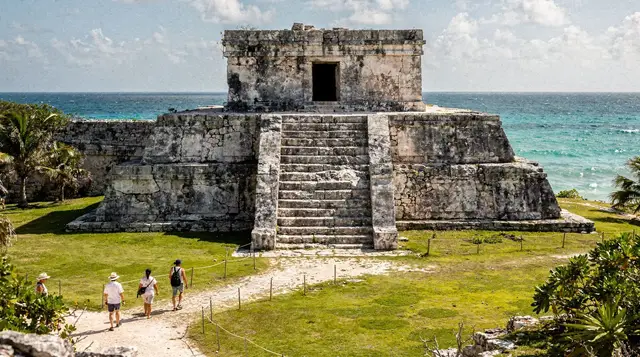
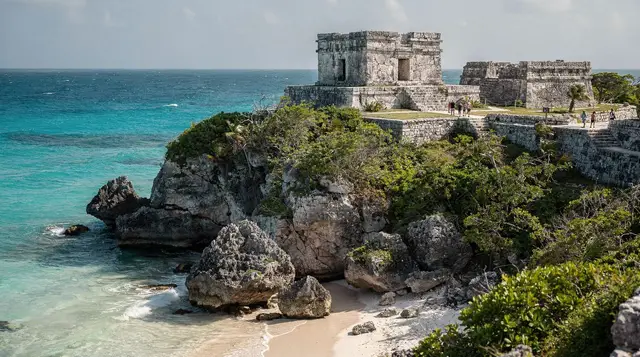
The ruins on the cliff are the obvious draw, and the Tulum ruins guide explains how to approach the visit so you are not caught in the heat of the day. If you would rather climb a pyramid, the Cobá ruins guide and the Cobá and cenote day trip show how to combine ancient stone with a swim. The pueblo is a comfortable base for all of these because you return to a cheap dinner and a proper bed rather than a long commute. For a single day that covers both, a Cobá, Tulum, cenote and Playa del Carmen tour is an easy option.
A realistic day plan from the pueblo
A typical day looks like this: breakfast at a cafe on Avenida Tulum, bike or taxi to a cenote for the cool, clear morning water before the tour groups arrive, then across to the beach zone for a few hours in the sand and a beach-club lunch, and back to the pueblo for a cheap, excellent dinner once the beach-road prices lose their appeal. It is the rhythm most budget-minded visitors settle into after a day or two, and it is a large part of why so many end up extending their stay.
Practical tips and what’s changed
A few honest notes. The pueblo has grown fast and the main avenue is busy, noisy, and lined with traffic — if you want quiet, choose a hotel a few streets back. Bikes are cheap to rent (roughly 150–250 MXN a day, about 8–14 USD) and the best way to reach the beach, but the ride out has a stretch of road with traffic, so go carefully and use the bike lane where it exists. ATMs are plentiful in town and a better, lower-fee place to withdraw pesos than the beach zone; standalone street ATMs can carry high fees, so prefer ones inside banks.
Tap water is not drinkable, so refill bottles from the filtered dispensers most hotels and hostels provide rather than buying single-use plastic. Card payment is common, but keep cash for taco stands, colectivos, and small shops, which are often cash-only.
Staying longer and working from town
The pueblo is one of the easier places on the coast to settle into a routine. Cafes with good connections, shaded patios and a steady flow of regulars make it simple to work in the morning and swim in the afternoon. Because services are close together, errands that would be a hassle in the beach zone, such as laundry, a pharmacy run or a bank visit, take a few minutes on foot. If you plan to stay a while, ask about weekly rates at guesthouses, and pick a street with some shade.
If you want something restorative between busy days, the temazcal experience guide describes a traditional steam ceremony that several operators in the area offer.
Building a wider trip around the pueblo
A pueblo base works well as the middle of a larger route. The Tulum three-day itinerary gives a ready-made sequence, and the Tulum day trip from Cancún is useful if friends or family are staying elsewhere and visiting for the day. To move around the region more broadly, the Riviera Maya getting-around guide compares the options, and the Cancún car rental guide helps if you decide a car suits your plans.
Nearby stops are easy to add: Akumal is a natural stop for sea turtles and calm water, Playa del Carmen offers a livelier contrast, and Bacalar is a good follow-on for travellers heading south. For the bigger picture of the town and the area around it, see the main Tulum destination page.
Who the pueblo suits
The pueblo is the natural home base for budget travellers, backpackers, solo travellers, and the large digital-nomad crowd that has settled in Tulum — there are co-working cafes, long-stay rentals, and a sociable hostel scene. It also suits families and couples who would rather spend their money on cenote trips and good food than on a beachfront room, and who don’t mind a short ride to the sand. The people it suits least are those whose whole reason for coming is to wake up on the beach with resort-style service — for them, the beach zone, with its higher prices, is the trade-off to accept.
Is it worth it?
Tulum pueblo is the practical, affordable heart of Tulum, and for budget travellers, foodies, and anyone who values reliable services it is the smartest place to base. You trade beachfront for lower prices, better food, and easy transport — then ride or taxi to the sand whenever you want it. Pair a pueblo base with early-morning cenote trips and a sunset on the beach, and you get the best of Tulum without the beach-zone bill.
Frequently asked questions about Tulum Pueblo
Is Tulum pueblo safe to walk around at night? Avenida Tulum and the streets around the plaza are well lit and busy with locals and travellers well into the evening; use normal city sense (stick to lit streets, watch traffic) rather than any special precaution.
Can I walk from the pueblo to the beach? It is possible but not pleasant — it is a few kilometres along a road with fast traffic and little shade. Almost everyone bikes, taxis, or takes a colectivo instead.