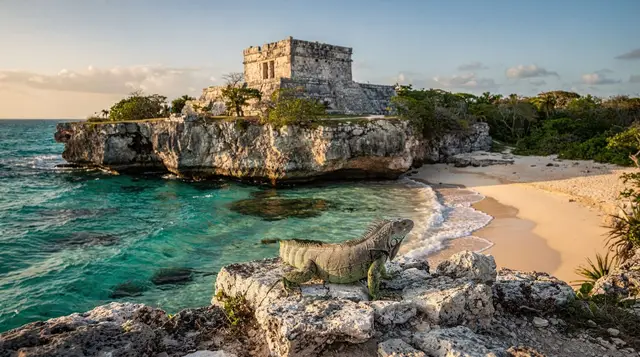
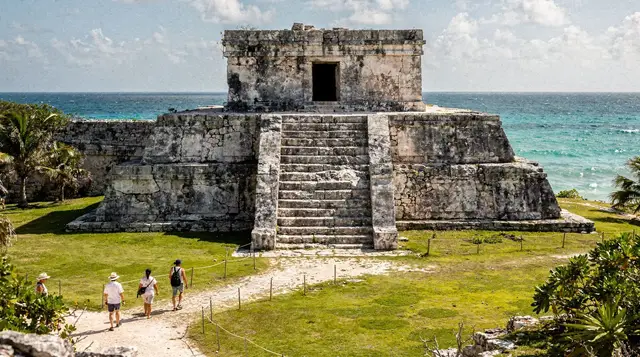
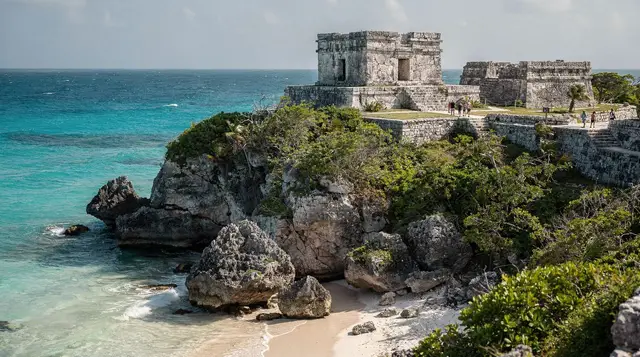
The Tulum beach zone (zona hotelera) is the strip everyone has seen on Instagram: a single narrow road running for kilometres behind the dunes, lined with thatched-roof boutique hotels, beach clubs, yoga studios, and candle-lit restaurants, all styled in a deliberate jungle-bohemian look. It is genuinely beautiful and genuinely expensive, and the gap between the marketing and the reality is worth understanding before you book.
| Where | A single beach road behind the dunes, about 3 km from Tulum pueblo |
| Cost | Hotel rooms often 150–500+ USD/night in season; mains around 20–40 USD |
| Time needed | A day trip works; 1–3 nights if you stay |
| Getting there | Bike, taxi, or colectivo from the pueblo; ~2 hrs from Cancún by car or ADO |
| Best time | December–April for dry weather and the least sargassum |
What it actually is
This is not a town — it is a coastal road behind the beach with hotels on both sides, most of them small and design-driven, many running on generators and limited services. The aesthetic is “barefoot luxe”: macramé, exposed wood, mood lighting, swing seats. There are no high-rise resorts and no big chains on the beach road itself; that is the whole point and the reason prices are high.
The beach is the real draw — soft white sand and turquoise water, with the famous palm-leaning-over-the-sea shots taken here. Because Mexican beaches are public by law, you can access the sand even if you are not a guest, though the practical entry points are through beach clubs or public access paths between properties.
The catch: prices, power and seaweed
Three honest warnings. First, prices are steep — beach-zone hotel rooms commonly run 150–500+ USD a night in season, and restaurant mains often land at 350–700 MXN (about 20–40 USD), sometimes billed in dollars at unfavourable rates. Cocktails can hit 200–300 MXN. You pay a heavy premium for the location and the look.
Second, infrastructure is patchy: many hotels run on generators, Wi-Fi and air-conditioning can be limited or absent (some rooms are fan-only on purpose), and the single road jams with traffic in high season. Third, sargassum (brown seaweed) can blanket this coast roughly May to August, worst in June and July — when it hits, the postcard turquoise turns murky and hotels rake the beach constantly. The dry months, December to April, are when the zone looks like the photos. Check our sargassum guide before you travel if you’re visiting outside those months — it covers current conditions across the whole coast, not just Tulum.
Beach clubs and how to spend a day
If you are not staying on the beach, the easiest way to enjoy it is a beach club day pass or minimum spend, typically around 500–1,500 MXN per person (roughly 28–85 USD) depending on how upscale the club is, often redeemable against food and drinks. That gets you a lounger, shade, bathrooms, and beach service. Some travellers find them overpriced; the budget alternative is to find a public access path, bring your own towel and shade, and buy nothing.
The vibe runs from chilled-out yoga-and-smoothies to full DJ beach parties — the zone has a real club scene at the southern end. Decide which you want before you pick a spot.
Choosing your stretch of the road
Not every part of the beach road feels the same. The northern end, closer to the ruins, tends to be calmer and easier to combine with a morning of sightseeing. The middle is where most of the boutique hotels and restaurants cluster, so it has the most atmosphere and the most people. The southern end leans toward the party scene and then fades into quieter, wilder sand as you approach the reserve. If you want to sleep well, ask the hotel how close it sits to a club; sound travels easily across open-air properties.
For a deeper comparison of the sand itself, including which stretches are best for swimming and which are better for walking, read our Tulum beaches guide. If you are still deciding which clubs deserve your money, the Tulum beach clubs guide goes through the different styles so you can match one to your mood.
A sample day on the sand
A good beach-zone day starts early. Cycle or taxi down from the pueblo while the light is soft and the road is quiet, and take your first walk along the water before the loungers fill. Late morning is the time for a swim and a long breakfast, then a club lounger or a free spot on a public stretch through the hottest hours. Come mid-afternoon, many people move to a shaded terrace for a slow lunch, because the sun on open sand is strong and there is little natural shade outside the clubs.
Stay for sunset if you can. The light on the dunes is the reason many photographers come, and the walk back along the road in the dusk, past candle-lit entrances, is part of the atmosphere. Plan your ride home in advance, though: taxis can be harder to find late at night, and cycling a dark road without lights is a bad idea. Bring a light, insect repellent and a small bag, and keep your phone charged before you leave a generator-powered hotel.
What to bring
Pack for sun, sand and unreliable power. Reef-safe sunscreen, a hat, a light cover-up, and a refillable bottle all help. A small dry bag protects your phone and cash from sea spray and sudden showers. A portable battery pack is useful if your room has limited power hours. Cash in pesos matters more here than almost anywhere else on the coast. For a fuller kit list, our Cancún packing list covers the basics that apply along the whole coast.
When to come, month by month
| Season | Water & weather | Prices & crowds |
|---|---|---|
| Dec–Apr (dry) | Clearest water, least sargassum | Priciest, busiest, especially Christmas–New Year and Easter |
| May–Aug | Warmer, sargassum risk climbs, worst Jun–Jul | Moderate crowds, some rate dips outside holidays |
| Sep–Nov | Hurricane season; storms possible | Quietest and cheapest, but weather is a real gamble |
If beach photos are the whole point of the trip, book the dry months. If your budget is the priority, shoulder months (May or November) often balance decent weather against lower rates.
Weather is only part of the picture. The coast-wide patterns in our best time to visit Cancún guide apply here too, and if you are travelling in the stormy months, the hurricane season guide explains how to plan flexibly and what to check before you commit to a non-refundable beachfront room.
What’s nearby, beyond the beach
The beach zone is also a genuinely good base for the rest of Tulum’s attractions. The Tulum ruins sit right at the northern end of the same coast road, an easy morning add-on before the beach crowds build. Inland, the region’s best cenotes near Tulum — Gran Cenote, Dos Ojos, Cenote Calavera — are a short taxi or bike ride away and make the obvious plan B on a seaweedy day. If you’d rather not organise it yourself, a Tulum ruins, turtle swim and cenote tour bundles the logistics into one day.
South of the hotel strip, the developed road ends and the Sian Ka’an biosphere reserve begins, reachable as a full-day tour. And if you want jungle pyramids over beach ruins, Cobá is about 45 minutes inland. For dinner, our Tulum restaurants guide covers where the beach-zone prices ease off a little in the pueblo.
Getting there and around
The beach zone is about 3 km from Tulum pueblo. From the town you can cycle (bike rentals are cheap and the most pleasant option), take a taxi (agree the fare first — short hops are often 100–200 MXN, about 6–11 USD), or catch a colectivo. From Cancún it is roughly a two-hour drive or ADO bus to the pueblo, then onward to the beach.
A car is more hassle than help here: parking is scarce and the single road clogs. Most people stay car-free, cycling or taxiing between pueblo and beach.
If you are arriving from the north, our Cancún to Tulum transport guide compares the options in detail. Short on time? The Tulum day trip from Cancún shows how to fit the ruins and a beach stop into a single day, though you will feel the road more than the sand. If you spend your first night in Cancún’s Hotel Zone before heading south, a private airport transfer to the Hotel Zone makes the arrival easy. For a longer stay, the 3-day Tulum itinerary spreads the beach, ruins and cenotes over a relaxed pace, and the wider Tulum destination page sets the beach zone in context with the town and the surrounding sights.
Stay here or in the pueblo?
This is the key decision. Stay in the beach zone if your priority is waking up on the sand and you have the budget and tolerance for generator quirks. Stay in Tulum pueblo (about 3 km inland) if you want far lower prices, more restaurant variety, reliable power and Wi-Fi, and easy access to cenotes and the bus station — then visit the beach by bike or taxi. Many first-timers find the pueblo the smarter base and treat the beach zone as a day-and-sunset destination.
Think about how you like to travel before you decide. If you want to wander out for tacos at night, compare prices, and have a choice of places, the pueblo gives you that freedom. If you would rather stay in one beautiful place and let the sea set the pace of the day, the beach road makes sense for a night or two. A split stay, a night or two on the sand followed by the rest of the trip in town, is a sensible compromise that lets you enjoy the setting without paying for it throughout. If you are comparing Tulum with its neighbours before choosing at all, see Cancún vs Playa del Carmen vs Tulum.
The eco-reality and the money side
The beach zone markets itself as eco-conscious — solar lamps, composting toilets, “off-grid” rooms — and some of that is genuine, but a lot is aesthetic. Many properties sit between the beach and a protected ecosystem, water and waste management are real challenges, and the area has faced periodic enforcement actions over construction. As a visitor, the practical effect is the rustic infrastructure mentioned above: don’t expect resort-grade reliability behind the rustic-chic look.
On money, come prepared. ATMs on the beach road are scarce and charge high fees, so withdraw cash in the pueblo first. Many places quote in US dollars and add service charges; check whether tax and tip are included before you are surprised by the bill. Paying in pesos usually gives a better rate than letting a venue convert dollars for you.
What’s nearby
The beach zone’s location is part of its value: the Tulum ruins sit at the northern end of the same coast road, and the region’s headline cenotes — Gran Cenote, Dos Ojos, Cenote Calavera — are a short ride inland, making an easy clear-water alternative on a seaweedy day. The Sian Ka’an biosphere reserve begins just south of the hotel strip, where the developed road gives way to wild lagoon and mangrove. Cobá’s jungle pyramid is about 45 minutes away. In short, you can stay on the beach and still reach ruins, cenotes, and nature without a long drive.
If you only have time for one swim in fresh water, the Gran Cenote guide explains what to expect there, and the Tulum ruins guide helps you time the visit so the heat and the crowds do not wear you down before you reach the beach.
Is it worth it?
The Tulum beach zone delivers on looks: at its best, in dry season with no seaweed, it is one of the most beautiful beaches in Mexico. Just go in knowing you are paying a premium for the aesthetic, that the infrastructure is intentionally rustic, and that summer seaweed is a real risk. Time it for December to April, decide between staying here or basing in the pueblo, and you will get the version of Tulum the photos promised.
Frequently asked questions about Tulum Beach Zone
Is the Tulum beach zone worth the higher prices? For the specific boho-luxe look and beachfront access, many travelers say yes, but it’s a real premium — staying in Tulum pueblo and visiting the beach by day is the better-value alternative for most budgets.
Do beach-zone hotels have reliable Wi-Fi and air conditioning? Not always — many properties intentionally run on generators with limited power hours, and some rooms are fan-only by design, so check specifics before booking if that matters to you.