Bacalar is a freshwater lagoon town near the Belize border, famous for water that shifts through up to seven shades of blue — from near-white turquoise over sandbars to deep navy where the lagoon drops into underwater sinkholes. It’s slower, cheaper, and far less developed than the coast up north, and travelers increasingly use it as the laid-back antidote to Tulum’s prices and crowds.
| Where | South Quintana Roo, near the Belize border |
| Cost | Dorms ~250–400 MXN; mid-range hotels ~800–2,000 MXN/night; boat tours ~350–600 MXN |
| Time needed | 2–3 days |
| Getting there | ~4.5–5 hrs south of Cancún by car, ADO bus, or Maya Train |
| Best time | December–April; mornings for the calmest, clearest water |
Why seven colors
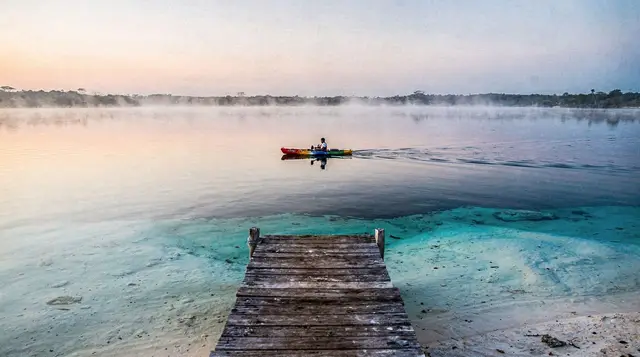
The “seven colors” aren’t a gimmick. The lagoon sits over a white limestone and gypsum bed, and the water’s clarity means the color you see depends entirely on depth. Shallow sandy stretches glow pale aqua; channels and the deep cenotes within the lagoon read as inky blue. Stand on a dock and you’ll see distinct bands of color side by side. It looks unreal in photos and, unusually, looks just as good in person — provided the water is calm.
What to actually do
The lagoon is the attraction, so most of your time is on or in the water:
- Kayak or paddleboard at dawn, when the surface is glassy and the color bands are sharpest. Rentals run roughly 150–300 MXN (about 9–18 USD) per hour.
- Sailboat or pontoon tours cruise to highlights like the Cenote Negro (a deep sinkhole), the “Pirate Channel,” and the stromatolites. Shared boat tours run around 350–600 MXN (20–35 USD) per person; private sailboats cost more. If you want a set itinerary, a boat tour of the Seven Colors lagoon covers the main stops.
- Swim at the public balneario or from a waterfront hostel/hotel dock.
- Visit the Fuerte de San Felipe, a small 18th-century fort built against pirate raids, now a modest museum with good lagoon views.
The thing you must not do: the stromatolites
Bacalar’s shores host stromatolites — living rock-like structures built by microbes, among the oldest life forms on Earth and rare worldwide. They look like crusty grey mounds at the water’s edge and they are extremely fragile. Do not stand, sit, or walk on them, and avoid sunscreen near them. Damaging them is illegal and locals are protective for good reason. Use reef-safe, biodegradable sunscreen across the whole lagoon, or none at all — the freshwater ecosystem is delicate.
Getting there honestly
This is the catch with Bacalar: it’s far. From Cancún it’s roughly 4.5–5 hours by car or ADO bus heading south past Tulum and Mahahual. The Maya Train now serves a Bacalar-area station, which has cut travel time for some routes, but schedules are still settling — check current times before relying on it. ADO runs comfortable long-distance buses from Cancún, Tulum, and Chetumal; a one-way fare is roughly 300–600 MXN (18–35 USD) depending on the route and how far ahead you book.
Because of the distance, Bacalar is not a day trip from Cancún — at least not a sane one. Treat it as a 2–3 night destination, ideally combined with the southern coast or as the turnaround point of a longer Quintana Roo trip.
What it costs to stay
Bacalar is noticeably cheaper than Tulum. Hostel dorm beds start around 250–400 MXN (15–24 USD); simple guesthouses and mid-range hotels run roughly 800–2,000 MXN (about 50–120 USD) a night, with waterfront and boutique places climbing higher. Meals at local cocinas cost 80–150 MXN (5–9 USD); the handful of trendier lagoon-front spots charge Tulum-ish prices. Bring pesos — small businesses prefer cash and ATMs are limited.
How long to stay
Two to three days is the sweet spot: one to get out on the lagoon at dawn, one to swim, paddle, and do nothing, and slack for the long travel days at each end. People who go just for a quick overnight often regret rushing the four-plus-hour drive each way.
Is it worth it?
If you want turquoise water, slow days, and a fraction of the coast’s crowds and prices — yes, Bacalar is one of the most rewarding stops in the region. The honest caveats: it’s a long haul, it’s a freshwater lagoon rather than a beach (no surf, no white-sand Caribbean shoreline), and “developed nomad town” energy has crept in. Manage those expectations and it’s a highlight.
A few practical notes
Bacalar rewards a slow approach, but a couple of realities are worth knowing. The town center sits up on a small bluff above the lagoon, so most accommodation is either lakefront (with private docks, pricier) or in town (cheaper, but you’ll walk or taxi down to swim). Decide which matters more before booking. The lagoon has no waves and a soft, sometimes muddy or seagrass-y bottom in places — it’s a swimming and paddling destination, not a sandy beach.
Wind is the variable that makes or breaks the experience: calm dawns give you the mirror-flat, multi-banded blue, while afternoon chop flattens the colors and can make kayaking work. Plan water activities for early. Internet and nomad infrastructure have improved, but power and connectivity can still be patchy at smaller lakefront places, so don’t count on Bacalar for heavy remote-work days without checking first. Mosquitoes are present near the mangroves at dusk; bring repellent for evenings, but keep it off your skin when you get in the lagoon.
Choosing how to get there
The right way south depends on how you like to travel. The bus is the simplest: the ADO bus guide explains how the long-distance network works, and a coach means you can watch the scenery, nap, and arrive without having to think about parking. The train is the novelty option, and the Maya Train guide is the place to check how it fits your route and what to verify before you buy. Driving gives you the most freedom, especially if you want to stop along the way, and the Cancún car rental guide covers what to know before you pick up keys. If you are starting from the coast rather than the airport, the Cancún to Tulum transport guide covers the first stretch of the same journey.
Whichever you pick, leave early in the day. Arriving with daylight left means you can check in, walk down to the water, and see the lagoon before dusk instead of spending your first evening hunting for dinner in the dark. If you’d rather not manage the logistics, a Bacalar tour from Cancún handles the long transfer for you.
A sample rhythm for your days
Because the lagoon changes with the wind, it helps to build the day around the water rather than around a list of sights. A simple pattern works well.
Arrival day. Drop your bags, take a slow walk through town, and get oriented. Find the water, see where the docks are, and pick the spot you want to swim from. Have a relaxed meal at a local cocina and turn in early, because the best light comes first thing.
Full day on the lagoon. Be on the water at dawn for the calm surface and the clearest color bands. Kayak or paddle while it is still, then head back for breakfast. Later in the morning, a shared boat tour covers the sinkhole, the channel, and the stromatolites from a respectful distance, or you can book a private pontoon tour on the lagoon for more space. Spend the hot hours swimming from a dock or reading in the shade, and keep the late afternoon for the fort and the town.
Departure day. Take one last early swim if the schedule allows, then start the long ride back. Do not book a tight connection for the same evening; the road south and north both have a way of running long.
If you have a third day, use it to do less. Rent a bike or simply walk, linger over a long lunch, and let the place settle in. That slowness is exactly what most people come to Bacalar for.
What to pack and what to leave behind
Packing for a lagoon is different from packing for the resort strip. Bring a hat, a rash guard or light long-sleeved top so you rely less on sunscreen, and a reef-safe or biodegradable sunscreen for the moments you do need it. Water shoes help on the soft, sometimes uneven lagoon bottom and around docks. A small dry bag is useful on kayaks and boats, and a refillable bottle keeps you hydrated through long days in the sun. Pack insect repellent for the evenings, and a light layer for breezy mornings on the water. The general Cancún packing list covers the basics, and the lagoon adds only a few items on top.
Leave behind anything you would hate to see damaged by water, and leave behind the habit of treating every swim spot like an ocean beach. Here the water is still, the bottom is soft, and the ecosystem is easily disturbed.
Money, planning and the wider trip
Because small businesses lean toward cash and machines can be scarce, plan your money before you arrive rather than after. It is easier to budget when you know the broad picture of what a Mexican Caribbean trip costs, and the Cancún budget guide is a good reference for setting expectations, even though Bacalar itself sits on the cheaper end. For timing, the best time to visit guide explains the seasonal patterns that also shape conditions on the lagoon, and the Cancún travel tips cover the everyday habits that make any stop in the region smoother.
If Bacalar is one stop in a much longer journey, the Yucatán 10-day road trip shows how the south can fit into a bigger loop, and the Costa Maya page is useful if you want to extend toward the reef coast.
Who will love it, and who may not
Bacalar suits people who are content with simple pleasures: a hammock, a paddle, a swim, a good meal, and an early night. Couples tend to love the quiet and the sunrise light. Kayakers and swimmers get a calm playground. Remote workers like the pace, provided they check the connection first.
It suits others less. If you need nightlife, big resorts, or a long sandy beach with waves, you will probably be happier elsewhere on the coast. Travelers with very limited time may also feel the distance outweighs the reward. Be honest with yourself about which group you belong to, and the decision becomes easy.
Combining it with the south
Bacalar pairs naturally with Mahahual and the Costa Maya reef an hour or so north, and with the Sian Ka’an biosphere if you’re working your way down from Tulum. Many travelers string Tulum → Sian Ka’an → Mahahual → Bacalar into a southern Quintana Roo loop that escapes the resort strip entirely — see the dedicated Bacalar day trip guide if you’re weighing a rushed visit against staying over, and the Cancún vs Riviera Maya guide for how the far south fits the bigger regional picture.
Bacalar vs Tulum: which slow-travel base wins
Both get pitched as the “escape the crowds” option, but they solve different problems.
| Bacalar | Tulum | |
|---|---|---|
| Distance from Cancún | ~4.5–5 hrs | ~2 hrs |
| Water | Freshwater lagoon, no waves | Caribbean Sea, beach + surf |
| Crowds | Light to moderate | Heavy, especially beach zone |
| Prices | Noticeably lower | Higher, especially beach clubs |
| Best for | Slow days, kayaking, digital nomads | Beach + ruins + nightlife |
If you want a beach vacation with ruins nearby, stay in Tulum. If you want water, quiet, and a lower bill and don’t mind the drive, Bacalar wins.
A note on safety and pace
Bacalar sits in a quieter part of Quintana Roo than the resort corridor, and most visitors report it feels relaxed and low-key. As anywhere, stick to well-reviewed tour operators for boat trips, avoid swimming alone in unmarked parts of the lagoon after dark, and keep the same general travel precautions you’d use in Cancún or elsewhere on the coast. For a broader look at the question, the is Cancún safe guide covers the practical precautions that apply across the region.
Frequently asked questions about Bacalar
Can you do Bacalar as a day trip from Cancún? Not sensibly — it’s roughly 4.5–5 hours each way, so a day trip means 9+ hours of travel for a few hours at the lagoon. Treat it as a 2-3 night stop instead, ideally combined with Mahahual or Tulum.
Is Bacalar cheaper than Tulum? Yes, generally — accommodation, food, and tours in Bacalar run noticeably lower than Tulum’s beach-zone prices, though a handful of trendier lagoon-front spots have caught up.