Puerto Juárez isn’t a destination you linger in — it’s the working ferry port in northern Downtown Cancún where the boats to Isla Mujeres leave from. But it’s worth a page of its own, because using it correctly saves you money and gets you to the island faster than the options the resorts steer you toward. Knowing your terminals here is genuinely useful.
| Where | Northern Downtown Cancún, on the mainland shore facing Isla Mujeres |
| Cost | Round-trip ferry (check fares on ultramarferry.com); R-1 bus there ~12 MXN |
| Time needed | 15–20 minutes for the crossing itself; it’s a transit point, not a stop |
| Getting there | R-1 bus or taxi from the Hotel Zone (~250–350 MXN); short and cheap from downtown |
| Best time | First morning sailing, to beat the Hotel Zone tour boats to the island |
Why Puerto Juárez matters
There are several places you can catch a boat to Isla Mujeres, and they are not equal:
- Puerto Juárez (Ultramar terminal), Downtown Cancún: the main passenger ferry port. Frequent departures, the standard fare, and the closest crossing point to the island — about a 15–20 minute ride.
- Hotel Zone docks (e.g. Playa Tortugas, El Embarcadero): more convenient if you’re staying on the strip, but typically pricier and less frequent, and some are bundled into pricier “tours.”
If you’re counting pesos, Puerto Juárez from downtown is the value play. If you’re deep in the Hotel Zone and short on time, weigh the higher dock fare against the cost and hassle of getting downtown first.
Ferry prices and schedules (what to expect)
Two operators have run the route over the years; Ultramar is the dominant one from Puerto Juárez. Check current round-trip fares on ultramarferry.com; children pay less. Tickets are paid at the terminal booth — and be aware that street touts outside sometimes quote inflated or bundled prices, so buy at the official window.
Sailings are frequent, commonly every 30 minutes through the day, with the first departures in the early morning and last returns in the evening. Times shift seasonally, so check the current schedule on the day and, crucially, confirm the time of the last boat back so you don’t get stranded on the island.
Getting to Puerto Juárez
- R-1 bus: runs from the Hotel Zone through downtown and passes near the port for the usual ~12 MXN. Tell the driver “Puerto Juárez” or “el ferry.” Cheapest option by far.
- Taxi: from the Hotel Zone, roughly 250–350 MXN; from downtown, much less. Agree the fare before getting in, as taxis here aren’t metered.
- Car: there’s paid parking near the terminal if you’re driving, since cars generally stay on the mainland (Isla Mujeres is best explored by golf cart, rented on the island).
What’s actually there
Don’t plan to spend time in Puerto Juárez itself. It’s a functional port area with the ferry terminal, ticket booths, parking, a few snack stands, and bathrooms — nothing scenic. Arrive, buy your ticket, board, and save your day for the island. There’s no reason to stay overnight here; if you want to be near the early ferry, base yourself in nearby Downtown Cancún instead.
Gran Puerto vs the classic Puerto Juárez name
Signage and maps sometimes call this terminal “Gran Puerto Cancún” — a rebrand of the same Ultramar dock most locals and taxi drivers still know as Puerto Juárez. Don’t let the naming confuse you: tell any driver “Puerto Juárez” or “el ferry a Isla Mujeres” and you’ll end up at the right terminal either way. There is only one main passenger port here, so you won’t be split between competing docks the way you might be figuring out the ferry to Cozumel from Playa del Carmen.
A smooth island day, start to finish
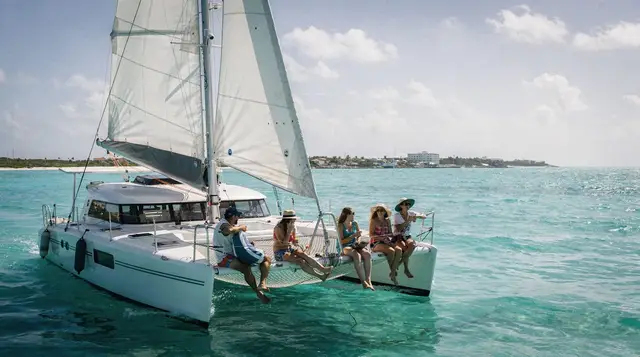
Aim to be at Puerto Juárez for one of the first morning ferries. You’ll reach Isla Mujeres before the big Hotel Zone tour boats unload, giving you quieter time at Playa Norte — one of the best swimming beaches in the whole region, calm and shallow with barely any sargassum. Rent a golf cart on the island to loop the south end, the Punta Sur cliffs, and the sculpture park. Then time your return for the evening, having confirmed the last sailing earlier in the day. Done this way, the cheap little port becomes the gateway to one of the easiest, most rewarding day trips from Cancún. If you’d rather skip the ferry queue entirely, a catamaran with open bar, snorkeling and lunch sails straight from Cancún.
Avoiding the common rip-offs
A few traps catch first-timers at Puerto Juárez and the surrounding docks. Street touts outside the terminal sometimes intercept you with friendly questions and steer you toward overpriced “tours,” timeshare presentations, or inflated ferry tickets — buy only at the official Ultramar window inside.
Hotel Zone “ferry tours” bundle the crossing into a pricier package with stops you may not want; if all you need is a ride to the island, the plain round-trip ticket from Puerto Juárez is cheaper and gives you a free day. And in the parking and approach area, anyone insisting you must pre-pay for golf carts, beach clubs, or guides on the mainland is selling you something you can arrange better, and cheaper, on Isla Mujeres itself. Keep it simple: official ticket, board, sort the rest on the island.
What to bring across
Pack as if for a full beach day before you board, because prices on Isla Mujeres run higher than mainland downtown. Bring cash in small bills (for the golf-cart rental, beach clubs, and lunch), sunscreen and a hat, water, and a dry bag if you plan to snorkel. There are ATMs and shops on the island, but lines and markups are real. Confirm your return time, note which company you sailed with, and you’re set for one of the smoothest day trips in the region.
Puerto Juárez vs the Hotel Zone docks
It’s worth spelling out the choice, because it’s the main decision you’ll make. From Puerto Juárez you get the most frequent sailings, the standard (lowest) fare, and the shortest crossing, but you have to get yourself to downtown first. From the Hotel Zone docks (Playa Tortugas, El Embarcadero and others), you save the trip downtown if you’re staying on the strip, but you’ll generally pay more, sail less often, and sometimes only as part of a packaged tour. The math usually favors Puerto Juárez for budget travelers and anyone already downtown, and the Hotel Zone docks for time-pressed resort guests willing to pay for convenience. Either way, you reach the same island in well under half an hour.
| Puerto Juárez | Hotel Zone docks | |
|---|---|---|
| Fare | Standard, lowest round-trip | Generally higher, sometimes bundled |
| Frequency | Most frequent, ~every 30 min | Less frequent |
| Crossing time | Shortest, ~15–20 min | Longer, depending on dock |
| Best for | Budget travelers, downtown stays | Time-pressed Hotel Zone guests |
Making the most of your day on the island
Once you land, most first-timers head straight for Isla Mujeres and Playa Norte, but it’s worth deciding in advance whether you want a self-guided Isla Mujeres day trip with a rented golf cart, or a packaged Isla Mujeres catamaran tour that bundles snorkeling stops and lunch. The golf-cart route is cheaper and more flexible; the catamaran is easier if you’d rather not navigate, and a catamaran tour with snorkeling and Playa Norte covers both in one outing. Either way, remember that every beach you’ll set foot on, including Playa Norte itself, falls under Mexico’s public beach access rules, so you’re never obliged to pay for entry, only for chairs, food, or gear.
Fitting the ferry into a longer Cancún stay
Because Puerto Juárez is only a transit point, the useful question is where the island day sits in your week. If you have a short stay, the 2-day Cancún itinerary leaves little slack, so an early ferry is the way to fit an island in without losing the whole day to logistics. With a bit more room, the 3-day Cancún itinerary and the 5-day Cancún itinerary both give you space to treat Isla Mujeres as a relaxed outing rather than a rush. If you are still deciding how long to stay overall, the how many days in Cancún guide helps you weigh it.
A good rhythm is to put the island on a day when you have no other early commitments. Ferry days reward an unhurried start at the terminal, a slow lunch on the island, and a return before you are tired. Pairing it with a lazy beach morning or a late dinner downtown the evening before keeps the trip from feeling like a chore.
Choosing where to sleep if the ferry matters
You do not need to stay near Puerto Juárez, but it helps to know how your base changes the morning. From the Hotel Zone you will be relying on the R-1 bus or a taxi, so build in a buffer and leave a little earlier than you think you need. From downtown the journey is short and cheap, which is one reason the area suits budget travelers. Our where to stay in Cancún guide compares the areas, and the Hotel Zone page explains what you gain and give up by sleeping on the strip. If the main reason you are choosing a hotel is easy access to the island, downtown is the practical answer; if you mainly want a resort beach and will make only one ferry trip, the Hotel Zone is fine and the extra transfer is a small price.
Moving around once you are in Cancún
Puerto Juárez sits within the same bus network that serves the rest of the city, which is why the R-1 works so well for this trip. For a broader picture of how to get between the airport, the Hotel Zone, downtown and the port, the Cancún travel tips guide collects the practical basics, and the airport to Hotel Zone transfer guide covers your arrival. If you are renting a vehicle for other excursions, read the Cancún car rental guide before deciding whether to drive to the port at all. For most travelers who are only crossing to the island for the day, leaving the car behind is simpler.
If the weather turns
Sailings can be affected by rough seas or storms, and the practical advice is the same on any ferry day: look at the sky and the forecast the night before, keep your plans flexible, and talk to the ticket window if conditions look doubtful. During the stormier months it is worth reading the Cancún hurricane season guide so you know what to expect and how to adjust. On a windy day the crossing can feel livelier than usual, so anyone prone to motion sickness may want to sit toward the middle of the boat and keep their eyes on the horizon.
Traveling with children or a group
The ferry is straightforward for families: the terminal is simple to navigate, the crossing is short, and the island has calm swimming spots that suit younger kids. Keep everyone together in the queue, agree a meeting point before you board, and carry water and snacks, since the terminal offers little more than basic stands. If you are planning the wider trip around children, the Cancún with kids guide and the family itinerary show how an island day fits alongside everything else. For groups, it helps to nominate one person to buy the tickets so you are not holding up the window, and to settle on the return time together before splitting up on the island.
Other island options to compare
Isla Mujeres is the obvious reason to use this port, but it is not the only island within reach of Cancún. Between June and September, a whale shark swimming tour from Isla Mujeres is a worthwhile add-on. If you are weighing choices, the Isla Mujeres vs Cozumel comparison lays out how they differ, and the ferry to Isla Mujeres guide goes deeper on the crossing itself. Those who want a quieter, more remote feel can look at Holbox, which suits a longer stay rather than a quick outing from this terminal. Whichever you choose, the same principle applies: go early, confirm your return, and keep your plans simple.
Bottom line
Treat Puerto Juárez as pure logistics: the cheapest, most frequent, fastest crossing to Isla Mujeres, reached by a 12-peso bus. Buy tickets at the official Ultramar window, note the last boat back, and don’t pay a premium at a Hotel Zone dock unless the convenience genuinely outweighs it. Spend nothing here but transit time — the payoff is on the island.
Frequently asked questions about Puerto Juárez
Is Puerto Juárez the same as Gran Puerto Cancún? Yes — Gran Puerto Cancún is the official rebranded name for the same Ultramar ferry terminal most travelers and taxi drivers still call Puerto Juárez.
Can I buy a return ferry ticket in advance? It’s rarely necessary. Ultramar sells tickets at the terminal window throughout the day, and sailings are frequent enough that advance booking mainly saves you a short wait at busy times.