Puerto Aventuras is a gated marina community about halfway between Playa del Carmen and Tulum. It is not a town in the usual sense — it was master-planned around a man-made marina — and that shapes everything about the experience: tidy, secure, calm, and a little bit artificial. If you want street life and taquerias, this is not it. If you want a sheltered beach and a quiet base, it works.
| Where | Highway 307, ~20 min south of Playa del Carmen |
| Cost | Restaurant mains ~250–500 MXN; condos vary widely |
| Time needed | Half a day, or a base for a few quiet days |
| Getting there | Colectivo (~35–60 MXN) or car, ~1 hr from Cancún |
| Best time | December–April for dry weather and least sargassum |
What it actually is
The whole place is built around a horseshoe-shaped marina ringed by condos, a handful of restaurants, small shops, and resorts. There is a security gate at the entrance, and day visitors are usually waved through but may be asked where they are going. Everything is walkable in about fifteen minutes end to end. The atmosphere is more “residential resort” than “Mexican coastal town,” so set your expectations accordingly.
The catch is honesty time: prices inside the gate run higher than in nearby towns, the dining is limited, and the constructed feel can read as soulless if you were hoping for character. Many travellers visit for a couple of hours, swim, and move on.
The beaches
The main beach sits inside the marina’s protected curve, which makes the water unusually calm — genuinely good for small kids and nervous swimmers. By Mexican law every beach is public, so you can use it even if you are not staying at a resort, though the easiest access points are near the marina and the main hotels. The sand is decent rather than spectacular.
Like the rest of the Caribbean coast, sargassum (brown seaweed) can wash up roughly May to August, with the worst usually June and July. The sheltered geometry of the marina beach sometimes traps it, so check recent photos before you build a beach day around it. In the dry months, December to April, the water is typically clear.
Dolphins, snorkeling and the water
Puerto Aventuras has a long-running captive dolphin program in the marina, where you can pay to swim with dolphins. Be clear-eyed about this: these are dolphins kept in marina pens, and many travellers now skip captive-animal encounters on ethical grounds. If you want to see marine life in the wild instead, the reefs off Akumal and Puerto Morelos and the cenotes inland are better, more honest options.
For snorkeling, the calm water near the marina is fine for beginners, but the real reef action is a short drive away. Akumal Bay (about 10 minutes south) is famous for swimming with sea turtles, though it now has paid, regulated access and gets busy. If you’d rather not organise it yourself, a Tulum ruins, turtle swim and cenote tour bundles the turtles with a cenote and lunch. Bring your own mask if you have one — rentals on the coast run roughly 150–250 MXN (about 8–14 USD) per day.
A slow day in the marina
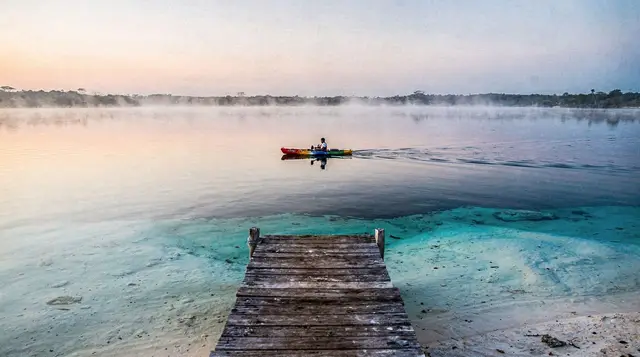
The best way to enjoy Puerto Aventuras is to stop trying to “do” it. Arrive in the morning, walk the edge of the marina while the boats sit quietly at their moorings, and look at the water before the day gets busy. Then head for the sheltered beach, swim, and let the afternoon drift. Lunch can be one of the marina restaurants, a long and unhurried meal with a view of the boats, which is the one thing you are really paying a premium for.
Late in the day the light on the marina is the nicest it gets, and the walk back toward the gate is easy even with tired kids. If you are staying elsewhere on the coast, this rhythm makes it a gentle contrast to a packed tour day. Our Riviera Maya 7-day itinerary shows how a calm stop like this fits between busier days.
Who it suits, and who should skip it
Puerto Aventuras suits families with small children, couples who want quiet, and anyone who gets stressed by traffic, hawkers and crowds. It also suits travellers who like the idea of a condo with a kitchen rather than a hotel room. If you are planning a family trip, the wider Cancún with kids guide helps you decide how much of the coast to cover and how much downtime to leave.
It suits far less well the traveller who wants spontaneous street food, live music in the evening, or a long list of places to wander into without a plan. For that kind of stay, the comparison of Cancún, Playa del Carmen and Tulum will point you somewhere livelier. If your main question is where to sleep on the whole trip, see where to stay in Cancún and the breakdown of all-inclusive versus staying independent.
Beach access and etiquette
Because beaches in Mexico are public, you can walk to the water without being a guest of any resort, but be sensible about it. Keep to the public stretches, do not set up on a resort’s private loungers, and ask politely if you are unsure. Our guide to public beach access explains how this works along the coast and what to expect at the gates and entrances. Take your rubbish with you, avoid touching the reef and the sea life, and keep sunscreen reef-safe, as the water here is part of a fragile coastal system.
Seaweed, weather and when to go
The seasons matter more than almost anything else for a beach-focused stay. If you are flexible, aim for the dry months and read the best time to visit Cancún guide before you lock in dates. For the seaweed question in particular, the sargassum guide explains how to check conditions and what the alternatives are when the beach is not at its best. Storm season brings its own considerations, covered in the hurricane season guide.
Water activities beyond the marina
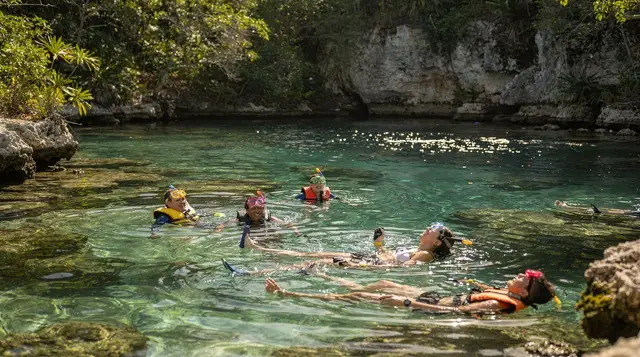
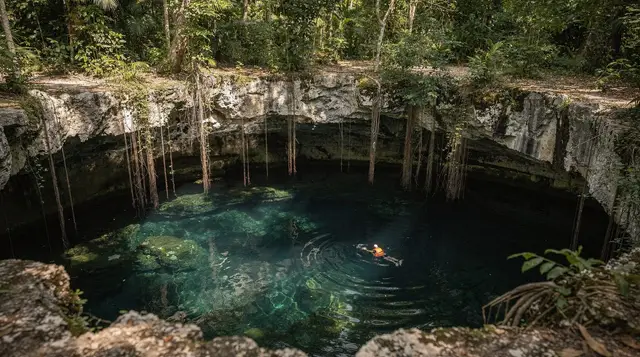
If you want to get in the water properly, treat Puerto Aventuras as a launch point rather than the main event. The snorkeling guide compares the options along the coast, and the nearby reef-side stops are far more rewarding than the marina itself. For freshwater swimming, the spring-fed pools inland are a different world: for something more active, an ATV, cenote and zipline adventure tour is an option, or browse the best cenotes in the Riviera Maya, or the family-friendly cenotes if you are travelling with young children. The wider cenotes of the Riviera Maya page gives the regional picture.
Neighbouring beaches worth a detour
Because you are in the middle of the corridor, a rental car or a few colectivo rides open up other stretches of coast. Xpu-Ha offers a more natural, open-sea beach feel, while Puerto Morelos to the north has a relaxed fishing-village character. If you want the famous clifftop and beach-club scene, the Tulum beach zone is the obvious contrast. If you are weighing the big theme parks, the Xcaret, Xel-Ha and Xplor guide will help you choose whether any of them deserves a day.
Planning the practical side
If you are tempted to drive, read the car rental guide first, since it covers what to check before you sign. For the general rules of the road, tips and scams to watch for, the Cancún travel tips page is a good companion, and the packing list saves you from forgetting the basics such as reef-safe sunscreen and a mask of your own. Travellers who want reassurance about the area can also read is Cancún safe.
How it compares to nearby bases
Puerto Aventuras sits between two very different alternatives. Playa del Carmen, 20 minutes north, has the walkable town, Fifth Avenue, and the Cozumel ferry, but none of the calm. Akumal, 10 minutes south, has the famous turtle snorkeling but even less infrastructure. If your priority is calm, sheltered water for young kids and you don’t mind limited dining, Puerto Aventuras wins; if you want a sense of place and things to do on foot, base in Playa instead and treat this as a stop, not a destination — see Cancún vs. Playa del Carmen vs. Tulum for the wider comparison.
Getting there and around
Puerto Aventuras sits right off Highway 307. From Cancún it is about an hour by car; from Playa del Carmen, around 20 minutes. The cheapest way is a colectivo (shared van) running the Playa–Tulum corridor — flag one along the highway and pay roughly 35–60 MXN (about 2–3 USD) depending on distance, then walk in from the gate. Taxis are available but pricier and you should agree the fare first, as the meters are decorative.
You do not need a rental car to visit, but having one makes it easy to combine Puerto Aventuras with Akumal, the cenotes at Dos Ojos, and Tulum in a single day. There is no train station in the town itself; the nearest Maya Train stops serve the larger hubs.
Eating and staying
Dining is the weak point. There are a dozen-odd restaurants around the marina — seafood, Italian, casual international — and they are pleasant but tourist-priced, often 250–500 MXN (about 14–28 USD) for a main. For better value and more variety, drive or colectivo to Playa del Carmen or Tulum pueblo for dinner.
Accommodation is mostly condos and a few all-inclusive resorts. Renting a condo can be good value for families who want a kitchen, a pool, and a safe place for kids to roam. If you want nightlife, restaurants within walking distance, and a sense of place, base yourself in Playa del Carmen and treat Puerto Aventuras as a calm beach stop rather than a destination in its own right.
What’s nearby
Puerto Aventuras’ best feature might be its position: it sits in the middle of the Riviera Maya’s best day-trip cluster. Akumal Bay and its sea turtles are about ten minutes south. The Dos Ojos cenote system — some of the most famous snorkeling and cave-diving cenotes in the world — is roughly fifteen to twenty minutes away, with entry typically around 350–600 MXN (about 20–34 USD).
Tulum and its clifftop ruins are about forty minutes south, and Playa del Carmen’s Fifth Avenue twenty minutes north. With a car or a string of colectivos, you can base here and never be bored, even though the town itself is small. Our getting around Riviera Maya guide covers the colectivo fares and routes in more depth. If you’d rather not drive, a guided Tulum ruins and cenotes tour with lunch handles the logistics.
The gated layout also means it is one of the safer-feeling stops on the coast for travellers nervous about driving and parking in busier towns — there is a guarded entrance and a calm, low-traffic interior, which is reassuring for first-timers and families.
Money and practical tips
Inside the gate, card payment is widely accepted and some restaurants quote in USD, but you will usually get a better rate paying in pesos, and small vendors prefer cash. There is an ATM or two, but withdraw what you need in Playa del Carmen or Tulum where fees can be lower. Tap water is not drinkable anywhere in Mexico, so stick to bottled or filtered water. Reef-safe sunscreen is the responsible choice given the nearby reefs and the marine park status of stretches of this coast.
If you visit between May and August, check a sargassum tracker before committing to a beach day, and have the cenotes as a clear-water backup — they are spring-fed and never affected by the seaweed that hits the open coast.
Is it worth it?
Puerto Aventuras is best understood as a quiet, sheltered, secure base — ideal for families with young kids or anyone who wants calm water and a low-key few days, and willing to trade local character and dining variety for that calm. As a day trip it is a pleasant half-hour swim, not a must-see. Skip the captive dolphins, use the public beach, and pair it with Akumal’s turtles or a nearby Dos Ojos cenote to make the drive worthwhile.
Frequently asked questions about Puerto Aventuras
Is Puerto Aventuras worth visiting if you’re staying in Playa del Carmen? As a half-day stop, yes — the calm, sheltered beach is a nice change of pace and it’s only about 20 minutes away, but it’s not worth switching your whole base there unless you specifically want the gated, quiet feel.
Do you need a car to visit Puerto Aventuras? No — colectivos running Highway 307 between Playa del Carmen and Tulum will drop you at the gate for a small fare, though a car makes it easier to combine with Akumal and nearby cenotes in one day.