Isla Contoy is a small, uninhabited island about 30 km north of Cancún, run as a strictly protected national park and seabird sanctuary. You can’t stay overnight, you can’t visit independently, and the number of daily visitors is capped. That scarcity is exactly the point — but it also means you need to manage expectations before you book.
| Where | ~30 km north of Cancún, protected national park |
| Cost | Around 750–1,300 MXN (~40–70 USD) tour incl. park permit, often lunch |
| Time needed | A full guided day (roughly 7–9 hours door to door) |
| Getting there | Permitted boat tour only, from Cancún or Isla Mujeres |
| Best time | December–April for calm seas and clear snorkeling |
You can only go on a permitted tour
This is the headline rule. Contoy allows roughly 200 visitors per day, all of them on boats licensed by the park. There is no public ferry and no way to arrive on your own. You book a guided day tour — typically departing from Cancún, Isla Mujeres, or Cancún’s Hotel Zone marinas — and a park fee (around 750–1,300 MXN, about 40–70 USD depending on the operator and what’s included) covers the conservation permit. Always confirm the park fee is included so you’re not surprised at the dock.
Because of the cap and the weather, tours don’t run every day. Rough seas in winter cold fronts (nortes) or summer storms can cancel a departure outright, so build flexibility into your plans and don’t pin it to your last day.
What the day actually looks like
Most tours follow a similar rhythm: a morning boat departure, a snorkel stop on the reef along the way (often near Isla Mujeres or the Ixlache reef at the southern tip of Contoy), then a few hours on the island itself. On the island you’ll walk marked trails, climb the observation tower for views over the lagoon and mangroves, and visit the small museum and visitor center that explains the ecosystem. Lunch — usually grilled fish — is included on most trips, and you’re back in the afternoon.
It is a relaxed, low-intensity day. There are no shops, no bars, no loungers-for-rent — just beach, mangrove, trails, and birds. Bring everything you need, including reef-safe sunscreen (regular sunscreen is restricted to protect the water), a hat, and water.
The birds and the wildlife
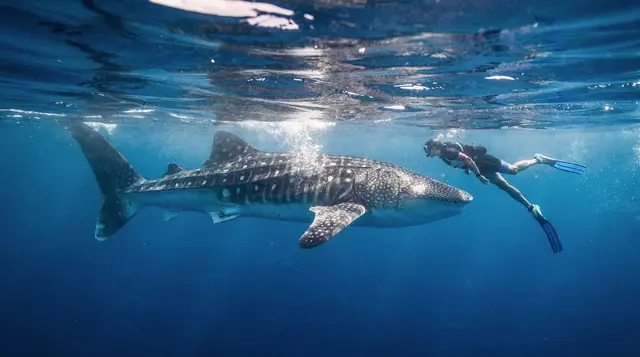
Contoy is a nesting ground for frigatebirds, brown pelicans, cormorants, and a range of seabirds — over 150 species are recorded here. Nesting activity peaks in spring and early summer, so if birdlife is your main reason for going, that’s the window. Sea turtles also nest on the beaches in season, and the surrounding waters are part of the same reef system that draws whale sharks offshore in summer. In season, a whale shark swimming tour with lunch makes a good companion day.
Be honest with yourself about the appeal: this is a quiet nature outing, not an adrenaline trip or a party boat. If you want lively beach clubs, choose Isla Mujeres; if you want birds, mangroves, and a snorkel in protected water, Contoy delivers.
The snorkeling and the reef
For many visitors the in-water time is the best part. The boat usually stops at a section of the Mesoamerican Reef — the second-largest barrier reef system in the world — near Ixlache at Contoy’s southern tip or off Isla Mujeres on the way. Expect colorful coral, parrotfish, sergeant majors, and decent visibility on a calm day. Gear is included on most tours, but the experience is weather-dependent: on a choppy day the water turns murky and the captain may swap the stop. If snorkeling is your priority, book in the December–April calm-sea window rather than the summer.
Conditions also matter for comfort on the island itself. Contoy has soft sand beaches, mangrove channels, and shallow lagoons, but no built infrastructure beyond the visitor center, composting toilets, and shade palapas. It is deliberately kept minimal — part of why the wildlife thrives.
A quick history and why it’s protected
Contoy was declared a protected area in 1961 and a national park in 1998, making it one of Mexico’s oldest marine reserves. The reason is its role as a nesting and feeding ground at the meeting point of the Caribbean and the Gulf, where nutrient-rich currents support huge concentrations of seabirds, turtles, and fish — the same productivity that draws whale sharks to the waters offshore each summer. Scientists run a small research station on the island, and the strict visitor cap exists precisely to keep human pressure low. Understanding that backstory turns the day from a generic boat trip into something with a point: you’re visiting a working conservation reserve, not a resort beach.
How it compares to Isla Mujeres and Holbox
Many operators sell Contoy combined with Isla Mujeres as a single long day, which is a sensible way to see both — Mujeres for its beaches and town, Contoy for the wild, protected side. Holbox, further north, is a separate multi-night trip and a different kind of island calm. If you want it as a day trip, a Holbox birdwatching and wildlife tour from Cancún is possible. If your time is tight and you want one island day from Cancún, Isla Mujeres alone is easier; add Contoy when you specifically want the nature reserve and don’t mind a longer day on the water. If you want the lively version of Isla Mujeres, an Isla Mujeres catamaran with snorkeling and lunch covers it in one day.
Practical notes before you book
- Confirm what’s included: transport, park permit, snorkel gear, lunch, and guide. Cheap quotes sometimes leave the park fee off.
- Bring cash for tips and any extras; there’s nothing to buy on the island.
- Motion sickness: the open-water crossing can be choppy, especially in winter cold fronts — take precautions if you’re prone to it.
- Reef-safe sunscreen only, and follow the no-touching, take-nothing rules. Removing shells, sand, or coral is prohibited.
- Weather buffer: book it early in your trip so a cancellation can be rebooked.
Contoy is a small, deliberate experience: a half-tamed island kept deliberately wild. Go for the birds, the empty beach, and the snorkel — and accept the rules that keep it that way.
Choosing your departure point and operator
Because tours leave from more than one place, the first decision is where you want your morning to start. Leaving from Isla Mujeres shortens the open-water leg, which helps if the crossing worries you, but it means getting yourself over there first; our ferry to Isla Mujeres guide explains how that works. Leaving from a Cancún marina is simpler if your hotel is nearby and the operator handles pickup. Either way, ask the operator plainly what the boat is like: shade, seating, a toilet on board, and how many people share it. A smaller group usually means more time at the tower and the trails and less time queuing for the snorkel ladder.
It also pays to ask who the guide is. On a bird island, a guide who can name what is perched in the mangroves turns a pleasant walk into a real outing. Reviews that mention the guide by name, or that talk about the birds rather than only the lunch, are a better signal than a polished listing. If you are weighing a sailing-style day instead, the Isla Mujeres catamaran guide shows what a more social day on the water looks like, so you can decide honestly which mood you are after.
Packing for a day with no shops
Nothing on Contoy can be bought once you land, so the bag you carry is the bag you live with. Think in layers: a light long-sleeved shirt for sun and wind on the boat, swimwear you are happy to wear under your clothes, a towel that dries quickly, and sturdy sandals or shoes that can handle sand and wooden walkways. Bring a refillable bottle, a hat, and insect repellent for the mangrove edges, checking first that it will not wash off into the water. A camera with a decent zoom is worth more here than a phone alone, because the birds will not come to you. Keep valuables to a minimum and put everything that must stay dry in a waterproof pouch. Our Cancún packing list covers the wider trip, and the sun-and-water basics apply just as well on this island.
Getting the most out of the island itself
Resist the urge to rush the trails. The best moments tend to come when the group thins out: a pelican gliding low over the lagoon, a frigatebird hanging motionless in the wind, a quiet stretch of beach with only footprints from your own boat. Walk slowly, keep your voice down, and stay on the marked paths, which exist to protect nesting ground and fragile vegetation. If your guide asks the group to hold back from a spot, that is usually about a nest or a resting animal rather than a formality.
The observation tower rewards patience. Give your eyes a few minutes to adjust to the view over the lagoon and mangroves, then scan slowly rather than looking for one big sight. The visitor center is worth a proper look too, since it gives the island’s story some shape before you head back out on the water. If you like to snorkel at your own pace, say so early to the crew; most are happy to point out where the calmer, shallower water is.
Respecting a protected reserve
Contoy is only still wild because visitors behave. Pack out everything you bring in, including small items like wrappers and bottle caps. Do not feed birds or fish, do not chase wildlife for a photo, and keep a respectful distance from anything nesting. In the water, avoid standing on coral and keep your fins away from the reef, since a single careless kick can undo years of growth. For a broader look at how to snorkel responsibly around here, see our snorkeling guide for Cancún. Another large protected area worth knowing about on the mainland is the Sian Ka’an biosphere, which pairs well with a nature-minded trip.
Fitting Contoy into the rest of your trip
Treat Contoy as one deliberate nature day inside a longer plan rather than the centerpiece of every day. Our Cancún travel tips are a good place to check the practical side before you commit, and the best time to visit Cancún guide helps line up your dates with the calmer sea months. If your trip falls in the stormier part of the year, read the hurricane season guide before you lock in a fixed date, and keep your Contoy day flexible.
If islands are the theme of your trip, the island-hopping itinerary linking Holbox and Cozumel shows how to string several together, and our Holbox destination page gives a sense of how different the northern island feels from a protected reserve. Contoy fits best as the wild, quiet counterpoint to those livelier stops.
Contoy season by season
Timing shapes both the crossing and what you’ll see, so it’s worth planning around this table rather than just picking a date.
| Months | Sea conditions | Wildlife highlight | Notes |
|---|---|---|---|
| Dec–Feb | Can be choppy (winter cold fronts / nortes) | Good birdwatching, cooler air | Tours occasionally cancelled for weather; build in a spare day |
| Mar–Apr | Calmest, clearest | Birdwatching still strong | Best all-round window for snorkeling and comfort |
| May–Jun | Warming, generally calm | Nesting activity ramping up | Good middle-ground month |
| Jul–Aug | Warm, occasional storms | Peak nesting; whale sharks offshore nearby | Pair with a whale shark tour if timing allows |
| Sep–Nov | Hurricane season, higher cancellation risk | Quieter, fewer tours running | Riskiest window to rely on for a fixed date |
Who Contoy suits — and who it doesn’t
This isn’t a trip for everyone. If you get seasick easily, want a lively beach day with music and drinks, or are short on time, Contoy is the wrong call — the crossing can be rough and the island itself has no bars or loungers. It’s built for travelers who genuinely want birds, mangroves, and a quiet protected reef, and who don’t mind a full day of travel for a few hours on the ground. Compare that against the best day trips from Cancún, ranked if you’re deciding between Contoy and other options like Chichén Itzá or Cozumel.
Frequently asked questions about Isla Contoy
Can you visit Isla Contoy without a tour? No. The park caps visitors at roughly 200 per day and only licensed tour boats are permitted to land; there is no independent or public ferry access.
Is Isla Contoy or Isla Mujeres better for a first island day trip from Cancún? For most first-timers, Isla Mujeres alone is the easier, shorter choice — a quick ferry, a great swimming beach, and a golf-cart loop. Choose Contoy when you specifically want a protected nature reserve and don’t mind a longer day; many operators combine both islands in one trip.