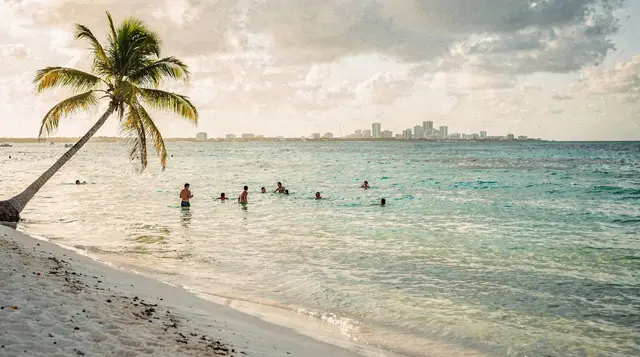
Isla Blanca isn’t really an island — it’s a long, skinny sandbar reaching north from Cancún, with the open Caribbean on one side and a shallow lagoon on the other. It’s about as far from the resort strip as you can get while still being a short drive away: barely any buildings, no big crowds, and long stretches of empty beach. That emptiness is the whole appeal, and also the catch.
| Where | A sandbar peninsula north of Cancún, past Puerto Juárez |
| Cost | Free beach access; kite lessons and gear rental typically 1,000–2,500 MXN (~55–140 USD) |
| Time needed | Half a day to a full day |
| Getting there | Rental car (~30–40 min) or taxi (~400–600 MXN one way); no public bus |
| Best time | December–April for calm weather; Nov–Mar winds for kitesurfing |
What’s actually out there
Picture a sand road running up a thin peninsula. On the ocean side, wide beaches with that classic turquoise water and very few people. On the lagoon side, Laguna Chacmuchuc: warm, shallow, flat water that’s a magnet for kitesurfers and, often, for flamingos and wading birds. A handful of rustic beach clubs and kite schools have set up along the way, but development is thin and patchy by design.
This is not a manicured destination. Expect natural beach, some seaweed depending on the season, the occasional bit of washed-up debris, and stretches with nothing built at all. If you want a beach bar with cocktails delivered to your lounger, stay in the Hotel Zone. If you want space and quiet, this is it.
The catch: bring everything, expect nothing
The honest warning that turns a great day into a frustrating one: there’s almost no infrastructure. Services are minimal and unreliable. Bring your own water, snacks, sunscreen, cash (cards often aren’t accepted, and there are no ATMs), and shade if you can. Some of the small beach clubs and kite schools sell food and drinks, but hours are inconsistent and you can’t count on them being open.
There are no lifeguards, the ocean side can have currents, and phone signal is spotty in places. Treat it like a mini-expedition, not a resort day, and you’ll love it.
Kitesurfing and watersports
This is Isla Blanca’s claim to fame. The lagoon’s flat, shallow, waist-deep water and steady wind make it one of the best spots near Cancún to learn or practice kitesurfing. Several schools operate here, with intro lessons and gear rental; book ahead in the windy season as English-speaking instructors get busy. Stand-up paddleboarding on the calm lagoon is gentler and beginner-friendly. The ocean side is for swimming and beachcombing rather than watersports, given the open-sea conditions.
Getting there
There’s no public bus to Isla Blanca, which is part of why it stays quiet. Your options:
- Rental car: the easiest. Head north past Puerto Juárez and keep going up the peninsula; the paved road gives way to a sand track the further you go, so a higher-clearance car is reassuring after rain.
- Taxi: roughly 400–600 MXN one way from the Hotel Zone, but you’ll need to arrange a pickup time since taxis don’t cruise out here. Agree the round-trip fare and wait time up front.
- Tour: kite schools and some operators run transfers from Cancún as part of a package.
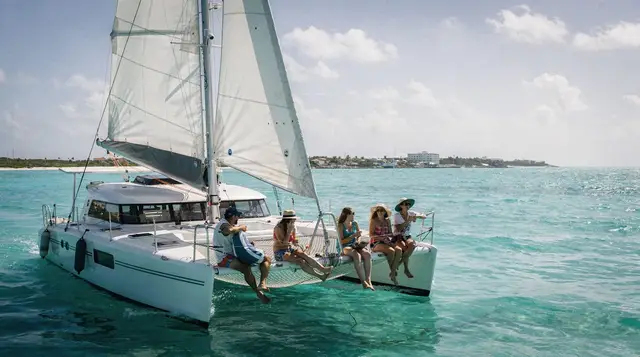
Allow 30–40 minutes of driving from the Hotel Zone, more in traffic. If you’d rather have a ready-made beach day with food and drinks included, an Isla Mujeres catamaran tour with snorkeling and buffet is the easy alternative.
How to spend the day
Drive (or get dropped) to a stretch you like, set up your shade, and alternate between the calm lagoon and the open beach. Walk — you can have hundreds of metres of sand to yourself. Watch the birdlife on the lagoon at the quieter end. Pack a picnic. If the wind’s up, watch the kites or take a lesson. Aim to leave before dark, since the unlit sand road is hard to navigate at night.
Wildlife and the lagoon
The lagoon side is quietly the most interesting part for non-kiters. Laguna Chacmuchuc is shallow, warm, and rich in birdlife — herons, frigatebirds, pelicans, and, with luck and the right season, flamingos wading the flats. Early morning is best for both calm water and birds. The mangroves fringing the lagoon are a nursery for fish and crustaceans, which is part of why the area is ecologically sensitive; stick to established access points and don’t disturb the mangroves or nesting birds. Some local operators run small lagoon and bird-watching trips, but as with everything out here, availability is informal — ask around in advance rather than assuming you can book on arrival.
How it compares
Be clear-eyed about what Isla Blanca is versus the alternatives. For calm, clear, easy swimming, the north-facing Hotel Zone beaches or a ferry to Isla Mujeres beat it hands down — those have lifeguards, food, and turquoise shallows. For reef snorkeling, Puerto Morelos or Akumal down the coast are far better. Isla Blanca’s niche is narrower and specific: wind sports on the flat lagoon, raw empty beach for walking and photography, and the simple pleasure of having sand to yourself within easy reach of the city. If that’s what you’re after, nowhere else this close to Cancún delivers it.
Is it worth it?
If you’ve already done the Hotel Zone and want to see what this coast looked like before the resorts, Isla Blanca is a refreshing half-day. It rewards travelers who like a bit of effort and don’t need amenities. But manage expectations: it’s wild, basic, and seasonally seaweedy, not a polished beach paradise. For calm, clear, easy swimming you’ll do better on the north-facing Hotel Zone beaches or a ferry to Isla Mujeres. Come to Isla Blanca for the emptiness, the wind, and the sense of escape — and bring your own everything.
Food, shade and staying comfortable
Don’t count on a proper meal out here. A handful of rustic beach clubs sell simple fare — grilled fish, quesadillas, cold drinks — when they happen to be open, but there’s no guarantee, especially outside peak kite season. The safest plan is a packed cooler: water (more than you think you need — there’s little shade and the sun is relentless), snacks, and a tarp or umbrella if your spot doesn’t have a palapa. Sunscreen and a hat are essential; the lagoon’s calm water gives no relief from the overhead sun the way a shaded pool or bar would. Reef-safe sunscreen is the better choice near the lagoon’s mangrove fringes.
Who will enjoy it most
Isla Blanca suits a particular kind of traveler. Kitesurfers are the obvious fit, but couples looking for a quiet stretch of sand and photographers chasing big skies and empty shorelines get just as much out of it. If you’re travelling with young children, think carefully: the lack of lifeguards, shade and easy food makes it harder work than a resort beach, and our guide to Cancún with kids lists easier options. Travelers who like a little improvisation, and who are happy to adapt when a beach club turns out to be closed, tend to leave delighted.
Fitting it into a Cancún trip
Because it’s a half-day outing, Isla Blanca slots in easily around other plans. Many visitors pair it with a slower morning, then head back toward town in the afternoon for dinner. If you’re still deciding how to structure your stay, the Cancún 3-day itinerary and the Cancún 5-day itinerary leave room for a low-key day like this one, and our guide on how many days to spend in Cancún helps you judge whether you have the time to spare. If your base is the Hotel Zone, our Cancún Hotel Zone guide explains what you’ll be leaving behind and why the contrast feels so strong.
Pair it with a day that is the opposite in character. A busy ferry-and-town day on Isla Mujeres or a morning of resort lounging balances out the roughness of the sandbar, and you’ll appreciate both more for the contrast. A catamaran day to Isla Mujeres with snorkeling and lunch does the job nicely.
Timing, wind and weather
The wind is the main variable. On windy days the lagoon fills with kites and the whole place feels lively; on still days it turns glassy and quiet, which is lovely for paddleboarding, walking and birdwatching but useless for kiting. If you plan around lessons, check conditions with the school the day before and stay flexible about your hours.
Seaweed is the other thing to keep an eye on. Depending on the season, the ocean side can collect sargassum, which changes how the beach looks and smells. Our sargassum guide for Cancún explains how the season works so you can set expectations before you drive out. Storm season changes the picture too, since a sand track and a low sandbar are not where you want to be when the weather turns; read the Cancún hurricane season guide and our advice on the best time to visit Cancún before you commit to a date.
A simple packing checklist
Because nothing out here can be taken for granted, a short list saves the day:
- Plenty of drinking water, and food you don’t mind eating warm
- Cash in small bills, since cards are rarely an option
- Shade, whether an umbrella, a tarp or a light tent
- Sunscreen, a hat and long sleeves for the middle of the day
- A charged phone and a downloaded offline map, as signal can drop
- A bag for your rubbish, so you leave the beach as you found it
- Water shoes or sandals for the lagoon edge and the sand track
For a longer list that covers the rest of your holiday, see our Cancún packing list.
Leave no trace
The appeal of Isla Blanca is that it’s still wild, and that only lasts if visitors treat it gently. Take everything you bring back out with you, keep to established paths through the dunes and mangroves, and give nesting birds plenty of room. Don’t drive onto vegetation to find a more private spot, and keep music low so the quiet stays part of the experience for everyone else. If you enjoy this kind of place, you may also like the other quiet corners we cover in our best beaches in Cancún guide, and the broader Cancún travel tips page covers general etiquette and common-sense precautions that apply here too.
Isla Blanca vs. Hotel Zone beaches vs. Isla Mujeres
| Isla Blanca | Hotel Zone beaches | Isla Mujeres | |
|---|---|---|---|
| Crowds | Almost none | Busy, resort-lined | Busy midday, quieter overnight |
| Amenities | Minimal, unreliable | Full — bars, loungers, food | Full town with restaurants, carts |
| Best for | Kitesurfing, solitude, photos | Easy resort beach day | Calm swimming, golf-cart loop |
| Getting there | Car or taxi, ~30–40 min | Walk or bus within Zona Hotelera | ~20 min ferry from Puerto Juárez |
| Cost | Free beach, pay for kite lessons | Often free (public beach) | Ferry fare + optional cart rental |
Frequently asked questions about Isla Blanca
Is Isla Blanca safe to visit? Yes, but it’s unstructured — there are no lifeguards, phone signal is patchy, and the ocean side can have currents. Treat it as a self-sufficient outing rather than a supervised beach.
Can you visit Isla Blanca without a car? Yes, by taxi (agree the round-trip fare and wait time before you go, since taxis don’t cruise the area) or as part of a kite-school transfer package. There’s no public bus.