Cancún with kids: what actually works
Cancún is genuinely one of the easier places to travel with kids, warm shallow water, short transfers, and resorts built for families. But the family-friendly label gets slapped on plenty of things that aren’t, and the marketing won’t tell you which. Here’s what actually works with children.
| Where to base | Hotel Zone (young kids, convenience) or Puerto Morelos/Playa del Carmen (value, real town) |
| Cost | Eco-parks around 1,800-2,800 MXN/adult; cenotes 200-500 MXN; kids often discounted |
| Time needed | At least 5-7 days to pace properly without overscheduling |
| Getting there | Direct flights into Cancún (CUN), then taxi/shuttle to your base, around 20-40 min |
| Best time | Late Oct-Nov or early Dec for weather, crowds, and price; avoid peak sargassum (May-Aug) with under-fives |
Where to base yourselves
For young kids, the Hotel Zone earns its premium here. A resort with a calm pool and beach steps away removes all the logistics that make family travel exhausting. Look for a family-specific all-inclusive (kids’ clubs, splash pads); for a family, all-inclusive often does pencil out because you skip the constant restaurant negotiations.
If your kids are older and you want value over convenience, Puerto Morelos or Playa del Carmen give you a real town, calmer vibe, and easier access to cenotes, with a beach still on hand. See our full Cancún with kids guide and where to stay in Cancún for base-by-base detail.
The beaches that work
- Playa Norte, Isla Mujeres: the gold standard for kids. Shallow, calm, warm, sandy a long way out, and the most sargassum-resistant beach around. The ferry (20 min) is part of the fun.
- Playa Delfines (Cancún): wide, free, public, with parking, but watch for surf and currents on some days; better for sandcastles than toddler swimming.
- Puerto Morelos: a sheltered reef just offshore keeps the water calm, good for first snorkels.
Avoid building toddler beach days around the open Hotel Zone surf on a rough day, and avoid May–August sargassum for the under-fives; lean Isla Mujeres or cenotes instead. Our best beaches in Cancún guide ranks all of them, not just the kid-friendly picks.
Cenotes with kids
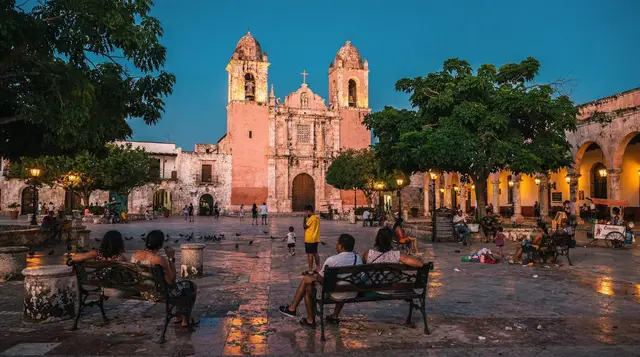
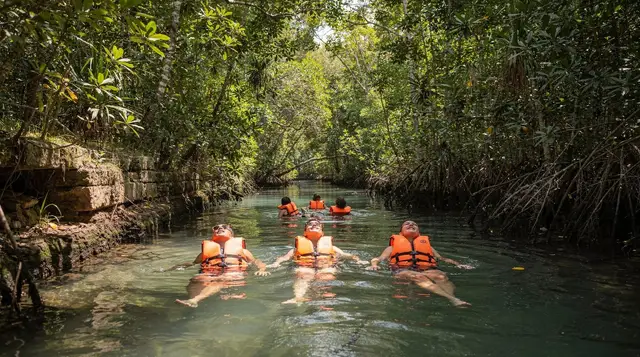
The right cenote is a hit with kids: cool, clear, novel. Pick open, shallow ones with life vests (provided and often required), Cenote Zaci in Valladolid, the swim areas at Dos Ojos, or any “family-friendly” labeled one. Skip the deep cave-dive-only cenotes with small children. Entry runs 200–500 MXN; under a certain age is often free or reduced. The dedicated family-friendly cenotes guide has a full list matched by depth and vest requirements, and cenote Dos Ojos covers that one in detail.
Day trips that survive contact with kids
- Isla Mujeres: short ferry, golf cart, great beach. The easiest win.
- A water park / eco-park (Xcaret, Xel-Há): genuinely built for families, with rivers, snorkel lagoons, and shows. They’re a full-day, 1,800–2,800 MXN-per-adult commitment (kids cheaper), so budget for a whole day and one park, not three.
- A close cenote + Akumal turtles: doable with school-age kids who can snorkel; a Tulum ruins, turtle swim and cenote tour bundles it into one day.
What to skip with younger kids: Chichén Itzá (2.5 hours each way, brutal heat, “look at the old rocks” lands badly under age 8), and any beach-club-centric Tulum day.
Practical things that actually matter
- Heat and sun: the Yucatán sun is no joke for small kids. Reef-safe sunscreen (required by law at cenotes and parks), hats, and a midday water-or-shade break are non-negotiable.
- Water: tap water isn’t drinkable. Stick to bottled/filtered, including for teeth.
- Strollers: fine in the Hotel Zone and malls, useless on beach sand and rough in Tulum, bring a carrier too.
- Food: picky eaters do fine; quesadillas, fruit, and plain rice are everywhere. Centro and town markets are cheaper and just as kid-friendly as resort restaurants.
Eco-parks: which one for which age
The big eco-parks get lumped together, but they suit different kids. Xel-Há is essentially a natural snorkel lagoon with lazy rivers and easy water, best for younger kids and non-swimmers (life vests everywhere). Xcaret is the culture-and-shows park, underground rivers, wildlife, an evening spectacle, better for school-age kids with stamina for a long day. Xplor is the adventure park, ziplines and amphibious vehicles, aimed at older kids and teens, with height and age minimums; an Xplor Park all-inclusive entry ticket covers food and drinks inside. If you do want two parks, a Xel-Há and Xplor combo with transport saves the driving. Pick one to match your child, not all three; each is a full day and 1,800–2,800 MXN per adult (kids discounted, toddlers often free). Bring reef-safe sunscreen, regular brands are confiscated at the gate.
Pacing the trip so nobody melts down
The most common family mistake here isn’t picking the wrong activity, it’s overscheduling. The heat and humidity flatten small kids fast, and a day that looks reasonable on paper becomes a 4pm meltdown in practice. Build in pool-and-nap afternoons, do the active outing in the cool morning, and accept that you’ll see less than a couple would. A trip that’s 60% beach-and-pool downtime with one good outing a day works far better than a packed itinerary. Travel insurance and a flexible plan matter more with kids, especially in hurricane season (June–November), when a washed-out day needs a plan B.
When to go with kids
Timing matters more with children than with adults. The clear-water, low-seaweed winter window (December–April) gives you the calm, clean beaches small kids want, but it’s also the priciest and most crowded, and March brings spring-break party crowds you may want to avoid with little ones. The summer months are cheaper but sweltering, with frequent sargassum on the open beaches, lean on cenotes and Isla Mujeres then, and keep the under-fives out of the midday heat. The shoulder months (late October–November, early December) are the family sweet spot: good weather, thinner crowds, lower prices, and easing seaweed. If you have school-age flexibility, that window is worth targeting.
Month-by-month for families
| Months | Weather | Crowds | What it means for kids |
|---|---|---|---|
| Dec-Apr | Dry, warm, clearest water | Highest (March = spring break, avoid with young kids) | Best beach conditions, but book resorts early and expect premium prices |
| May-Aug | Hot, humid, frequent sargassum | Moderate, some school-holiday spikes | Lean on cenotes and Isla Mujeres; midday heat needs real shade breaks |
| Sep-Oct | Hurricane season peak, rain likely | Lowest, cheapest | Riskiest window for a family trip; keep plans flexible with insurance |
| Late Oct-Nov, early Dec | Improving weather, thinning seaweed | Low-moderate | The family sweet spot: good conditions, better prices, thinner crowds |
Getting around with kids
Airport transfers and day trips are where a lot of family trips lose an afternoon to logistics. A private or shared shuttle from the airport is worth the extra cost over a public bus with luggage and tired kids in tow; see our Cancún airport to Hotel Zone guide for the realistic options and prices. For getting around once you’re settled, the Hotel Zone bus system is stroller-unfriendly but cheap, and a rental car only pays off if you’re planning several cenote or ruin day trips; our getting around Riviera Maya guide breaks down when each option makes sense with children in the mix.
The honest verdict
What works: a calm-water base (Hotel Zone resort or Puerto Morelos), Playa Norte for beach days, one or two shallow cenotes, and at most one eco-park. What doesn’t: long inland ruins drives with little ones, sargassum-season open beaches for toddlers, and trying to cram in a “real Mexico” itinerary that ignores nap times. Keep transfers short, water calm, and days unhurried, and Cancún is about as smooth as tropical family travel gets.
Frequently asked questions about Cancún with kids
What is the best age to bring kids to Cancún? Any age works for a beach-and-pool trip, but ruins-heavy day trips (Chichén Itzá, Cobá) land much better with kids 8 and up who can handle heat and a long bus ride. Under-fives do best with a Hotel Zone or Puerto Morelos base, Playa Norte, and shallow cenotes only.
Is Cancún safe for a family trip? The tourist corridor (Hotel Zone, Playa del Carmen, Isla Mujeres) has a strong safety record for visitors, and the main real risks for families are sun, heat, and water conditions rather than crime. See our is Cancún safe guide for the full picture.
Popular Cancún tours on GetYourGuide
Verified deep-linked GetYourGuide tours. Book through these links and we earn a small commission at no cost to you.
These are our own photographs of the area, not the operator's pictures of this tour — open the tour page to see those.